

Sablage humide ou projection par voie humide – un traitement de surface en douceur
Quand l'eau et l'abrasif de grenaillage agissent de concert
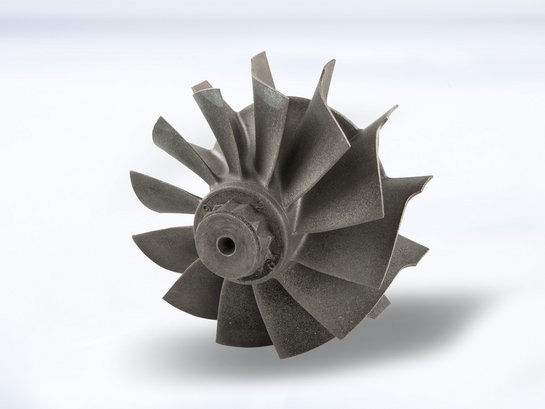
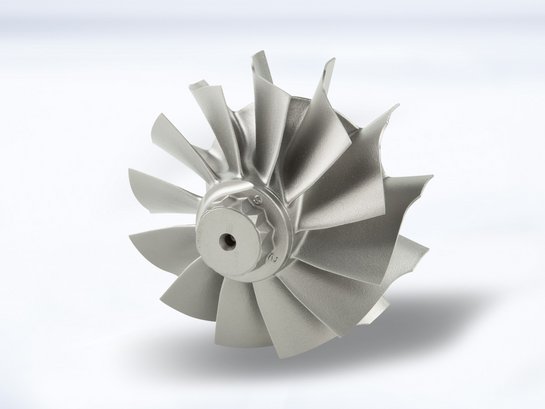

Le Sablage humide, également appelé projection par voie humide, est une technique particulièrement douce pour le traitement de surface. La pression d'air, l'eau et un abrasif de grenaillage sont appliqués conjointement et de manière ciblée sur les pièces à traiter. Ce procédé élimine les encrassements et produit des états de surface définis, sans endommager le matériau de base.
L'eau joue ici plusieurs rôles : elle associe le processus de grenaillage (le « Sablage » ou grenaillage à sec) à un effet nettoyant, assure une meilleure distribution de l'abrasif de grenaillage, pénètre dans les moindres interstices et amortit simultanément l'impact de l'abrasif à la manière d'un coussin. L'enlèvement de matière est ainsi réduit au minimum, car l'eau dissipe l'énergie des impacts, ce qui permet de respecter les tolérances les plus étroites des pièces.
Ce procédé est particulièrement adapté à la création de surfaces facilement nettoyables, au nettoyage délicat des pièces et à l'obtention d'un finish de surface esthétiquement irréprochable.
Dans quels cas le Sablage humide est-il particulièrement indiqué ?
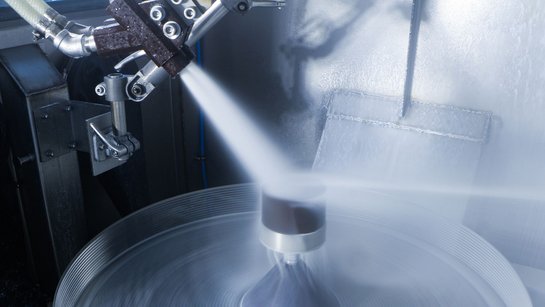
Le Sablage humide est particulièrement recommandé pour les pièces métalliques sensibles et de haute précision. L'écoulement de l'eau à la surface de la pièce génère un effet abrasif contrôlé. Cette méthode n'est pas seulement douce, elle est également économique : grâce à la couche d'eau amortissante entre la pièce et l'abrasif de grenaillage, la consommation d'abrasif est réduite. Par ailleurs, l'absence de poussière et d'encrassement permet d'utiliser des abrasifs de grenaillage très fins.
Pour garantir un résultat de grenaillage et un finish de surface parfaitement homogènes, la commande de la buse de projection dans les installations de Sablage humide Rösler est généralement assurée par un robot industriel ou un système CNC. Le chargement et le déchargement sont également adaptés individuellement à vos exigences de production – avec des solutions d'automatisation variées, selon vos besoins.
Questions fréquentes – Ce que vous devez savoir sur le Sablage humide
Un compresseur génère la pression d'air, qui est ensuite mélangée à de l'eau et à un abrasif de grenaillage, puis appliquée sur la pièce. L'abrasif de grenaillage utilisé est continuellement régénéré afin de garantir un processus de grenaillage propre et économe en ressources. Les encrassements récupérés ainsi que l'abrasif de grenaillage utilisé doivent être séparés après utilisation et éliminés dans les règles de l'art.
Dans le Sablage humide, de l'eau est ajoutée à l'abrasif de grenaillage. Ce mélange amortit l'énergie d'impact de l'abrasif, réduit l'enlèvement de matière et prévient la formation de poussière. Il en résulte des surfaces particulièrement homogènes, traitées en toute douceur.
- Traitement délicat des pièces sensibles
- Environnement de travail sans poussière et propre
- Consommation d'abrasif de grenaillage réduite
- Combinaison du nettoyage et de la valorisation de surface
- Possibilité d'utiliser des abrasifs de grenaillage très fins
Ce procédé est particulièrement adapté aux pièces sensibles ou de haute précision, telles que les implants, les composants de turbines et de propulseurs, les bijoux, les outils et les pièces issues de l'industrie médicale, de l'aéronautique ou de la mécanique de précision. L'acier inoxydable se prête notamment très bien au Sablage humide, permettant d'obtenir des surfaces répondant aux exigences élevées de nettoyage et de désinfection de l'industrie médicale et agroalimentaire.
Selon le résultat souhaité, on utilise notamment des billes de verre, des billes céramiques ou des grades fins de corindon. Grâce à la circulation d'eau, il est possible de traiter des abrasifs de grenaillage très fins, difficiles à manipuler en grenaillage à sec. La règle est la suivante : l'efficacité du Sablage humide repose sur le bon équilibre entre l'abrasif de grenaillage, sa concentration, l'eau et la pression d'air.
L'eau assure une distribution homogène de l'abrasif de grenaillage et génère un état de surface défini avec un léger effet brillant. Par ailleurs, les inclusions d'abrasif dans la surface sont minimisées et la pièce est débarrassée de tout résidu ou encrassement.
Les premières grenailleuses par voie humide ont été développées dans les années 1960 pour le traitement de composants hautement sensibles dans l'industrie aéronautique.
Le procédé est aujourd'hui utilisé notamment pour la réalisation de surfaces de précision sur des implants, des bijoux, des composants de propulseurs, des outils à enlèvement de copeaux ou des outils de coupe, dans les secteurs de l'aérospatiale, de l'industrie médicale et de la fabrication d'outillage.
Oui. Le procédé ne génère pas de poussière et l'eau capte les particules arrachées, ce qui réduit considérablement la charge dans l'environnement de travail. De plus, la consommation d'abrasif de grenaillage est diminuée, ce qui contribue à la préservation des ressources.
Le procédé de Sablage humide peut également être utilisé pour la compression superficielle, c'est-à-dire pour le renforcement des surfaces, lorsque celles-ci sont très sensibles et que les procédés de Shot Peening conventionnels s'avèrent trop intenses.
Utilisez le Solution Finder pour trouver le système qui convient à votre méthode de traitement.