Solution Finder
SOLUTION FINDER

La vostra guida nel mondo dei prodotti Rösler

Con pochi clic troverete la macchina giusta per le vostre esigenze!

Risultati: 237 Articolo

Customer Experience Centers Offer Free Surface Finishing Insight & Solutions

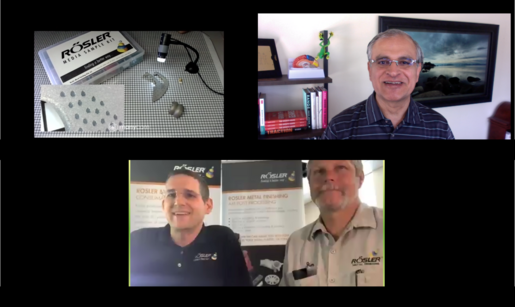
During more than 80 years in business, the Rosler team has gained extensive experience in shot blasting and mass finishing for a variety of industries . In addition to the machinery and consumables we provide, our Customer Experience Centers enable us to demonstrate Rosler’s expertise by processing your samples with settings and requirements tailored to your needs. Sending your work pieces to one of our 11 test centers around the world is an important step in achieving the perfect surface finishing process. Learn what to expect from Rosler’s Customer Experience Centers and get the most out of your partnership with Rosler from Sales Representative and Interim Product Manager of Turbine Blast Equipment Zack Murray and Mass Finishing Product Manager Michael Salyers. What to Expect as a Customer To achieve optimal processing results, we carry out sample processing step-by-step. With an emphasis on finding a better way, our process includes: A joint kick-off meeting (in-person or virtually) between your team and Rosler experts to set the processing objective. Determination of the process technology. Sample processing. Appraisal by Rosler shot blasting or mass finishing experts. In some cases, both. Creation of detailed test and measurement reports. An opportunity for you to evaluate the results and a final meeting. Salyers, a mass finishing expert with four years of experience at Rosler, describes the sampling process as collaborative and informative. “The customer gets the chance to meet all of the key players involved in the project. They have the opportunity to ask any questions they may have, review the equipment available, and discuss the pros and cons of each,” he said. “As a team, we review the customer’s parts, goals, and expectations. Based on many years of experience, our team will consider each factor involved with finishing the part, select the most appropriate machine, media, and compound, and then run test trials in order to reach the stated goal.” Whether you are in search of a mass finishing or shot blasting system, you can expect a team who will listen to your desires, uncover and discuss your pain points, and then develop a solution that best fits your goals, Salyers said. Murray, a shot blasting expert with nearly nine years of experience, agreed but said the shot blasting sampling process typically starts with more options already predetermined. “A large majority of the time, customers already know what shot blasting media they are going to be using—either because they are already using it in a different machine, a sisterplant of theirs is using it for similar applications, or an upstream application is currently outsourced using that media,” he said, “Therefore, the only things that need to be verified are time cycles for batch or single part processing applications or throughput speeds for continuous throughput applications.” Rosler CEO Bernhard Kerschbaum (bottom left) and Customer Experience Center Process Expert Jim Kellay (bottom right) meet virtually with a customer to discuss a test batch and demonstrate Rosler’s capabilities without the need for an in-person meeting. The typical testing experience does not even necessitate the customer’s presence on-site, Murray said. Testing can be accomplished by the customer sending sample work pieces to Rosler which are then processed with different cycle times or throughput speeds and sent back to the customer for evaluation. “For the relatively rare case wherein the customer is in need of our support for media selection and th eprocess needs are special enough that we don’t have an ‘off-the-shelf’ solution ready based on previous experience, Rosler tries to have the customer visit our facility for the testing,” Murray said. “We do an initial round of testing in our manual air blast or wet blast cabinets using a small cut of the part for larger parts or a small batch of the parts for smaller parts so that we can quickly change out the media to show the results of several materials and/or sizes of media. Once the customer has verified which media gives them the finish they are looking for, we do a separate test to verify time cycles orthroughput speeds.” Preparing for Testing While testing in our Customer Experience Centers is free of charge to prospective and current customers, Rosler understands that your time is valuable. Gathering the right information prior to testing can help expedite your test trials and enable us to develop the exact system for your needs more quickly so you can implement changes or plan for system upgrade investments sooner rather than later. Gathering information for testing typically begins with a one-page initial inquiry questionnaire specific to mass finishing or shot blasting. Both versions contain questions related to processing objectives, final surface quality, work piece conditions and specifications, desired processing modes, reason for investment, project budget, and desired timeline. Specific to the type of surface finishing sought, each questionnaire also addresses current systems in use and more process-specific information. Rosler Customer Experience Center Process Expert Jim Kellay conducts a virtual test trial review with a customer. “Our goal is to create a collaborative process,” Salyers said. “The more information a customer can provide regarding their problems and goals, the more effective solution we can develop. “No two projects are the same. There is no magic bullet or media for every part. Each part must be considered individually before a comprehensive process can be developed.” Rosler’s ability to communicate the potential and limitations of shot blasting and mass finishing for specific customer processes relies on understanding the customer’s initial work piece condition and end goal, all finishing steps utilized, and productivity metrics sought. “Communication is the key in identifying unrealistic expectations as well as identifying innovative solutions,” Salyers said. “Fully understanding the customer’s needs and goals in the beginning helps us achieve maximum results for them.” Visual inspection of knee femorals after tested processing in Rosler’s United States-based Customer Experience Center for the desired surface finish. The Rosler Way “Finding a better way…” is more than a motto at Rosler; it’s our mission. With more than 80 years of experience and a portfolio containing more than 15,000 equipment and consumable products, solving challenges is what we do. Contact us today to get our Customer Experience Center to work developing a solution for your surface finishing challenges!

Dutch Equipment Manufacturer Increases Flexibility with Automatic Shot Blasting

Blast cleaning is uniquely capable and efficient at delivering the pre-coating surface preparation required for components that must be able to withstand severe ambient conditions including heavy equipment for construction and mining, agricultural machinery, transportation and material handling equipment, and railway equipment and rolling stock. When Dutch equipment manufacturer Delwi Groenink sought a better solution for prepping its various steel weldments for painting, the company enlarged its manufacturing depth with a new continuous hanger shot blast machine from Rosler . The Situation Based in Enschede, Netherlands, the company designs and produces numerous products including placement systems for container pads. Its customers largely work within the material handling, offshore, and transportation sectors. Prior to the new system, pre-treatment of steel components utilized various external job shops for manual shot blasting in labor-intensive blast rooms and paint booths. In addition to complex logistics, the process was also time-consuming. The Solution To accelerate the manufacturing process and become more flexible, the company decided to bring these processes in-house and took over the job shops including their staff. To further optimize operations, Delwi Groenink invested in a modern shot blasting machine , which was placed in a new building adjacent to the painting facility. The company selected Rosler’s continuous hanger shot blast machine RHBD 27/32-K after shot blasting trials with Delwi Groenink components in our Customer Experience Center in addition to demonstration of similar Rosler systems in the field, and Rosler’s technical service in the Benelux countries. The Specifications The RHBD-K is designed for continuous processing of single components and batches of multiple work pieces with dimensions up to 10 ft (3 m) long, 10 ft (3 m) wide, and 40 ft (12 m) long. The blast chamber is manufactured from manganese steel. Easy-to-exchange, gap-free manganese liners are also added in areas exposed to the blast stream for added protection. The required high blasting intensity is generated by 16 Gamma 400 G turbines , each with an installed power of 11 kW. The turbines are arranged vertically in two rows on the left and right wall of the blast chamber, with the two rows being somewhat offset from each other. Combined, the turbines throw approximately 5,000 lb (2,240 kg) of blast media per minute. This ensures excellent blast coverage and uniform preparation of all surfaces. The special “Y” design of the throwing blades and the optimized media transfer in these Rosler high-performance turbines allow a highly fluidized media movement with little or no turbulence. Compared to conventional turbines of similar sizes, the resulting higher throwing and impact speeds produce a 15- to 20-percent-higher blast performance. Blasting efficiency is further improved by the concentrated blast pattern. Moreover, both sides of the throwing blades can be utilized resulting in a doubling of the uptime of the throwing blades. All these technical features, along with the fact that the blades can be exchanged within only seven minutes, convinced the customer. The Process Once a steel weldment has been transferred to the transport truss, the RHBD-K recognizes that a component is ready to be blasted and transports it into the entry chamber. As soon as a sensor monitoring the front area of the blast machine signals that no people are present, the double-leaf door closes automatically. According to the part-specific treatment program, all or some turbines then start up and blasting begins in the blast chamber. This blasting intensity can be adjusted with frequency inverters. After completion of the blast cycle, the work piece is transported into the exit chamber, media flow is interrupted with shell valves, and turbines turn off allowing the operator to manually remove blast media and dust from the work piece. Once finished, the operator leaves the exit chamber and signals another sensor to initiate and open the double-leaf doors so a transport truss can remove the work piece from the machine. Designed to handle a media throughput of around 2.5 metric tons per minute, the media recycling and cleaning system includes an elevator, cross auger, and air wash separator. The Rosler Way “Finding a better way…” is more than a motto at Rosler; it’s our mission. With more than 80 years of experience and a portfolio containing more than 15,000 equipment and consumable products, solving challenges is what we do. Contact us today to discuss your surface finishing goals and how we can deliver improvements!

Mass Finishing Machine Settings Series, Part 1 – Improve Machine Function with Proactive and Responsive Observation, Calibration

Even if the finishing media and compound/water are managed perfectly, without a well-functioning machine a mass finishing process is doomed to fail. Focusing on a few essentials will ensure that a mass finishing machine is performing as intended. From machine settings to preventative maintenance and troubleshooting tips, Rosler has the experience and insight to keep mass finishing machines running efficiently. The Right Machine Settings The speed at which a machine is running is critical to the success of a finishing process. If the machine is running too slow, the finishing results, deburring/edge radiusing , surface grinding , etc., might not be achieved at all or only after excessively long processing times. If the machine is running too fast, the work pieces may be damaged by scratching, nicking, or bending. Excessive speeds will also cause the media to wear much faster without the benefit of shorter cycle times. Beyond speed, other machine settings must be taken into consideration based on the specific machine type. Rosler's R 420 EC vibratory tub machine with media Vibratory The energy required to move the media and part mix in a rotary , tub , or linear continuous flow vibrator is created by the vibratory motor and imbalance weights. As such, the motor speed, setting of imbalance weights, and the mass of imbalance weights are adjusted to match the processing needs. Rosler's FKS centrifugal disc machine from above Centrifugal Disc Finishing Rotation of the spinner in the bottom of the processing bowl produces energy needed to accelerate the media and parts batch in a centrifugal disc finishing machine . The speed of the drive motor and the ribs on the spinner should be regularly evaluated to ensure effective energy transfer. Rosler's R6/1000 with automatic loading robot Drag Finishing Within a drag finishing machine , the movement of the fixtured parts through the stationary media mass is powered by the rotation of the carousel, work station(s), and, sometimes, individual work station spindles. The speed of each component as well as the angle of the work stations determine the intensity of the process. Immersing the part deeper in the mass increases the processing intensity. Rosler's R 1-1 TSA plunge finishing machine Plunge Finishing In a plunge finishing machine , the fixtured part moves in relation to the static media. The motion is driven by the eccentric spindle rotation and rotational and/or vertical oscillation. The rotational speed of the motor driving the spindle(s) as well as the frequency and amplitude of the oscillation determine the processing intensity. As with drag finishing, immersing the part deeper in the mass increases the processing intensity. Rosler's surf finishing machine Surf Finishing Also referred to as spin finishing, surf finishing machines rely on a rotating processing bowl with the media and a stationary work piece holder to introduce the required energy for the finishing process. The parts are fixtured to the work piece holders on a robot arm or a slowly rotating spindle. Possible points of adjustment and evaluation include the rotational speeds of the processing bowl. The angle of the work piece holder and the immersion depth also affect the processing intensity. A six-axis robot can provide almost infinite degrees of process intensity for different areas of the same part. Regardless of the machine type, correctly connecting the motor drive is vital. The rotational direction of the motor is one of the main causes for a poorly running process after a machine has been repaired or moved to a new location. Such a small mistake can have disastrous results by completely ruining a mass finishing process. Preventive Maintenance As with any other manufacturing operation, preventive maintenance will allow you to achieve consistent, high‐quality results with your mass finishing equipment. Operator manuals usually provide detailed guidelines for properly maintaining your equipment. Reputable machine producers will provide preventive maintenance checklists with a quick overview of the essential equipment and process aspects. If regularly checked, these steps will ensure that the desired finishing results are consistently achieved without any unnecessary equipment downtimes. In addition, the checklists provided by Rosler also include valuable pointers for managing the grinding and polishing media levels as well as the compound and water flow rates. Troubleshooting Tips Optimal interaction between equipment, media, compound, and water are the key to achieving good mass finishing results. Small changes in the surface condition of the raw work pieces (for example, an oil change in a stamping operation), use of a different compound and/or different media, use of a different water source with harder or softer water, a poorly calibrated compound dosing pump, plugged machine drains, the wrong wiring of a drive motor, the wrong motor speed, incorrectly set imbalance weights, and a number of other factors can drastically impact a mass finishing process. For situations where the finishing results are no longer what they are supposed to be, machine manufacturers can provide a checklist of troubleshooting tips and suggestions as to what might have gone wrong. Qualified service and process technicians can also provide an assessment of your system. The Rosler Way With more than 80 years of experience, Rosler has extensive knowledge in identifying ideal setting configurations as well as developing the machines themselves. Contact us to discuss your machine needs and issues, both proactive and reactive. The Mass Finishing Settings & Imbalance Weights Series will continue with, “Part 2 – Determine Imbalance Weight Settings for Consistent Results.” Sign up for enews alerts to follow the Rosler Blog and be notified of new posts!

Non-Foaming Plastic Media Optimizes Finishing Process

While the optimization of mass finishing processes mostly focuses on the machinery utilized, Dörfler & Schmidt Präzisionsfinish GmbH (Dörfler & Schmidt) has shown that a simple shift such as using a different media can create significant process optimization. By switching to a new, non-foaming plastic media from Rosler , the post-processor achieved improved process stability, productivity, and efficiency. Meeting Varied Needs Founded in 1998, Dörfler & Schmidt offers a wide range of surface finishing including deburring , edge radiusing, surface smoothing and polishing , creating matte and textured finishes, descaling , and cleaning . The family-owned business located in Kammerstein, Bavaria, works with automotive , machinery building, electronics, medical engineering , jewelry , and a variety of consumer goods customers. “We have to deal mostly with requests for deburring and edge radiusing,” said Dörfler & Schmidt Management Assistant Felix Dörfler. “For example, on tools like milling tools and cutting inserts we have to create a precise edge radius. “Other work pieces, such as bearing rings, must have precisely defined surface roughness readings after the finishing operation while jewelry and accessories must have an optically pleasing finish.” Work piece materials range from metal, plastic, and ceramic to glass and wood in dimensions as little as a fraction of an inch (a few mm) up to 25 in (60 cm). Working with a Proven Partner Dörfler & Schmidt operates 33 different machines capable of handling a broad range of different mass finishing and shot blasting technologies. “To handle various work piece materials, we employ different process water cleaning and recycling systems,” Dörfler said. “For this purpose, we are utilizing five centrifuges , which, like the overwhelming majority of our mass finishing equipment, were supplied by Rosler.” When it comes to consumables , Dörfler & Schmidt primarily uses Rosler products as well. “The consistently high quality of the Rosler media and compounds, as well as the excellent process development support and optimization by their Customer Experience Center , are just a few reasons why we’ve relied on solutions from Rosler right from the beginning,” Dörfler said. The Situation “For the deburring and edge radiusing 40-mm-long stainless steel wire segments, we need an excellent grinding performance with a high metal removal rate,” Dörfler said. “However, foaming during the finishing process created a buffer between the work pieces and the media, reducing the grinding effect. “Therefore, the desired finishing results could no longer be achieved within the prescribed cycle time,” he said. In addition to Prolonged cycle times and an inability to separate media from finished work pieces after processing, the foaming issue was even carried over to the process water cleaning system, where foam seeped out of the centrifuges, soiling the system itself and the immediate environment. A Smart Solution The extent of foaming issues largely depends on the hardness of the process water and can often be remedied with special additives. When the company’s Rosler Sales Agent learned of the problem, he recognized that additives weren’t effective and suggested the newly developed “N” series of non-foaming plastic media from Rosler. Dörfler & Schmidt subsequently joined a select group of companies who tested the new media series. Since the non-foaming media version is identical to standard plastic media in identical shapes, sizes, and grinding performances, it could be swapped in without finishing process modifications. The Results More than a year later, Dörfler & Schmidt is still using the non-foaming media. Impressive results are achieved within the prescribed cycle time and separation issues have also been resolved. The media switch also greatly simplified the monitoring of the finishing process. Eliminating the need for reprocessing significantly improved the process’ overall cost-efficiency and extended the usable life of the process water, reducing the consumption of additives and contributing to increased sustainability. “We have been using the non-foaming media in two machines, and we have found that the grinding performance and the wear rate are absolutely identical with the standard version,” Dörfler said. “The new media helped us to make our processes more cost-efficient without affecting the quality of the finishing results. “For this reason, we will switch more plastic media types to the non-foaming version.” The Rosler Way All standard Rosler plastic media varieties have been available in non-foaming “N” versions since 2021, adding to the more than 15,000 equipment and consumable products we offer. Contact us today to discuss your mass finishing challenges and our solutions!
Wet Blasting Equipment & Media, Part 5 – Careful Media Selection, Additive Use Impact Results 

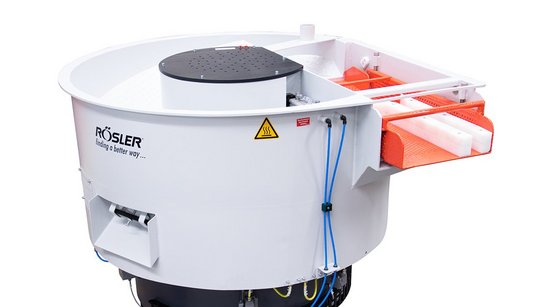
Wet blasting and dry shot blasting often use similar media to achieve the desired processing result. Unlike dry blasting that only uses a solid abrasive media, wet blasting processes use a slurry of water with the shot blasting media. This greatly cushions the impact energy on the work pieces, providing gentler, yet effective results for delicate work pieces. The achieved surface finish and appearance will also differ between wet and dry processes, even when the same media type and size are used. With more than 80 years of experience worldwide, Rosler can supply both the machines and media best suited for your wet blasting needs. Common Media Types As long as it is heavier than water and not water soluble, practically any media used for dry blasting can be used for wet blasting. It is important to consider the usefulness of the media compared to its cost. While a cheaper or longer-lasting media may be available, it may also require additional processing time to accomplish the desired surface finishing. Selecting the most appropriate media for your process requires balancing initial costs with overall results. Common types of wet blasting media include (top, from left) brown, white, and pink fused aluminum oxide; glass beads, ceramic beads, (bottom, from left) stainless steel shot, stainless steel grit, and polycarbonate beads. The most common wet blast media include: Brown, white, and pink fused aluminum oxide – Widely used for blast cleaning, this media type’s hardness makes it ideal for surface cleaning and paint preparation. Glass beads – Useful in wet cleaning and light peening applications, glass beads can also be used for light deburring and cosmetic blasting. Ceramic beads – This media’s high bulk density produces a higher impact intensity than glass beads and is useful for general surface cleaning and shot peening. The spherical beads provide a bright matte finish. Stainless steel shot – While useful in special cleaning and shot peening applications, this media type is not suitable for non-ferrous, soft metals. Stainless steel grit – The high bulk density and angular shape of this media produces an excellent cleaning effect, but is not suitable for non-ferrous, soft metals. Polycarbonate beads – This media is useful for very gentle cleaning applications and cosmetic blasting. Water Additives Rosler offers a wide selection of additives and compounds. The addition of certain chemical additives to the process water will support the wet blasting process and help extend the usable life of the process water. Popular additives in wet blasting processes include: Degreasing compounds – These surfactants chemically augment the mechanical cleaning effect of the wet blast process. They are only applicable when the work pieces are covered with grease or oil. Heavy contamination must be removed before wet blasting. Corrosion protection compounds - Such compounds provide temporary corrosion protection for a few days on ferrous work pieces. Biocides – These additives prevent bacterial contamination of the process water/slurry. During downtimes and inactivity such as the holidays or weekends, bacteria grows more easily. The addition of a biocide prevents such contaminations and allows process water to be used for longer periods of time before being replaced with fresh water. Flocculants – Used for augmenting the cleaning effect of centrifuges, flocculants aid in the removal of contaminants from the process water by encouraging contaminates to “floc” or group together, making the larger pieces of debris easier to remove for the system. Water hardeners - If very soft water is used (< 70 mg/L or 4.2 grains per gallon), foaming in the wet blast machine and the filtration system can become an issue. In such cases, a water hardener is useful in eliminating and/or avoiding issues. The Rosler Way As the utilization of wet blasting increases, Rosler reminds manufacturers to review their traditional, dry shot blasting applications and consider if wet blasting could provide additional efficiencies, reduced costs, and better results. We have extensive experience in wet blasting. Whatever your challenges are, we are confident that we can deliver a solution. Contact us to discuss your needs today! The complete Wet Blasting Equipment & Media series includes: Part 1 – “Machines Range in Complexity, Uses.” Part 2 – “Technical Components Combine for Systematic Success.” Part 3 – “Maintain Slurry Concentrations for Finishing Consistency.” Part 4 – “Internal Cleaning, Rebuilds Prolong Machine Lifetime.” Part 5 – “Careful Media Selection, Additive Use Impact Results.”
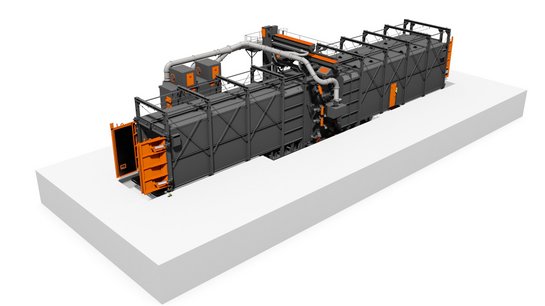
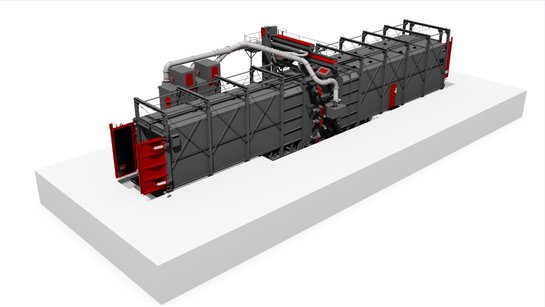
RHBD 22/27-F blast chamber

Linde MH relies on a sturdy foundry version of continuous feed spinner hanger blast machine

Linde Material Handling (MH) is a globally leading supplier of fork lift trucks and warehousing equipment. The company also provides technical solutions and services in the field of intralogistics. With a sales and service network in more than 100 countries the company is represented in all major regions of the world. In Weilbach the material handling specialist manufactures the counterweights for its broad program of fork lift trucks. Taking advantage of the potential for optimization with a new shot blast machine Linde MH is continuously striving to improve its manufacturing operations. Therefore, a Linde project team and the Rösler Oberflächentechnik GmbH worked closely together to optimize the material flow and increase the overall flexibility of the shot blasting operation for different lift truck counterweights (in short LTCW). To fulfill the demand for a better utilization of the available space, Rösler developed a customized system around a continuous feed spinner hanger blast machine RHBD 22/27-F that is setting new standards in the foundry industry. Fully automatic and flexible operation within an integrated manufacturing system Within the scope of the newly laid out material handling process the raw castings are deposited in a specially reserved, clearly marked staging area in front of the inlet chamber of the blast machine. After an operator has manually positioned the castings and confirmed this step at the control panel, they are picked up by a power & free system for transport through the shot blast machine. For each work piece type specific shot blasting and transport parameters were defined and stored in the respective PLC programs. This ensures that after the shot blasting operation the LTCWs are perfectly clean with no traces of residual molding sand. At the same time they have a highly homogeneous surface roughness that displays the typical casting structure of the work pieces, even after they have been painted. All process parameters were established on the basis of a suitable operating mix of the selected blast media. Special foundry version of the shot blast machine RHBD 22/27-F In compliance with the customer requirements the new shot blast machine was installed at its designated location in the factory. In a very tight space, but easily accessible for maintenance, the return system for the mix of blast media and sand was placed below the shot blast machine. Also integrated into this system was the return of the molding sand carried into the work piece staging area by the LTCWs. For this purpose, the sand is guided to a cross-chute located in front of the shot blast machine. This cross-chute then carries the material to the sand transfer hopper that transports the sand from LTCWs at the staging area and the sand from the inlet chamber onto the return conveyor below the inlet chamber. The return conveyor transfers the collected sand to the central screening hopper below the blast chamber. At the outlet chamber of the shot blast machine a floor scraper returns any residual sand and blast media to the central screening hopper below the blast chamber. The screening hopper separates all sand clumps, burs and metal flashes and transfers them to a sturdy Z conveyor belt for discharge from the machine. The screening hopper transports the remaining sand/media mix to an elevator, from where it is carried to the highly efficient media cleaning system. This device, consisting of a dual stage magnetic separator and an air wash system, ensures a high cleaning efficiency, guarantees a trouble-free operation and minimizes the wear of the shot blast machine. After the LTCWs have been manually positioned in the staging area, they are picked up by the trolleys of the power & free work piece transport system and carried through the different machine sections inlet chamber, blast chamber and outlet chamber at certain indexing time intervals. The three-chamber design of the shot blast machine also helped to minimize the escaping of sand, blast media and dust into the immediate environment. At the center of the entire shot blast system is the blast chamber with five specially placed blast turbines. The chamber is made from wear resistant austenitic manganese steel, grade X120Mn12. For additional wear protection it is lined with 25 mm thick replaceable cast chromium plates. A large maintenance platform, easily accessible by stairs, greatly facilitates the required maintenance activities. All goals achieved! With the new Rösler continuous feed spinner hanger shot blast system the demands by Linde MH for a technically and economically optimized shot blasting operation & work piece handling could be fully met. The quality requirements for the LTCW components are fulfilled through precisely defined shot blasting parameters, optimized blast patterns and better wear characteristics. Overall, this resulted not only in a significant improvement of the shot blasting results, but the streamlined shot blasting and transport concept also increased the overall efficiency of the material flow in the factory.