Solution Finder
SOLUTION FINDER

La vostra guida nel mondo dei prodotti Rösler

Con pochi clic troverete la macchina giusta per le vostre esigenze!

Risultati: 237 Articolo

Are Your Additive Polymer Parts Breaking During Post Processing?

Growing utilization of additive manufacturing for volume production of plastic components has increased the demand for cost-efficiency and high-quality surface finishes. That’s why AM Solutions , a brand of the Rosler Group , has further expanded its product portfolio with the development of a media type specifically for the post processing of plastic components. Designed specifically for work pieces printed with MJF and SLS powder-bed-based technology, AM Solutions’ media permits the safe, cost-efficient finishing of 3D printed components with different shapes and sizes in one single process step and with absolutely repeatable results. This eliminates the time-consuming and costly media changes for different processing stages. In combination with an understanding of respective printing processes, the media mix generates a perfect, finely structured, and highly homogeneous surface finish. Experience-Based Design For this novel product, the AM Solutions experts took advantage of the comprehensive development know-how of the Rösler Oberflächentechnik GmbH. With more than 15,000 products Rosler offers the largest portfolio of media and compounds in the world by far. High versatility makes finishing processes simpler, safer, and more cost-effective. The material, shape, and size of the media has been perfectly adapted to the post-processing requirements of 3D printed plastic components. “The composition of the media mix was developed through numerous processing trials,” said Christoph Bätz, Project Engineer at AM Solutions. “The result is a product that allows the surface finishing of a broad spectrum of components with different shapes and sizes. Irrespective of whether small, delicate work pieces or large components must be treated, the result is always a highly homogeneous, consistent, and repeatable finish.” Simplified Processes The grinding performance depends on the geometrical complexity of the work pieces. For certain applications, the surface roughness can be reduced from Ra = 15 μm to Ra = 3 μm within 240 minutes. Multi-stage finishing processes frequently require multiple media changes. Since the new MJF/SLS media already contains an optimum mix of different shapes and sizes, the need for such changes could be eliminated. Maintaining the correct processing sequence is also no longer necessary. This facilitates the overall handling ease considerably. Since the media type can be used for a broad range of applications, there is no longer a need to stock multiple media types for different work piece categories, presenting a significant cost saving. Increased Benefits Higher cost-efficiency is only one part of the story. The media also helps improve the stability and safety of the finishing processes. Thanks to its mostly digitized and tightly controlled manufacturing process, consistently high quality of the ceramic media is guaranteed. “Decades of valuable experience allow us to continuously develop new products that offer a significant added value for our customers and provide solutions to the challenges they have to face,” Rainer Schindhelm, Division Manager for the Production of Consumables at Rösler Oberflächentechnik GmbH comments. “The perfectly adapted interaction between machines, consumables, and process know-how makes the innovative, unique solutions of Rösler and its brand AM Solutions' 3D post-processing technology highly successful.” Adaptive Results The media allows for efficient surface grinding of extremely delicate components without causing any damage. Typically, surface finishing of particularly delicate work pieces with complex geometries poses especially demanding 3D post-processing challenges. In combination with optimized printing methods, the media mix generates highly homogeneous results for these difficult finishing tasks while simultaneously minimizing scrap and reducing costs. Work pieces with delicate, fine structures pose significant post-processing challenges. At left, problems frequently caused by inefficient post processing are shown. At right, improved results delivered using Rosler and AM Solutions’ offerings are shown. Finding a better way… Utilizing Rosler’s more than 80 years of expertise, AM Solutions 3D post-processing technology can assist you in optimizing your engineering and improving overall results. At Rosler, “Finding a better way…” is more than a motto. Contact us today to discuss your challenges!

Structural Steel FAQ, Part 1 – Why Surface Preparation is Necessary

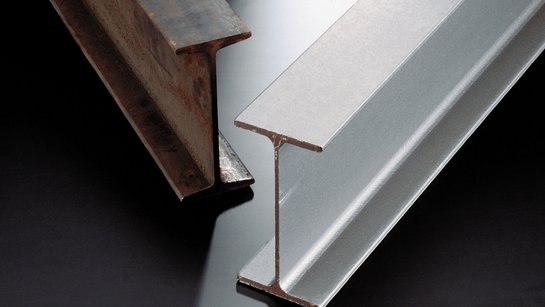
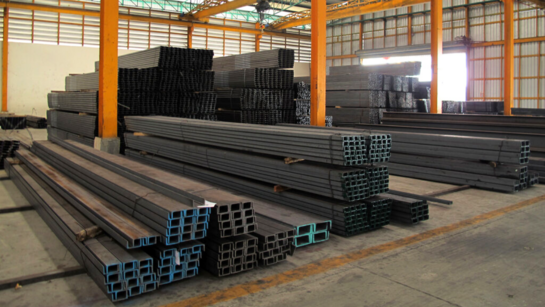
Structural steel components are used in many industries , including construction and construction equipment , shipbuilding , and the production of all kinds of heavy-duty vehicles, trucks, railway vehicles, and agricultural implements. In the construction of bridges, building of ships, or production of equipment that must withstand heavy loads, steel is selected for its strength and durability. To live up to its full potential and prevent premature failure, the steel must be guarded against corrosion with a protective coating. Shot blasting plays an indispensable role in preparing the steel surface for such coatings. Partnering with a shot blasting expert such as Rosler can help you determine the shot blasting equipment, blast media , and processing required for your structural steel components. In a series of blog posts, Rosler will answer the most common questions about the surface preparation and coating of structural steel. We begin with a basic question: Why do structural steel components need to be prepared for protective paint coating? The answer, in short, is for the best coating results and longevity. Goals of Surface Preparation If not covered with a suitable, protective coating, structural steel components are prone to rust quickly and fail with potentially catastrophic consequences. The effective life of a coating of anti-corrosive paint applied to a steel surface is largely dependent on how thoroughly the surface has been prepared prior to painting. Structural steel components requiring protective coatings include: Beams (I‐beams, H‐beams, channels, angles, etc.). Steel plates. Round bars and pipes. Weldments. Preparing and coating the surfaces effectively increases their durability and improves their appearance. Issues to Watch For A variety of factors can create surface issues necessitating proper preparation before coating such as the steel rolling process itself and prolonged exposure to the elements, water, or chemicals. Specific surface factors in need of attention include: The presence of rust or mill scale. The presence of surface contaminants. Surface profile or roughness. The presence of these and other contaminants on the steel surface can cause premature coating failure. Painting a surface with the wrong surface profile/roughness can also cause premature failure or drastically increase paint consumption. To achieve good coating adhesion, the surface profile generally must become somewhat rougher, increasing the overall surface area. Tools of the Trade While numerous cleaning techniques such as hand and power tool cleaning, high-pressure water jetting, and degreasing are used for surface preparation, dry shot blasting is the most common industrial paint preparation method for structural steel components. This method utilizes ferrous metallic abrasives and can be used in combination with other methods. For example, pre-cleaning steps are frequently required before the shot blasting process. Go-to Guidelines Surface issues for structural steel components vary greatly. Fortunately, users can rely on detailed standards describing the visual evaluation of surfaces and procedures regarding the correct surface preparation for coating and painting. The most commonly used standards address different surface characteristics of steel components and preparation requirements. ISO 8501 – Visual assessments of surface cleanliness, rust, and preparation grades of uncoated steel substrates ISO 8502 – Tests for the assessment of surface cleanliness ISO 8503 – Evaluates surface roughness characteristics of blast‐cleaned steel substrates ISO 8504 – Methods for abrasive blast cleaning AMPP - The Society for Protective Coatings (SPCC) and the National Association of Corrosion Engineers International (NACE) have merged to for the Association for Materials Protections and Performance (AMPP) ASTM D 2200 – Standard practice for use of pictorial surface preparation standards and guides for painting steel surfaces created by the American Society for Testing and Materials The Rosler Way Whatever your structural steel needs are and your materials’ starting conditions, you can count on Rosler to help you find a better way. Contact us today to discuss your unique challenges. Upcoming posts in the Structural Steel FAQ series will include: Part 2 – Methods of Surface Preparation. Part 3 – Evaluating Rust and Mill Scale Pre- and Post-Blast. Part 4 – Evaluating the Presence of Dust. Part 5 – Assessing Surface Profile. Part 6 – Blast Media’s Influence on Surface Profile. Part 7 – Comparing Commonly Used Blast Machines. Part 8 – Are All Turbines Created Equal? Part 9 – Removing Residual Blast Media and Dust. Part 10 – Blast Rooms for Touch-Ups. Part 11 – Preservation Lines. Part 12 – Material Handling Options.

Intuitive Post Processing Preserves Intricate 3D-Printed Details

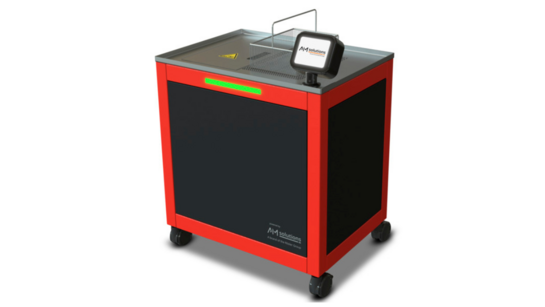
AM Solutions , a brand of The Rosler Group , provides post-processing solutions for a number of customers worldwide. For leading manufacturer of wide-format inkjet printers and high-precision cutting plotters, Mimaki , Rosler and AM Solutions collaborated with the Japanese printer manufacturer to develop a fully automated surface finishing system for a Full-Color Inkjet 3D Printer. Through collaboration, a fully automatic machine capable of safely removing support structures for work pieces with the finest detail was developed. The Situation With the 3DUJ-2207 , Mimaki combines impressive color diversity with an imposing level of detail. The compact and affordable 3D printer with a build size of 8 x 8 x 0.4 in (203 x 203 x 76 mm) offers more than 10 million colors, high resolution, and, therefore, new application options in the field of professional additive manufacturing. Innovative uses of the printer include manufacturing prototypes, industrial design objects, and collectible figures as well as medical and architecture models. Usually, solutions for the removal of support structures are treating the work piece with wet blasting or a water bath. A safer, easier, and more efficient approach was required, since each of these processes involves the risk of damaging the often filigree 3D parts. Mimaki turned to AM Solutions for an automatized and production-ready solution. The Solution “With AM Solutions and Rosler, we have a partner with extensive know-how and experience in the fields of mechanical engineering, industrial surface finishing, and the development and production of consumables ," said Arjen Evertse, Mimaki General Manager of Sales. “At the same time, AM Solutions is among the leading suppliers of automatized post-processing equipment in the AM sector, where it pursues constant development.” The resulting post-processing solution consists of an Industry 4.0-ready plug-and-play system. Its matching compound is classified as non-hazardous and with a high flash point. The completely closed variant of the system already contains all the necessary safety features, making a regular 230 V electricity supply the only requirement for operation. Special casters make the repositioning of the machine easy. Furthermore, the system is equipped with a web interface enabling operation and monitoring via smartphone. Together, Mimaki and AM Solutions provide innovative printing technology and a well-matched assortment of post-processing equipment at an attractive price from a single source. At the same time, post processing can be up to three times faster than with equipment previously available on the market. The Process While the need for aggressive wet blasting has been eliminated, the solution includes accommodations to make the immersion bath less damaging to intricate filigree features on the work pieces. The fully automatic removal of the support structures is achieved by placing the 3D parts in an immersion bath via a basket and selecting the most fitting processing parameters. For this purpose, various programs are available in the equipment controls by default. Pre-saved programs cover a range from bigger parts with many support structures to very delicate printing objects. In addition, users can configure programs for their 3D parts themselves and save specific settings within the equipment controls. Once selected, the specific chemical, mechanical, and thermal effects interact according to the program’s specific parameters, and the prescribed interaction ensures that the support material is completely removed in a way that is gentle on the component and, at the same time, effective and fast. After a defined processing time, the basket is removed from the immersion bath. Dripping compound is collected and returned to the dip tank. Due to the classification as non-water hazardous, the parts can simply be rinsed under running water before subsequent processing and handling. Process Advantages Initial tests have shown that this specific support removal is up to three times faster than other systems on the market. One crucial advantage of the significantly shorter processing time is that it prevents the work pieces from swelling in the bath. At the same time, the relatively low bath temperature prevents damage. An integrated monitoring system ensures that the system automatically shuts down if the temperature is too high. “With this innovative post-processing solution, we can offer future-oriented printing technology including safe and simple post processing at an attractive price-performance ratio and from a single source. We are confident that this allows us to contribute to establishing 3D printing in new application areas,” Evertse said. David Soldan, Head of AM Solutions – 3D post-processing technology, agreed. “The collaboration with Mimaki gives us the opportunity to further deepen our expertise and to perfectly adapt our product development to the requirements of every user,” he said. The Rosler Way Decades of experience and the ability to design, service, and maintain machines as well as provide the consumables and accessories required to get the finish you require make Rosler a well-rounded, single source for surface finishing expertise. For additively manufactured components, AM Solutions builds upon Rosler’s expertise with innovative post-processing solutions. Contact us to discuss your surface finishing needs.