Global defense industry in transition: Market trends, networks and the role of surface finishing
, Patrick Doliwa - Terug naar overzicht
The international defense industry is currently undergoing a phase of rapid transformation – technologically, geopolitically and structurally. While many developments are still being debated in Europe, entirely new capacities are already emerging at tremendous speed in other parts of the world. Rösler’s visit to the World Defense Show in Riyadh provided the opportunity to experience this dynamic firsthand, assess market potential realistically and establish personal contacts in a strategically important environment.
A trade show with strong signaling power
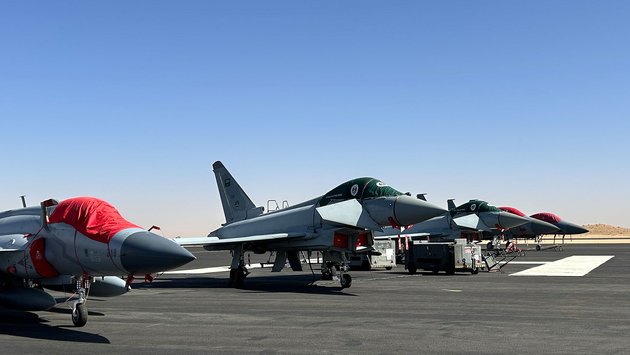
The exhibition grounds, located about two hours from Riyadh in the middle of the desert, immediately conveyed the ambitious scale of the event. The sheer size of the site, the demonstration possibilities in open airspace and the elaborate presentation of military systems were impressive.
This was complemented by exciting and forward-looking presentations and panel discussions by high-ranking executives from the military, government and industry, which focused in particular on the future of defense, technological innovations and the localization of the defense industry within the framework of “Saudi Vision 2030.”
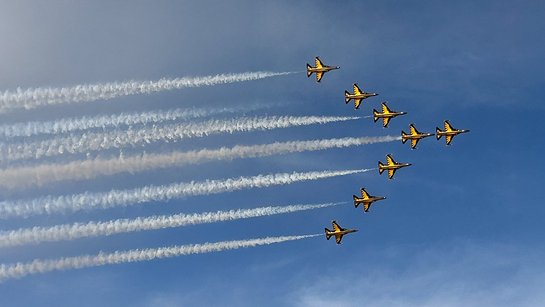
The aerospace sector was particularly well represented – ranging from the Saudi Air Force to international players such as the US Air Force.

Major OEMs such as Lockheed Martin, Diehl and Leonardo were also present. In contrast to European trade shows, European suppliers, particularly mid-sized industrial companies, were hardly represented. Meanwhile, exhibitors from Asia and Russia demonstrated a strong presence, including a Russian pavilion – something that would be almost unimaginable at leading European trade fairs.
The overall impression: defense is not discussed cautiously here – it is approached and implemented with determination. Systems, including multi-armed vehicles, could even be tested by trade show visitors themselves.
Major industry trends

There was a clear focus on unmanned systems. Drones, whether for combat, evacuation, logistics or medical missions, dominated the exhibition. Particularly striking was the increasing integration of autonomous platforms and artificial intelligence. Drone systems that deploy additional drones demonstrate how fundamentally military strategies are evolving.
This development may mark a revolution in warfare. It remains to be seen what specific scenarios will emerge. However, the large-scale deployment of AI-supported unmanned systems will also permanently transform the industrial value chain.
At the same time, there is a strong trend towards national sovereignty: production capacities are being deliberately relocated to domestic markets in order to reduce dependence on third countries. This means new plants, new production lines and new investments – and therefore new requirements for automated production and surface finishing technologies.
Potential for shot blasting and mass finishing technologies
Significant opportunities for surface finishing are emerging in this context.
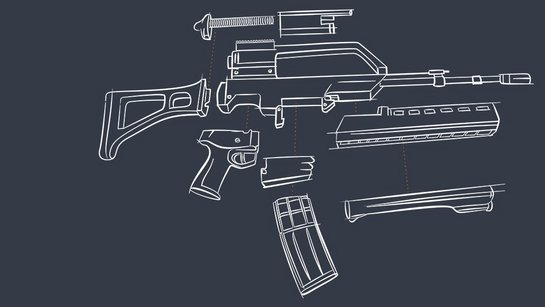
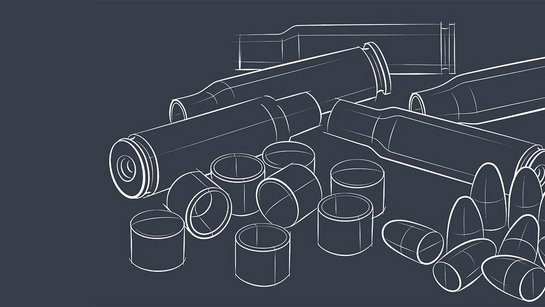
In the field of armored vehicles and structural components, processes such as shot peening are essential for ensuring strength and reliability of components. Precise mass finishing technology plays a central role in the manufacturing of ammunition components and weapons. Additional applications exist in aerospace as well as in highly dynamic components used in unmanned systems – drone parts also require a defined surface finish.
Rösler is by no means new to the defense sector. Its technological expertise is demonstrated by references with companies such as Krauss-Maffei, GKN and Rheinmetall, as well as specialised solutions for ammunition processing. The ability to seamlessly integrate shot blasting and washing and drying systems into complete production lines supports efficiently coordinated processes and provides customers with additional options.
Synergies through “Partners for Defence”

Against the backdrop of the defense industry's rapid global development, networks such as “Partners for Defence” (P4D) – of which Rösler is a founding member – are gaining strategic importance. This alliance of specialized industrial companies combines expertise in automation, robotics, drive technology, dosing and plastics technology, machine vision and surface finishing.
The goal of P4D is to create synergies, share expertise and jointly implement powerful, highly automated production solutions for the defense industry. Through this close collaboration, Rösler can not only position its own technologies but also offer holistic manufacturing concepts as part of a strong network. At the same time, joint appearances at international events increase the visibility of all partners – an important factor in a politically sensitive market environment.
Conclusion
The World Defense Show clearly demonstrated how dynamically the global defense market is evolving – technologically, strategically and geographically. The trend towards unmanned, AI-supported systems, the massive expansion of national production capacities and the strong localization of manufacturing are opening up new market potential.
For Rösler, this means that there are extensive application possibilities for shot blasting and mass finishing technologies, but the requirements are becoming more complex and accessing the market is becoming more challenging. To be successful in this environment, it is essential to maintain a strong presence, cultivate networks and understand the market firsthand. Then it offers great opportunities for innovative surface technology.