Solution Finder
SOLUTION FINDER

Ваш гид по миру продукции Rösler

Всего за несколько кликов вы найдете машину, соответствующую вашим потребностям!

Результаты: 235 Статья - 53 Продукты

Wet Blasting Equipment & Media, Part 3 – Maintain Slurry Concentration for Finishing Consistency

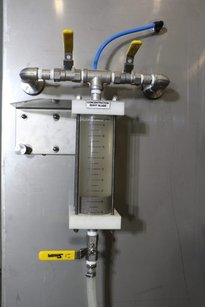
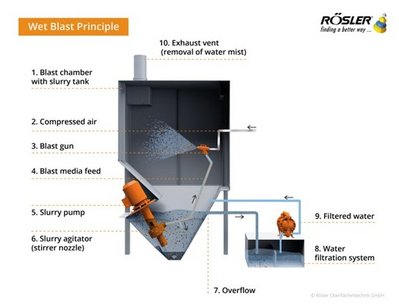
Wet blasting propels a mixture of media and process water at the surface of a work piece to provide cosmetic (anti-glare) finishes, surface smoothing , deburring , de-powdering, decontaminating, and cleaning after casting, welding, machining, and additive manufacturing . Useful in a variety of industries , this specialized form of shot blasting relies heavily on the media and water mix known as wet blasting slurry to work in tandem with the machinery in order to deliver the desired finishing results. Rosler has extensive experience developing wet blasting systems as well as providing guidance on slurry concentrations and supplying the necessary consumables . Slurry Characteristics Wet blast schematic The slurry is created in a tank housed within the blast chamber by mixing water and an abrasive media. A special pump delivers the slurry to the blast gun where it is then propelled onto the work surface using compressed air. High-speed impact of the slurry on the surface of the work piece creates the desired blasting effect, be it cleaning, coating preparation, cosmetic surface texturing, or peening . Wet blasting in process The concentration of abrasive media in the slurry usually amounts to 10-40% by volume, for example, 20% media and 80% water, etc. Establishing the ideal concentration may require extensive processing trials initially or if the work pieces and their original condition change. In these cases, contact the machine manufacturer for guidance. Controlling Slurry Concentrations Regular and gradual slurry loss is expected even in a well-calibrated finishing operation. During the blast process the media wears by becoming smaller or fracturing. These smaller and irregular pieces must be removed from the system. To make up for this loss and removal of undersized media, new media must be added. Maintaining a very tight tolerance range of 1-2% in the prescribed slurry concentration is required to achieve consistent results. For smaller systems, maintaining slurry concentration can be done by visual inspection of the media-to-water ratio in the graduated viewing glass of the concentration measurement unit and manually adding media as needed. In larger blast systems, the slurry concentration is controlled automatically with an ultrasonic level sensor, a weighing system, or continuous density measurement. Adding media to the desired concentration level can be done manually or through an automated, PLC-controlled media adder. Manual slurry concentration measurement unit The Rosler Way Rosler has more than 80 years of experience in shot blasting. Whatever your wet blasting challenges are, we are confident that we can deliver a solution. Contact us to discuss your needs today! Previous posts in the Wet Blasting Equipment & Media series include: Part 1 – “Machines Range in Complexity, Uses.” Part 2 – “Technical Components Combine for Systematic Success.” Upcoming posts will include: Part 4 – “Internal Cleaning, Rebuilds Prolong Machine Lifetime.” Part 5 – “Careful Media Selection, Additive Use Impact Results.” Sign up for enews alerts to be notified of new posts!
MultiShape ceramic media

Innovative consumables for mass finishing operations

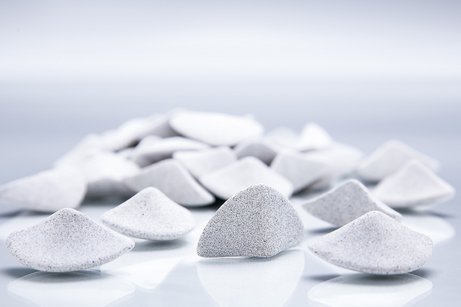
Simple steps to improve finishing results, sustainability and efficiency When it comes to achieving the required quality of products by surface refinement, the mass finishing technology can be used for a broad range of different finishing tasks. With its comprehensive research & development activities the Rösler Oberflächentechnik GmbH continues to generate new technical highlights not only for the machine technology but also for the respective mass finishing consumables. Three recently introduced products make it possible to significantly improve the finishing results, the process consistency, the cost efficiency and sustainability of mass finishing operations. At the same time, they open the door for new applications, for example, the finishing of complex, cup-shaped work pieces. The mass finishing technology can handle all kinds of surface finishing tasks ranging from the simple deburring/edge radiusing and surface grinding to high gloss polishing of mass-produced bulk goods and single components. It can even create special effects on the surface of the work pieces. Of course, like any other industrial processes, mass finishing operations must comply with all kinds of requirements such as high quality standards, process stability, work piece traceability and cost-efficiency. More recently optimal resource utilization and sustainability have become a focal point in numerous industries. And finally, the rapidly growing automatization and digitization of manufacturing operations also calls for specially adapted solutions for mass finishing operations. For decades the Rösler Oberflächentechnik GmbH has met these challenges with comprehensive research and development in the equipment sector as well as in the fields of process and automation technology and consumables. In this context a big advantage is that Rösler is producing all its consumables in-house. Rüdiger Böhm, global R & D manager at Rösler, explains: „We study the technical trends and requirements in numerous industries and markets extensively. Our findings are then systematically utilized for the development of innovative products to provide a significant incremental value to our customers and to expand the application range for the mass finishing technology”. MultiShape – a unique media shape that makes the impossible possible Such an innovation is the new MultiShape ceramic media. Compared to all other products currently available in the market, this media has a patented shape without any flat, parallel surface areas. On the one hand this unique design prevents media lodging in the work pieces, which can occur particularly in case of complex work pieces. Such lodged media can severely affect the finishing process and must frequently be removed by hand. On the other hand, the shape with its rounded surface areas allows the surface refinement of work pieces, which to-date could not be handled by mass finishing at all or only with very complicated operational setups. This includes components with difficult-to-reach surface areas like tight radii, undercuts, notches and slits, which can frequently be found in stamped and bent components. The unusual ceramic media also allows the effective and homogeneous finishing of external and internal surface areas on tube segments and cup-shaped components like housings and deep drawn parts. Compared to traditional ceramic media, the new product is also characterized by a faster and more dynamic motion of the work piece/media mix and a higher material removal rate. This results in up to 10 % shorter finishing times. Therefore, the new media represents a significant contribution towards higher productivity and cost-efficiency. Another important attribute of the MultiShape media are its uniform wear characteristics. This excellent shape retention feature allows a longer media use, which is positively affecting the operating costs. The grinding intensity can be adjusted to the respective finishing application through different ceramic compositions. Mass finishing without foaming – increased process stability, efficiency and sustainability Unwanted foam is a common phenomenon in mass finishing processes with plastic media, even with foam-reduced media versions. Foaming can be problematic because, acting as a buffer between the work pieces and media, it reduces the grinding performance and material removal rate. This can diminish the process stability, and the processing aim can frequently no longer be achieved within the defined cycle time. Moreover, the foam containing metal and media fines contaminates the surface of the finished work pieces. The foam also causes a deterioration of the process water cleanliness, requiring a higher compound dosing rate and forcing the user to replace the process water more frequently. Last-but-not-least, foam discharged from the mass finishing machine contaminates the working environment. In the past the users tried to control the foaming by adding special chemical compounds. But this was not very successful, caused additional costs and reduced the process sustainability. With its non-foaming plastic media, the so-called “N” version, the R & D department at Rösler has now developed a better solution. Christian Höhn, head of the technology management at Rösler, explains: ”Prior to introducing the product in the market we conducted extensive field trials with special pilot users. The trials proved convincingly that the non-foaming plastic media has the same grinding characteristics and performance as the standard product”. The trials also demonstrated that with the newly developed media the mass finishing processes are running much more stable, and the required results are achieved in shorter cycle times. This positive effect regarding cost-efficiency and sustainability is augmented by a longer usable life of the media and process water and a reduced compound usage. ”Because of the disruptive foaming many users had been using ceramic media, even though this was not the best option. For these users the non-foaming plastic media version is a great opportunity to optimize their finishing processes”, concludes Christian Höhn. All plastic media in the comprehensive Rösler portfolio are available in the non-foaming “N” version. Dust-free drying with organic drying media The third new development in the consumables sector in 2021 allows a significant reduction of the dust occurring during drying processes utilizing organic drying media such as maizorb. Even in small quantities the liquid, easily dispensable, Anti-Dust additive significantly reduces the formation of dust. Depending on the operating times and work pieces the additive can be manually added or dosed fully automatically. The Anti-Dust additive is employed in drying operations for metal and plastic components, whenever organic drying media is used. Without negatively impacting the drying performance it guarantees absolutely spot-free surface finishes. At the same time, dust residues on the finished work pieces and the surrounding area are minimized. This also represents a huge step towards a clean, low-dust working environment. Rainer Schindhelm, division manager of the consumables production, explains: „Because it is purely organic and complies with the prevailing food standards, the Anti-Dust additive also represents a significant contribution towards a cleaner environment”. Increasing the productivity of the mass finishing technology, improving overall sustainability and reducing CO2 emissions; these are the main goals of the development work at Rösler in the year 2022. Various solutions from the sectors equipment technology and consumables are already being tested at various customers.
dosing unit RDS-pH 10

Automated dosing system blocks legionella

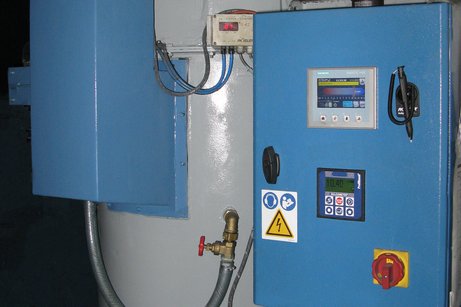
Like evaporation cooling systems and cooling towers, wet dust collectors can be the source of hazardous legionella. To eliminate such a risk for the respective personnel the 42nd BImSchV obliges the operators of such installations to maintain a high degree of transparency and to conduct regular, time consuming and costly controls. The dosing system RDS-pH from Rösler has proven to be a highly effective and cost-efficient alternative to these controls. In combination with a specially developed additive it automatically maintains the pH value of the process water above a level of 10 and, thus, prevents the formation of legionella. The process water in cooling towers and evaporation cooling systems is an ideal breeding ground for legionella and other microorganisms. The same is true for wet dust collectors used for neutralizing the explosive dust created during shot blasting operations with work pieces made from aluminum and other non-ferrous metals. Since the water is sprayed, aerosols containing legionella can contaminate the environment around the equipment and become a health hazard for the personnel working nearby. With the 42nd administrative order regarding the federal emission protection law of Germany (42. BImSchV), in effect since August 2017, comprehensive and strict obligations for the operators of such systems were imposed. For example, their operation must be reported to the authorities, and the process water must be analyzed by an approved test lab during the startup phase. Regular controls during operation According to these regulations, an operating log must be maintained, in which the results of the required regular bi-weekly internal microbiological tests for the presence of legionella are documented. The results of tests conducted by an approved external test lab every three months must also be recorded. Compliance with these requirements can be quite costly! Violations of the 42nd BImSchV regulations and missed deadlines are punishable as legal infractions of the law. Always on the safe side with an automatic dosing system The BImSchV provisions also describe ways to avoid the complicated and costly controls. The regulations do not apply to operators who consistently maintain a pH value of 10 or higher in their process water. However, irrespective of this, an operator log must be maintained and kept up-to-date. For this purpose Rösler has developed the dosing unit RDS-pH 10 and additive RST-P1 allowing the automatic compliance with the BImSchV provisions. The dosing unit, maintaining the pH value of the process water in the required alkaline range, can be connected as stand-alone system to practically any wet dust collector regardless of the manufacturer. It is equipped with a measuring device that continuously monitors the pH value. As soon as the pH level falls below 10, a certain amount of additive is injected to increase the pH value. This prevents the formation of legionella consistently and reliably. The measured values are transferred from the dosing unit to a USB memory drive. The data can then be easily analyzed and visualized with a special Excel tool. This procedure is in full compliance with the requirement to maintain an operating log. Improved safety and cost-efficiency All these benefits convinced Emanuele Cassataro, manager of the die-casting department at the GSB Aluminium GmbH to install the dosing unit. This company, located in Wuppertal, Germany, is utilizing casting, forging and friction welding technologies to make aluminum components for various industries, such as automotive, machine building and medical engineering. About 80 percent of the die-castings made from a variety of aluminum alloys and weighing between five grams and eight kilograms undergo a shot blasting process. A side effect of this operation is the creation of explosive dust that is neutralized by a wet dust collector. Emanuele Cassataro explains: „Initially we had to replace the process water on a weekly basis to prevent the formation of legionella. Naturally, this was quite costly. Therefore, we looked for a simple and inexpensive solution to comply with the regulations of the 42nd BImSchV”. During his search the department manager found out that by increasing the pH level of the process water the formation of legionella can be prevented. Subsequently, the company chose the dosing system RDS-pH 10 from Rösler. Besides its excellent functionality and high cost-efficiency another decision factor for this dosing unit was that the shot blast machine and wet dust collector were also supplied by Rösler. „We prepared a detailed documentation of the technical features of the dosing system for the authorities. For this reason we must no longer conduct internal measurements nor have external test labs conduct any controls”, reports Emanuele Cassataro. In the meantime the dosing system has been in operation for about 18 months. Since its installation the process water did not have to be replaced once. Fresh water is automatically added to offset losses due to evaporation and sludge discharge. The continuous pH measurements of the dosing system and the injection of a suitable amount of additive ensure that the pH value of the process water is always above 10. The department manager concludes: „I am very pleased with this solution. On the one hand the risk of legionella formation has been reliably eliminated. And on the other hand the entire shot blasting operation has become more economical because we no longer have to replace the process water and conduct costly controls. The system works so well that in September 2021 we purchased a second Rösler dosing unit for a wet dust collector from another supplier”.

Mass Finishing Process Water, Part 1 – Understand When to Balance Flow or Flood the Process Bowl

Maintaining the correct compound and water flow rate into a mass finishing machine is essential for the stability and success of a process. If inadequate compound and water are supplied to the machine, results will be more extreme and lead to unpredictable processing times, ineffective finishing, dirty work pieces after finishing, glazed media, and, potentially, a total collapse of the process. Excessive compound and water flow can be equally problematic. Too much water and compound will slow down the movement of media and work pieces in the machine or cause a complete stop. For example, in rotary vibrators the typical spiral movement of the media/work piece mix will give way to an uncontrolled shaking. In centrifugal disc machines , the rotating spinner will slip under the media/work piece mix with no movement at all. Longer processing times, poor finishing results, and even a complete collapse of the process can occur. For the best results and stability, Rosler understands that the flow rate of compound and water into the machine must be equal to the flow rate out of the machine. What Goes In, Must Come Out Compound and water fulfill distinct and important functions. The compound removes stains, dirt, and oil from the work pieces; burnishes and brightens them; and keeps the media clean. The water dissolves and distributes the compound in the machine, serves as a coolant for the finishing process and, above all, flushes out media and metal fines, and other contaminants from the machine. Hence the importance of matching the amount of compound and water entering the machine to what is flushed out. For example, if the drains are plugged with undersized media and debris, the compound/water mixture can become contaminated with media and metal fines and fail to remove oil and contaminants from the machine, jeopardizing results and machine functions. Optimizing Operations Achieving and maintaining a well-balanced process requires proactive evaluation and machine oversight. Key action points include: Regularly monitoring the compound and water flow and make sure that it is as specified. Ensuring that machine drains are not plugged and flowing easily. Installing bigger undersized media screens if drains are easily backed up. “Flooding” Benefits Mass finishing media in a flooded work bowl In some circumstances, it may be advantageous to run a process with high water levels or “flooding” the processing bowl with additional water. Keeping in mind that too much water and compound in the machine can slow or completely stop movement of media and work pieces in the machine, extra process water can be used to provide an extra cushioning effect and reduce machine intensity to create a gentler process. This prevents delicate work pieces from getting scratched or bent and even allows for certain polishing operations. Flooding the processing bowl can also protect the machine itself. For example, very pointed work pieces with sharp edges can undergo an initial deburring process in high water mode to help protect the bowl’s wear lining. Once the sharp points and edges are slightly rounded and pose a lower risk of destroying the wear lining, the processing mode can be switched to a normal water level for additional finishing. High water level mode is primarily utilized in high-energy systems like centrifugal disk finishing machines. Consult with your supplier to determine if running with high water is possible and feasible for your specific application. The Rosler Way “Finding a better way…” is more than a motto at Rosler; it’s our mission. With more than 80 years of experience and a portfolio containing more than 15,000 equipment and consumable products, solving challenges is what we do. Contact us today to discuss your process water challenges! The complete Mass Finishing Process Water Series includes: Part 1 – Understand When to Balance Flow or Flood the Process Bowl . Part 2 – Maintain Adequate Drainage to Protect Your System .

Equipment Investment Doubles Work Piece Longevity at Andersen Steel

Andersen Steel produces agricultural equipment including grubbers, front packers, and stubble tillers equipped with vibration tines for soil cultivation. Their equipment is exposed to extreme loads, causing decreased wear life of parts including the tines. Made using specially arched rolled steel at the company’s Poland plant, Andersen Steel tasked engineers at Rosler with finding a better way to process the tines and improve their wear life. We delivered a solution in the form of two identical machines for blast cleaning and shot peening . Delivering a Solution Compared to flat steel, the rounded edges of the material Andersen uses prevent small cracks from forming during the shaping process. The work pieces pass through a blast machine to remove mill scale and other contaminants before shot peening to further improve their wear resistance. For these dual shot blasting requirements, Rosler suggested two identical Rosler RHBD 13/18 K hanger machines . Successful blasting trials in a Rosler test center helped Andersen realize the advantages of purchasing these Rosler machines by demonstrating that shot peening the work pieces doubled the uptime of the tines. This improvement considerably exceeded the expectations of Andersen Steel and justified their investment in new equipment. Work pieces pass through two identical, subsequently arranged hanger machines for blast cleaning and shot peening in Andersen Steel's RHBD-K shot blasting machine. Technology in Action Each of the hanger blast machines is equipped with eight Gamma® 400G turbines featuring installed power of 15 kW each. Compared to conventional blast wheels this uniquely designed Rosler turbine style offers a 15–20 percent higher blast performance with double the uptime of wear parts like throwing blades. Pairs of two turbines located in the four corners of the blast chamber bombard the tines with media . The turbines are positioned to ensure that the individual blast patterns do not overlap, creating perfect blast coverage on the tines. Each blast machine is equipped with eight Gamma 400 G turbines strategically placed to ensure perfect blast coverage on the tines. Since the different work piece types require different media throwing speeds, the turbines are equipped with variable frequency drives. After the shaping process, work pieces are attached to the transport system on special carriers which move the components through the blast-cleaning, shot peening, painting, and drying stages. Vestibules equipped with multiple overlapping curtains are installed on the inlet and outlet side of the blast chamber to prevent blast media from spilling out of the machine. A sensor recognizes when a carrier enters the inlet vestibules and sends a signal to the machine controls to start the blast process. The Rosler Way “Finding a better way…” is more than a motto at Rosler; it’s our mission. With more than 80 years of experience and a portfolio containing more than 15,000 equipment and consumable products, solving challenges is what we do. Contact us today to discuss your shot blasting challenges!

Surface Preparation Standards, Part 2 – Dust Measurements and Considerations

As an expert in the surface finishing industry, Rosler knows that all the expertise in the world won’t do any good if the surface of the work piece is not properly prepared. When it comes to structural steel , we receive many questions about preparation. Among the most common questions is, “ How is the presence of dust on shot-blasted structural steel components evaluated?” Understanding dust considerations and mitigation will help produce higher quality and longer-lasting structural steel components more cost-effectively and safely. The Dangers of Dust Blast-cleaned structural steel surfaces must be completely free of dust to ensure proper coating and painting. Residual dust will reduce the adhesion of subsequently applied coatings and, by absorbing moisture, may promote the corrosion of the blast‐cleaned steel surfaces. The potential accumulation of dust is especially critical on horizontal surfaces, the interior of pipes, and inside structural cavities. Special inspections must be carried out to ensure that such areas are adequately cleaned and free from dust before painting. Standards of Assessment The most common standard of assessment for dust is ISO 8502–3:2017. Also known as the pressure‐sensitive tape method, this ISO standard describes a procedure to test shot blasted steel surfaces for dust and provides a reference description and photo with six dust ratings for comparison. On a scale of 0 to 5, the observation of dust particles and diameter are rated as follows: Visual rust scale 0 – No particles are visible under 10x magnification. 1 – Particles are visible under 10x magnification but not with normal or corrected vision; particles are usually less than 50 μm in diameter. 2 – Particles are just visible with normal or corrected vision; usually between 50 and 100 μm in diameter. 3 – Particles are clearly visible with normal or corrected vision; up to 0.5 mm in diameter. 4 – Particles are clearly visible; between 0.5 and 2.5 mm in diameter 5 – Particles are clearly visible; larger than 2.5 mm in diameter Testing for Dust ISO 8502 testing kit Special ISO 8502 kits include a 10x magnifier, adhesive tape to ISO 8502‐3 specification, comparator display board/operating instructions, a dust assessment plate, and 25 test record sheets. Proper procedure is required to accurately test for ISO 8502-3 using the kit. Remove a piece of tape about 8 in (200 mm) long. Place the sticky side of the tape onto the test surface; rub along the length of the tape using constant pressure several times. Pull the tape away from the test surface, compare the dust on the tape with the comparator display board and record the estimated dust rating number. Repeat the test at least three times on the surface being investigated. Minimum Requirements The dust test per ISO 8502‐3 is subjective and does not allow the precise determination of dust on a blast cleaned surface, but the rating can be a very useful approximation when carried out by experienced operators. Painting schedules usually call for shot blasted surfaces prior to painting to be free of dust. A generally accepted rule stipulates that the particle quantity and particle size do not exceed rating 2 of ISO 8502‐3. Rosler blow-off station Removing Residual Dust To remove residual blast media and dust from the work pieces shot blasted steel components are usually passed through a blow‐off station. These stations are frequently combined with a brush‐off system. The Rosler Way Rosler has more than 80 years of experience developing surface finishing technology and systems. We are confident that we can answer your surface finishing questions and develop a solution to meet your needs. Contac t us today to discuss your unique challenges. Additional information about surface preparation standards is available in Part 1 of this series, “Evaluating Surfaces Throughout Finishing Processes.”

Surface Preparation Standards, Part 1 – Evaluating Surfaces Throughout Finishing Processes

Surface preparation can account for up to 40 percent of structural steel painting and repainting jobs and the life of anti‐corrosion coatings on a steel surface largely depend on how thoroughly the surface was prepared before painting. At Rosler , we have extensive experience evaluating structural steel surfaces for coating before and after shot blasting. This knowledge of surface preparation standards and the widely used ISO and SSPC standards guide us in developing systems to expertly prepare and repair structural steel throughout its lifespan. The Standards Evaluating rust and mill scale pre- and post- shot blasting is a must. It is important to clearly specify the quality of the surface prior to preparation as well as the surface conditions after preparation. As a result, standards were developed to visually assess the initial surface conditions and the quality of the required surface preparation relative to the initial steel surface conditions. The dominant and widely used standards for evaluating rust and mill scale are ISO 8501‐1:2007 (based on the Swedish Standard SIS 05 59 00) and the SSPC (Steel Structures Painting Council) . While different in some minor details, these standards are practically identical. Pre-Paint Conditions In specifications relating to the preparation of surfaces prior to painting, the SSPC and SIS designations correspond as follows. Corresponding SSPC and SIS designations Rust Grades The standards identify four initial rust grades based on visual evaluation before surface treatment. The following examples illustrate and describe the four ratings. Visual comparison of rust grades A – The steel surface is covered completely with adherent mill scale and little, if any, rust. B – The steel surface has begun to rust and mill scale has begun to flake from the surface. C – The steel surface on which the mill scale has rusted away or from which it can be scraped, shows little pitting visible to the naked eye. D – The steel surface on which mill scale has rusted away shows considerable pitting visible to the naked eye. Preparation Grades After blast cleaning, the standards define four preparation grades. The appearance of the shot blasted surface must correspond to one of the following descriptions and standards: The cost to achieve longevity of each grade varies and should be considered based on initial cost as well as lifetime costs based on your structural steel’s uses and expected lifespan. Brush‐off – After light blast cleaning loose mill scale, rust, and foreign matter are removed. Despite being the least expensive grade of the four, brush-off preparation may not hold paint and coatings as well as the other grades and often requires more frequent resurfacing. Commercial – Thorough blast cleaning removes almost all mill scale, rust, and foreign matter. While normally adequate in a non-corrosive atmosphere, this grade is a more labor- and cost-intensive option compared to brush-off preparation. Near White – Very thorough blast cleaning removes mill scale, rust, and foreign matter to the extent that the only remaining traces are light stains in the form of spots and stripes. This grade is fully acceptable for most somewhat-corrosive environments. It is the most common preparation grade for ship building and most industrial and commercial weldments and fabrications. White Metal – Blast cleaning reveals pure metal. This grade is very expensive and typically reserved for applications in which the costs of coating failure are catastrophic, for example, for tanks containing highly corrosive, hazardous chemicals. Preparation Grade Examples Based on ISO 850-1 The different preparation grades depend on the initial rust grade. ISO 850-1 standard grades are presented below to provide visual examples. SSPC Vis 1/89 incorporates similar visual comparisons. Visual comparison of preparation grades The Rosler Way Whatever your pre- and post-treatment goals, count on Rosler to help you find a better way. To demonstrate our capabilities, we offer FREE sample processing in our global test centers . Contact us to discuss your surface finishing goals and challenges. Learn more about surface preparation standards in part two of the series, “Dust Considerations and Measurement” , and sign up for enews alerts to be notified of all new posts!
RHBD 17/32-K

Interlinked, automated shot blasting system improves the quality and reduces costs

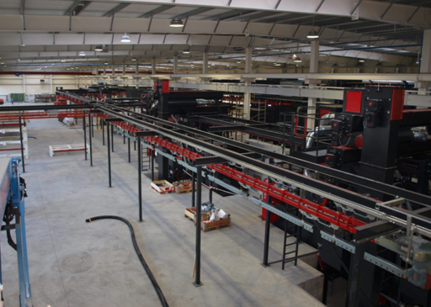
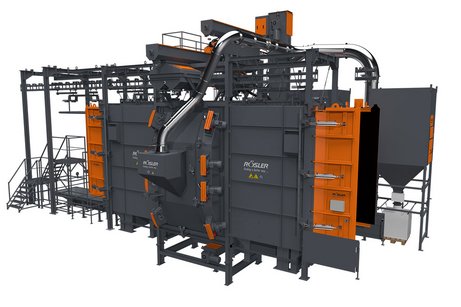
When a Polish manufacturer of complex steel weldments was ready to invest in a new shot blast machine, quality, capacity, high equipment uptime and integration into the manufacturing flow were the key selection criteria. As an essential part of the pre-treatment operation for a cathodic painting line, the new shot blast system had to produce optimal surface preparation results within an interlinked work flow in a 3-shift operation. The company chose a Rösler RHBD 17/32-K continuous feed spinner hanger blast machine because of its wear-resistant design and favorable operating costs. The specialty of the Stelweld Sp.o.o. is the production of complex steel weldments, including machining, laser and CNC cutting, bending as well as wet painting and powder coating. With this market philosophy the company, founded in 1997, has established itself as a key supplier for such diverse industries as automotive, agricultural and construction equipment, cranes, including all kinds of lifting equipment, renewable energy and rail transport. Among many other companies Stelweld also sells its products to Scania, Volvo, Bombardier and Cargotec. In the year 2019 a new building was erected to provide space for a new, fully automated cathodic painting line (KTL) with 16 operating stations and a power & free transport system. Danuta Dobrzynska, project manager at Stelweld, comments: „Within the framework of this expansion we also wanted to automate the shot blasting operation and integrate it into the painting line. To date, the paint preparation process was predominantly done manually”. Sturdy equipment design and convincing test results A high capacity, excellent shot blasting results, an outstanding equipment uptime and a high cost efficiency were the other key selection criteria. Among the five shot blast equipment manufacturers who were considered as potential suppliers, the customer chose Rösler with its continuous feed spinner hanger blast machine RHBD 17/32-K. „I was familiar with Rösler through a project I dealt with, when working for another company. Rösler does not offer the lowest price. But with regard to quality and technical features this supplier offered many advantages. Compared to the competitive products all essential components of the Rösler shot blast machine consist of wear-resistant materials, such as the throwing blades of the turbines, which are made from forged tool steel”, explains Danuta Dobrzynska the decision for Rösler and continues: „Another key factor for our decision were the results of the shot blasting trials that were conducted with some of our original components. In the Customer Experience Center at Rösler we achieved excellent shot blasting results, which provided valuable pointers for our actual shot blasting operation”. Technical features that ensure excellent results, outstanding efficiency and high uptime The continuous feed spinner hanger blast machine RHBD 17/32-K allows the blast cleaning of a very wide spectrum of three-dimensional weldments with dimensions of up to 2,500 x 1,200 x 3,000 mm (L x W x H) and weights of max. 1,250 kg. At cycle times of 6 to 8 minutes the automatic shot blasting process produces a finishing quality of SA 2,5 on the entire surface of the steel weldments and surface roughness values that are in full compliance with the standards defined by Stelweld and its customers. This ensures an excellent paint adhesion on the work pieces. To achieve such demanding results, the shot blast machine is equipped with 16 Gamma 400G turbines, each with a drive power of 15 kW. These high performance turbines, developed by Rösler, are furnished with throwing blades in “Y” design. Compared to conventional turbines, the special blade geometry with its precisely calculated curvature produces a very high throwing speed with, at the same time, a lower energy consumption. This results in an up to 20% higher shot blast performance. Moreover, because of their symmetric design both sides of the throwing blades can be used resulting in a two-fold increase of the usable blade life. Thanks to a special quick-change system blade changes can take place without having to dismount the turbine. The turbine placement (position and angle) was determined with a special simulation of the shot blast process. The highly focused blast pattern also contributes towards the high efficiency of the shot blasting process. In order to adapt the blast media throughput of up to 200 kg/min to the geometry of its steel components, Stelweld is utilizing three different shot blasting programs. The rotational speed of the turbines is adjusted by frequency inverters. This allows the precise control of the impact energy of the blast media on the work piece surface. For optimum wear protection and, thus, a long equipment life, critical sections of the inlet and outlet chamber are fabricated from 6 mm thick manganese steel. The same material, this time 8 mm thick, is used for the blast chamber. Furthermore, the blast chamber is protected by overlapping, easy-to-replace wear plates made from high-strength materials. Sturdy rubber curtains in the inlet and outlet chamber, as well as the protection of gaps with multiple rubber seals and brushes, prevent any blast media spillage to the immediate environment. „The turbines, the entire equipment design and the used materials guarantee a high uptime. This ensures a safe, trouble-free and energy-efficient operation”, concludes the project manager. Fully automatic, interlinked operation produces repeatable high quality The power & free transport system transports the steel weldments, containing a QR code for the automatic selection of the respective shot blast program, to the shot blast machine. As soon as a trolley with one work piece has entered the inlet chamber, the double leaf doors are closing, and the turbines, the blast media return system and dust collector are starting automatically. During the shot blast process the work piece is passing through the blast chamber at a pre-defined speed. The 16 blast turbines ensure an intensive cleaning of all work piece areas with highly homogeneous and consistent shot blasting results. Two dropout boxes placed in the duct connection between shot blast machine and dust collector make sure that the generated dust is evacuated from the blast chamber, whereas re-usable blast media is returned into the shot blast machine. The shot blast machine is accessible behind the outlet chamber. This allows the manual removal of residual blast media from the weldments, especially those with cup-shaped sections. An auger in the bottom returns the removed blast media to the media recycling and cleaning system consisting of two cascade air-wash separators. Subsequently the blast cleaned work pieces are transported to the KTL painting line. Danuta Dobrzynska concludes: „Compared to our previous manual shot blast operation the new shot blast machine achieves considerably better and much more consistent shot blast results in a much shorter time cycle. This allows us to employ our qualified personnel for more productive work, helping us to create more added value. Through savings in energy consumption and other operating costs the overall shot blasting operation has become considerably more economical”.
Rösler Smart Solutions

Webbasierte Fernwartung: Rundum-Sorglos-Service für Ihre Strahlanlage

Um Stillstandzeiten bei Strahlanlagen möglichst gering zu halten, gehört für viele Unternehmen eine vorausschauende Wartung zum Pflichtprogramm. Bei auftretenden Problemen ist es häufig notwendig, dass Servicepersonal des Herstellers ins Unternehmen kommen muss, um die Störungsbeseitigung durchzuführen. Das kann wertvolle Zeit kosten. Schneller und individueller Wartungsservice dank Wartung 4.0 Mit unserem webbasierten Fernwartungssystem mit Ethernet Verbindungsleitung zur SPS bieten wir Ihnen die Möglichkeit, die Fehlerdiagnose Ihrer industriellen Anlagen und Geräte mittels Fernzugriff auf Abruf und in Echtzeit zu realisieren. Durch einen gesicherten VPN-Tunnel wird im Bedarfsfall mittels Kundenfreigabe eine automatisierte Datenverbindung hergestellt, die es unseren Servicetechnikern ermöglicht, eine schnelle Fehleranalyse vorzunehmen. Auch die unmittelbare Anpassung an der Maschinensteuerung ist im Bedarfsfall möglich. Hierdurch können Sie die wartungs- und störungsbedingten Ausfallzeiten Ihrer Strahlanlage erheblich reduzieren. Mehrwerte: Gesteigerte Produktivität & Wettbewerbsfähigkeit durch unverzügliche Fehleranalyse und -behebung Nachhaltige Reduzierung der Instandhaltungskosten, da Einsätze an der Anlage auf ein Minimum reduziert werden Bereits ab dem ersten eingesparten Störungsfall können sich die Kosten für das Fernwartungssystem amortisieren Technische Aspekte: Maximale Sicherheit durch integrierte Firewall mit AES/SSL Verschlüsselung Durchgehende Nachvollziehbarkeit und Zugriffskontrolle Fernwartungssystem per Hardwareschalter durch Kunden zu – und abschaltbar, d. h. Zugriff auf SPS nur bei Kundenwunsch Zugriff auf alle im Subnetz verwendeten Teilnehmer möglich (SPS, OP, Umrichter, etc.)

Patient-Specific Implants Call for Equally Customized Processing

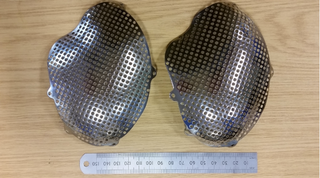
Advancements in medical technology now allow for the development of Patient-Specific Implants (PSI). Specialized computer programs analyze x-rays, ultrasound, and MRI images to create surgical guides, tools, and implants tailored to the patient’s unique anatomy. While still emerging, many medical industry suppliers have received FDA approval for PSI use. Like traditional implants, these implants must be carefully finished once created to ensure the work piece meets stringent medical safety standards while promoting patient comfort and long wear life. The benefits of PSI use include shorter surgery times, better surgical outcomes, and cost savings. True to its “apply innovation” tagline, Renishaw’s Medical and Healthcare Division has found great success in additively manufacturing PSI. Using CT scan-to-CAD software, one of the company’s most innovative advances is creating cranial plates using titanium powder. When determining how to finish the implants to precise medical requirements and surgical demands, Renishaw trusted Rosler for help with mass finishing . The Challenge Renishaw cranial plates after polishing Original commissioning neurosurgeon Bartolomé Oliver required the surface of Renishaw’s cranial PSI to be satin-like in order to best match the patient's cranial contours. Renishaw Applications Engineer Andy Wescott's job then became creating a repeatable and streamlined process to apply a satin and highly polished finish to the top of the cranial plates from their as-built condition. "Traditionally, post-processing these parts to a low surface roughness value was very manual and time-consuming," Wescott said. "The post-process time for a large cranial plate was up to five hours. We needed to reduce that time and the amount of manual input because if an operator working on a part loses concentration for one second, they could burn a hole in your part. “That makes one expensive bit of scrap." Finding a Better Way… Since metal additively printed parts are now of such quality, they can be treated like any other metal part. And Rosler knows a thing or two about surface finishing metal parts, having been in the post-processing game with its mass finishing and shot blasting divisions for more than 80 years. A more mechanized solution presented itself in the form of Rosler’s High-Energy Centrifugal Disc Finishing Machine FKS04 . Now, after a cranial plate comes out of the Renishaw AM250 machine, it undergoes only a small amount of manual operation to remove supports from printing and slightly improve the surface using a carbide burr and flap wheel. It is then placed into Rosler’s FKS where it automatically goes through a three-step process to produce the impeccably smooth finish, reducing manual operating time to under an hour. The clever part, which ensures repeatability on each and every part, comes from a little bit of Renishaw engineering know-how. "We designed a tool to hold our parts in a particular orientation inside the tumbling bowl,” Wescott said. “Rather than just throwing parts into three media types and coming out with a sort of fixed part, our parts require precision. Certain features require protection from the tumbling media, so we've invented a tooling method that keeps parts face down in the media and only applies the surface finish where needed." The Rosler Way Although there isn’t a one-size-fits-all solution for finishing, the collaboration between Renishaw and Rosler demonstrates that post-processing doesn’t have to be a grueling experience. Much like the additive manufacturing process itself, your finishing technique depends on your unique application. Contact Rosler today for help in finding a better way to meet your finishing needs.
Croom chooses Rösler as a strategic partner

Croom chooses Rösler as a strategic partner

Croom Precision Medical chooses Rösler as a strategic partner for the design, manufacture and installation of a dependable orthopaedic implant finishing system. This was no exception when Croom Medical approached Rösler with their plans to expand and increase their production & throughput of medical implants. As an industry leader in utilising high-tech, high-growth, cutting-edge medical device manufacturing technology, Croom Medical has over 37 years’ experience in partnering with global healthcare companies as an outsourced manufacturing service of high precision components and medical devices. The cooperation throughout the project from Croom Medical, the end customer and the personnel involved within the Rösler organisation, both in the UK & Germany, was indispensable from the initial contact through to the final installation & commissioning. The project itself and timeframe was completed within the expected timeline and also, in part, took place under some rather complicated circumstances (COVID-restrictions and required protocol) however, with the support from all at Croom Medical to our installation and engineering team, everything resulted in a commendable operation. With the installation now in place, Croom Medical can immediately proceed with the validation processes to fulfil their promise to their customer and subsequent commitments to patients. The Rösler equipment is designed to polish implants to an agreed standard, set within the industry, where surface finishing after machining is stipulated to provide consistent and reproducible results in a controlled process. The advantage of the Rösler designed system is the ability to finish multiple implants at a time based on the required batch size, which in turn reduces overall cost per part compared to other traditional finishing methods.
Separation of parts

Excellent finish for deep-drawn precision medical components

Deep-drawn functional components are increasingly being utilized in the production of medical and pharmaceutical products. To also meet the strict standards for manufacturing and quality management in the field of surface finishing, Stüken Medical relies on mass finishing solutions and consumables from Rösler. In order to meet the increasing demand for deep-drawn metal components in the field of medical and pharmaceutical engineering, a few years ago the Hubert Stüken GmbH & Co. KG, founded in 1931, established the business division “Stüken Medical”. The product range of this family-owned company includes also stamped and bent parts, plastic-coated components and complex assemblies. The company maintains manufacturing operations at five locations in Europe, Asia and the United States. Andreas Hellman, manager of the ISO 13485 certified business division, explains: „Components used in the field of medical and pharmaceutical engineering must meet strict quality standards. The same strict standards apply also to the actual production operations. For this reason, we have pooled the required knowhow for the development and production of such precision components at Stüken Medical”. Among other items, this division produces complex housings and assemblies, valves, extremely precise micro parts and primary packaging. These components are made from metals suitable for deep drawing, such as stainless steel, aluminum and titanium. To meet the strict quality standards in the medical and pharmaceutical industry, the company utilizes multi-stage cleaning systems and operates two class 7 cleanrooms. The company’s R&D and development department, located at the corporate headquarter in Rinteln, Germany, is continuously exploring the possibilities to expand the range of processes and materials. A team approach for innovative solutions „For many of our customers we are a development partner. To perfectly adapt new products to their intended use, we are not only working with our customers but are also cooperating with partners from various technological sectors”, continues Andreas Hellmann. When it comes to issues around surface finishing that can be resolved by mass finishing, for 30 years the company has been relying on the experience and knowhow of the Rösler Oberflächentechnik GmbH. Andreas Heilmann explains further: „Our long partnership is based on the excellent quality and reliability of the Rösler equipment and consumables. This helps us to ensure that the required results are achieved in a consistent manner”. Dirk Schulz, project engineer at Stüken, adds: „When it comes to the joint development of finishing processes, we value especially the flexibility and expertise of Rösler. In this respect, our access to the Customer Experience Center in Untermerzbach is extremely valuable. Rösler supports us also with documentations and equipment details, required for machinery and processes that must be qualified and validated in line with ISO 13485. At its manufacturing locations around the world this deep-drawing specialist is using around 15 rotary vibrators and 10 centrifugal disk finishing machines for its finishing operations. The company is also operating 18 centrifuges for the eco-friendly and reliable cleaning and recycling of the process water. Strict requirements for the finishing results The deep-drawn components are generally characterized by an extensive degree of material shaping, complex geometries and extremely small dimensions requiring a high dimensional accuracy. This results in especially demanding specifications for deburring, edge radiusing and polishing of external and internal work piece areas. Equally challenging are the surface roughness and surface quality requirements. Dirk Schulz explains: „On the one hand we must ensure that all pieces within a work piece batch receive the same high-quality surface finish. On the other hand, the work pieces must not be damaged or deformed. Last-but-not-least, after completion of the finishing process the work pieces and media must be reliably separated. A carry-over of the work pieces and/or media into the next batch must be prevented at all costs”. In conjunction with polishing jobs, the work piece surface must frequently be marked with an UDI code. To fully meet these specifications requires not only finishing processes that are precisely tailored to the respective work pieces. Likewise, the equipment and consumables must also be adapted. Frequently, this requires conducting special feasibility studies. A process for finishing medical components The process for radiusing the edges on a 20 mm large stainless steel housing for a medical device was developed in close cooperation with Stüken. The project engineer explains the finishing task as follows: „With this delicate housing the main challenge was a large surface area in combination with extremely thin walls. To remove sufficient material at the edges requires a high processing intensity. But the intensity must be tightly controlled to prevent any deformation”. The Customer Experience Center at Rösler is equipped with ultra-modern machines for running a wide variety of different finishing processes. This allows conducting processing trials for defining the most suitable equipment technology under actual production conditions. During such development processes, the processing bowl of standard machines must be frequently modified, sometimes involving substantial engineering changes. For this project, the comprehensive mass finishing experience at Stüken was a valuable source of ideas. To guarantee a reliable and complete separation of the finished work pieces from the media the finishing equipment for Stüken Medical required a few changes in the separation process. Another goal of the processing trials is the determination of the optimal media shape and type (ceramic or plastic) for the finishing task at hand. In order to achieve consistently good surface finishes, very often the media must have extremely tight dimensional tolerances. All ceramic and plastic media are produced at Rösler in compliance with the highest ecological standards. With over 15,000 different products the media, together with the compounds and process water cleaning agents, represents the by far largest range of mass finishing consumables in the world. Key factor for the development of successful finishing processes is the perfect interplay between the right equipment technology and the right consumables (media and compound). Generally, the best results are achieved by close cooperation with the customer. Photos: Hubert Stüken GmbH & Co. KG

Wet Blasting Equipment & Media, Part 2 – Technical Components Combine for Systematic Success

Wet blasting technology lends itself to a variety of processes and industries . From applying cosmetic (anti-glare) finishes and surface smoothing to deburring , de-powdering, decontaminating, and cleaning after casting, welding, and additive manufacturing , wet blasting has many capabilities. Rosler has decades of worldwide experience developing technology and machines customized to each customer’s unique challenges and demands. Each solution we deliver is innovatively designed around core wet blasting components and calibrated to your work piece with carefully selected media and tested process parameters. Basics Components Wet Blast Principle Diagram Regardless of their uses, all Rosler wet blasting machines start with a core group of components. While customized options and accessories can be added, these systems typically include 10 key components. Blast chamber with slurry tank – A mix of media and water is stored in this holding tank found at the bottom of the blast chamber. The chamber is made of stainless steel. Compressed air – Approximately 70 PSI of compressed air accelerates the slurry. Blast gun(s) – One or more guns accelerate the slurry supplied by the slurry pump with compressed air. Blast media feed – This component supplies the media slurry to the blast nozzle. Slurry pump – This high-powered mechanism transports the slurry to the blast gun(s). Larger wet blast systems can be equipped with multiple pumps. Slurry agitator (stirrer nozzle) – In order to keep the media suspended in the water, the slurry pump diverts some of its flow to a stirrer nozzle placed in the tank to agitate the mix of water and abrasives. Overflow – Small media particles, dirt, and other contaminants tend to stay suspended and are skimmed off and sent to the filtration unit. Water filtration system – Media particles and debris skimmed off the water’s surface must be passed through a filtration system to separate still usable media and process water from waste. Common filtration methods include hydrocyclones, weir tanks, bag filters, paper band filters, and semi- and fully automatic centrifuges. Filtered water – Once processed by a water filtration system, water is returned to the slurry tank and reused. Exhaust vent – The water mist mixed with media fines and other small particulates is removed from blast cabinet by suction fan-equipped filters. The Rosler Way We have the experience and expertise to meet your wet blasting needs. Rosler partners with you to find a better way, the best machine, and the best finishing results. Contact us today to discuss your unique challenges. Previous posts in the Wet Blasting Equipment & Media series include: Part 1 – “Machines Range in Complexity, Uses.” Part 2 – “Technical Components Combine for Systematic Success.” Part 3 – “Maintain Slurry Concentrations for Finishing Consistency.” Upcoming posts will include: Part 4 – “Internal Cleaning, Rebuilds Prolong Machine Lifetime.” Part 5 – “Careful Media Selection, Additive Use Impact Results.” Sign up for enews alerts to be notified of new posts!
Ausbildung 2021

Ausbildung & Studium in der Region: Rösler bildet seit über 43 Jahren erfolgreich aus

Insgesamt 15 junge Menschen beginnen am 01. September 2021 eine Ausbildung in einem technisch-gewerblichen oder kaufmännischen Beruf – sowie in dem dualen Studiengang der Wirtschaftsinformatik. Auch in schwierigen Zeiten will der Spezialist für Oberflächentechnik den künftigen Bedarf an bestens ausgebildeten Fachkräften selbst decken. Rösler bleibt somit ein wichtiger Arbeitgeber und Ausbildungspartner für die Region. Trotz der anhaltenden Corona-Pandemie setzt das familiengeführte Industrieunternehmen aus Franken auch in anspruchsvollen Zeiten auf eine nachhaltige Ausbildung von qualifiziertem Fachpersonal – und das seit mehr als vier Jahrzehnten. „Wir verstehen die Ausbildung als ein langfristiges Instrument und dieses braucht Kontinuität“, sagt Anja Süppel, Ausbildungsleiterin der Rösler Oberflächentechnik GmbH, die selbst Ende der 80-er Jahre ihre Ausbildung bei Rösler begann. „Das Thema Ausbildung liegt mir persönlich am Herzen. Viele der heutigen Führungskräfte haben ihre Ausbildung bereits im Unternehmen absolviert, so habe ich auch hier meine Ausbildung zur Industriekauffrau einst erfolgreich abgeschlossen. Zudem konnten wir in den letzten Jahren eine Vielzahl von Auszubildenden in ein langfristiges Beschäftigungsverhältnis übernehmen, damit sichern wir fortwährend Know-how im Unternehmen“. Spannende Projekttage verhelfen zu einem guten Start Schon fast traditionell finden in der zweiten Ausbildungswoche die Rösler Projekttage statt. Diese verschaffen den jungen Nachwuchskräften erste Einblicke in die wichtigsten Geschäftsbereiche des Unternehmens, dienen der örtlichen Orientierung und bieten zudem die Möglichkeit, sich untereinander besser kennenzulernen und als Team zu wachsen. Höhepunkt und Abschluss der Projektwoche ist das gemeinsame „Outdoor-Training“ auf dem Gelände der Freizeit- und Tagungsstätte CVJM in Altenstein. Themen wie „Knigge im Berufsalltag“ oder „Schlüsselqualifikationen“, aber auch ein „Kreativ-Workshop“ sind Topics für die ersten Tage. Mitte September startet bereits die heiße Phase für die Bewerbungen um die Ausbildungsplätze 2022. Das vielfältige Ausbildungsangebot reicht von unterschiedlichen Berufen des technisch-gewerblichen über den kaufmännischen Bereich bis hin zu dualen Studienangeboten. Die Rösler-Gruppe bietet für das Jahr 2022 folgende Ausbildungsplätze an: Industriekaufleute, Chemielaboranten, Technische Produktdesigner, Konstruktionsmechaniker, Industriemechaniker, Mechatroniker, Elektroniker für Betriebstechnik, Fachkräfte für Lagerlogistik, Fachinformatiker. Ein dualer Studiengang ist möglich im Bereich Wirtschaftsingenieurwesen, Wirtschaftsinformatik, Elektrotechnik oder Maschinenbau. Die Partnerhochschule von Rösler ist die Duale Hochschule in Mosbach. - Unabhängig von der Formulierung richten sich alle Ausbildungsangebote an alle Geschlechter gleichermaßen. - Online-Bewerbungen sind ab sofort möglich über die Internetseite: www.rosler.com Bei Fragen zu Ausbildung/Dualem Studium gibt Anja Süppel gerne Infos unter Tel.: +49 9533 / 924-442 oder per E-Mail an: a.sueppel@rosler.com

Centrifuge Technology, Part 5 – Potential Issues and Remedies for Water Recycling

Trial and error are often the origin of innovation. As such, mass finishing and centrifuge technology have been advanced by building upon what worked and avoiding what didn’t. With more than 80 years of experience, Rosler has extensive engineering knowledge and troubleshooting skills. An overview of the top three issues centrifuge water recycling systems experience along with possible remedies are summarized here. As always, trust a partner such as Rosler to consult on your specific issues. Excess Oil in the System Too much oil may be carried into the finishing system by the work pieces, for example, in stamping operations. The excess oil will negatively affect the mass finishing process. The media might become “glazed” causing longer processing times and poorer finishing results. In addition, the finished work pieces may also be contaminated with oil residue. Possible remedies include cleaning of the work pieces prior to mass finishing, for example, with an industrial washing machine, or switching to an alternative oil type that can be better emulsified by the compound for better discharge from the process water. Soft Water Process water that is very soft (i.e. less than 70 ppm or 4.2 gpg) can cause excessive foaming, especially, when plastic media is used. To correct this issue, make sure that you are using special recycling compounds , which are formulated to prevent excessive foaming such as Rosler compounds with the prefix ZF. Use of a defoamer, such as Rosler products ES 3, ES 4, and ES 7, can also correct excessive foaming caused by soft water. Bacteria & Fungus Contamination A very pronounced, foul smell from the process water often indicates bacteria or fungus contamination in the process water. Such contamination can be caused by a variety of factors, including: Longer shut‐down times and stagnation developed over the weekend or during process repairs and plant shutdowns. Too much oil carried into the finishing system, for example, by stampings. Dirt deposits in the form of media and metal fines in the water tanks and the piping. Numerous remedies are available based on the specific cause of bacteria and fungus accumulations, including: Using higher concentrations of special centrifuge compounds that are formulated to prevent bacterial growth such as the Rosler ZF compound range. Adding a biocide to the system to prevent bacterial growth. Ensuring that the process water is always in motion by using stirrers or other aeration methods. Reducing the length of time process water is used before replacement. Periodic cleaning of the tanks and piping, especially during a process water change. The Rosler Way When correctly designed, calibrated, and monitored, centrifuge technology can produce water and compound savings of up to 95% while simultaneously delivering precise mass finishing results. Whether you are researching new equipment or troubleshooting an existing process, contact Rosler for assistance and innovative solutions. Previous posts in the Centrifuge Technology series include: Part 1 – “Water Cleaning Systems Replace Outdated Methods.” Part 2 – “Operational and Economic Benefits of Recycling Process Water.” Part 3 – “Mechanics and Limitations of Water Recycling.” Part 4 – “Pre-Conditions and Consumables Enhance Process Efficiency.”