

Natstralen of slurrystralen – bijzonder schonend voor het oppervlak
Wanneer water en straalmiddel samenwerken
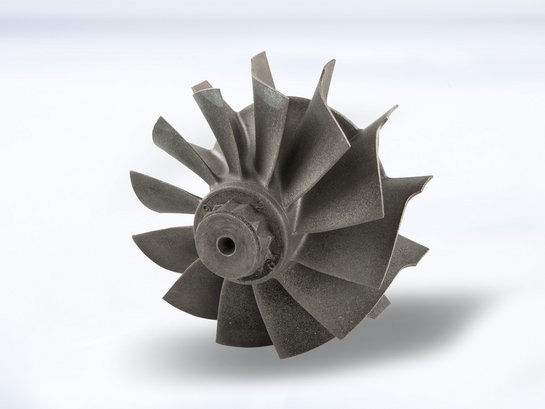
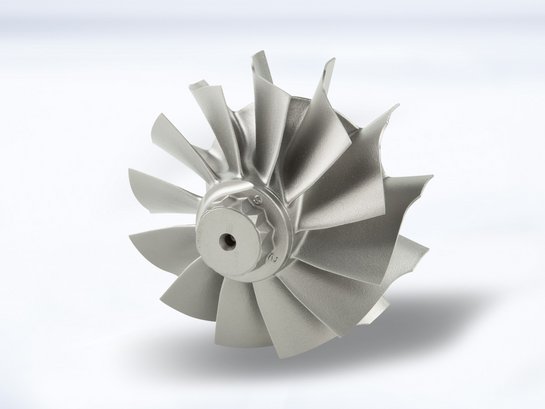

Natstralen, ook wel slurrystralen genoemd, is een bijzonder schonende techniek voor oppervlaktebewerking. Hierbij worden perslucht, water en een straalmiddel gecombineerd en gericht aangebracht op de te bewerken werkstukken en onderdelen. Het procédé verwijdert vervuilingen en creëert gedefinieerde oppervlakken zonder het basismateriaal te beschadigen.
Het water vervult daarbij meerdere functies: het combineert het straalproces (het zogenoemde zandstralen of droogstralen) met een reinigend effect, zorgt voor een gelijkmatigere verdeling van het straalmiddel, dringt door in de kleinste spleten en dempt tegelijkertijd de inslag van het straalmiddel als een kussen. Materiaalafname wordt hierdoor tot een minimum beperkt, doordat het water de impactenergie absorbeert — waardoor zelfs de nauwste mechanische toleranties van werkstukken gehandhaafd kunnen worden.
Het procédé is bij uitstek geschikt voor de productie van gemakkelijk reinigbare oppervlakken, voor de schonende reiniging van werkstukken en voor het bereiken van een visueel aantrekkelijke oppervlakteafwerking.
Waarvoor is natstralen in het bijzonder geschikt?
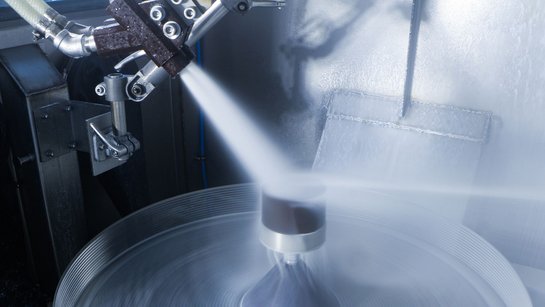
Natstralen is bij uitstek geschikt voor gevoelige en nauwkeurig vervaardigde werkstukken van metaal. Door het stromen van het water langs het werkstukoppervlak wordt een slijpend effect bereikt. Deze methode is echter niet alleen schonend, maar ook economisch voordelig: dankzij de dempende waterlaag tussen werkstuk en straalmiddel neemt het straalmiddelverbruik bij natstralen aanzienlijk af. Omdat stofvorming en daarmee gepaard gaande vervuilingen worden voorkomen, kunnen ook zeer fijne straalmiddelen worden ingezet.
Voor een bijzonder gelijkmatig straalresultaat en een optimale oppervlakteafwerking wordt de besturing van de straalmond in Rösler-natstralingsinstallaties doorgaans overgenomen door een industriële robot of een CNC-systeem. Ook de voeding en afvoer passen wij individueel aan uw productievereisten aan — desgewenst op uiteenlopende wijze geautomatiseerd.
Veelgestelde vragen – wat u moet weten over natstralen
Via een compressor wordt perslucht gegenereerd, die gemengd met water en straalmiddel op het werkstuk wordt aangebracht. Het gebruikte straalmiddel wordt continu opgewerkt om een zuiver en grondstofbesparend straalproces te waarborgen. De opgevangen vervuilingen en het gebruikte straalmiddel dienen na gebruik te worden afgescheiden en vakkundig te worden afgevoerd.
Bij natstralen wordt water toegevoegd aan het straalmiddel. Dit mengsel dempt de impactenergie van het straalmiddel, reduceert de materiaalafname en voorkomt stofvorming. Het resultaat zijn bijzonder gelijkmatige, schonend bewerkte oppervlakken.
- Schonende bewerking van gevoelige werkstukken
- Stofvrije en schone werkomgeving
- Lager straalmiddelverbruik
- Combinatie van reiniging en oppervlakteveredeling
- Mogelijkheid om ook fijne straalmiddelen in te zetten
Het procédé is bij uitstek geschikt voor gevoelige of nauwkeurig vervaardigde werkstukken zoals implantaten, turbine- en motorcomponenten, sieraden, gereedschappen en werkstukken uit de medische technologie, de luchtvaart of de fijnmechanica. Met name roestvrij staal laat zich uitstekend bewerken met het natstralingsproces, waarbij een oppervlak kan worden verkregen dat voldoet aan de hoge reinigings- en desinfectievereisten van de medische industrie en de levensmiddelenindustrie.
Afhankelijk van het gewenste resultaat worden onder meer glasparels, keramische parels of fijne korundsoorten ingezet. Dankzij de watertoevoer kunnen ook zeer fijne straalmiddelen worden verwerkt die bij droogstralen moeilijk hanteerbaar zouden zijn. Hierbij geldt: bepalend voor de effectiviteit van het natstralen is de juiste afstemming van straalmiddel, de concentratie ervan, water en luchtdruk.
Het water zorgt voor een gelijkmatige verdeling van het straalmiddel en creëert een gedefinieerd oppervlak met een licht glanzend effect. Bovendien worden insluitsels van straalmiddel in het oppervlak geminimaliseerd en wordt het werkstuk bevrijd van resten of vervuilingen.
De eerste natstralingsinstallaties werden in de jaren zestig ontwikkeld voor de bewerking van hooggevoelige componenten in de luchtvaartindustrie.
Het procédé wordt tegenwoordig onder meer toegepast voor de productie van precisieoppervlakken van implantaten, sieraden, motorcomponenten, spaangereedschappen en snijgereedschappen in de aerospace-sector, de medische technologie en de gereedschapsvervaardiging.
Ja. Omdat bij het procédé geen stof vrijkomt en het water de verwijderde deeltjes bindt, is de belasting van de werkomgeving aanzienlijk geringer. Bovendien wordt het straalmiddelverbruik gereduceerd, wat bijdraagt aan een zuinig gebruik van grondstoffen.
Het natstralingsproces kan ook worden ingezet voor oppervlakteverdichting of -verharding, wanneer de oppervlakken zeer gevoelig zijn en conventionele shot peening-processen te intensief zijn.
Gebruik de Solution Finder om de juiste machine voor uw bewerkingsproces te vinden.