

Wet blasting or slurry blasting – gentle on the surface
When water and blasting media work together
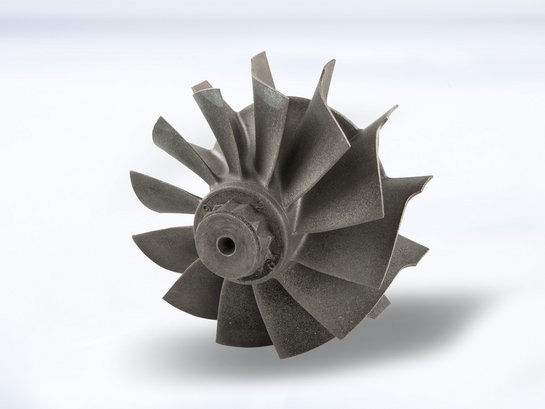
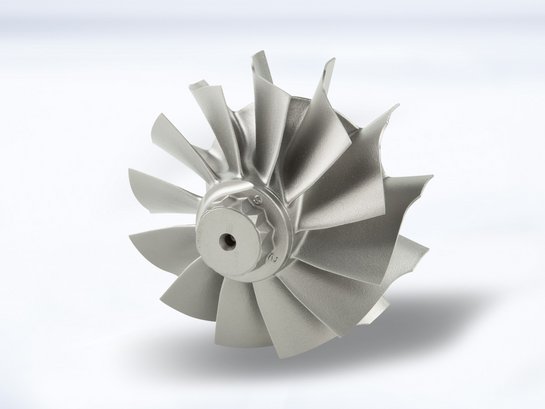

Wet blasting, also referred to as slurry blasting, is a particularly gentle technique for surface finishing. In this process, compressed air, water, and blasting media are applied in combination to the workpieces and parts being processed. The process removes contamination and produces defined surface conditions without damaging the base material.
Water serves several functions in this process: it combines the blasting process (conventional "sand blasting" or dry blasting) with a cleaning effect, promotes more uniform distribution of the blasting media, penetrates even the smallest crevices, and simultaneously cushions the blasting media like a buffer. As a result, material removal is minimal, since the water absorbs the impact energy — allowing the tightest workpiece tolerances to be maintained.
The process is particularly well suited for producing easily cleanable surfaces, for the gentle cleaning of workpieces, and for achieving a visually appealing surface finish.
What is wet blasting especially suited for?
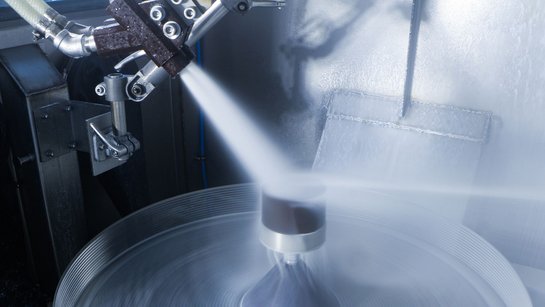
Wet blasting is ideally suited for sensitive and precision-manufactured metal workpieces. The flow of water across the workpiece surface produces a grinding-like effect. However, this method is not only gentle but also cost-effective: the cushioning water layer between the workpiece and the blasting media reduces blasting media consumption. Because dust generation — and the associated contamination — is prevented, very fine blasting media can also be used.
To achieve a particularly uniform blasting result and surface finish, blast nozzle control in Rösler wet blasting systems is typically handled by an industrial robot or a CNC system. Feeding and discharge are also individually adapted to your production requirements — and can be automated in a variety of ways upon request.
Frequently asked questions – What you need to know about wet blasting
Compressed air is generated by a compressor and applied to the workpiece in combination with water and blasting media. The blasting media used is continuously reconditioned to ensure a clean and resource-efficient blasting process. The captured contamination and the spent blasting media must be separated after use and disposed of properly.
In wet blasting, water is added to the blasting media. This mixture cushions the impact energy of the blasting media, reduces material removal, and prevents dust generation. The result is particularly uniform surfaces that are treated with minimal stress.
- Gentle processing of sensitive workpieces
- Dust-free and clean working environment
- Reduced blasting media consumption
- Combination of cleaning and surface refinement
- Ability to use fine blasting media as well
The process is particularly suited for sensitive or precision-manufactured workpieces such as implants, turbine and engine components, jewelry, tools, and parts from the medical technology, aerospace, and precision engineering sectors. Stainless steel in particular can be effectively processed using the wet blasting method, producing surfaces that meet the stringent cleaning and disinfection requirements of the medical and food processing industries.
Depending on the desired result, blasting media such as glass beads, ceramic beads, or fine grades of aluminum oxide are used, among others. The water-based process allows very fine blasting media to be handled that would be difficult to manage in dry blasting. The key principle applies: the effectiveness of wet blasting depends on the correct combination of blasting media, its concentration, water, and air pressure.
The water ensures uniform distribution of the blasting media and produces a defined surface with a slightly glossy effect. In addition, blasting media embedment in the surface is minimized, and the workpiece is freed from residues and contamination.
The first wet blast machines were developed in the 1960s for the processing of highly sensitive components in the aerospace industry.
Today, the process is used, among other applications, for producing precision surfaces on implants, jewelry, engine components, cutting tools, and machining tools in the aerospace, medical technology, and tooling manufacturing sectors.
Yes. Since no dust is generated during the process and the water binds the removed particles, the impact on the working environment is significantly reduced. In addition, blasting media consumption is lowered, contributing to more efficient use of resources.
The wet blasting process can also be used for surface compaction and work hardening when surfaces are highly sensitive and conventional shot peening processes would be too aggressive.
Use the Solution Finder to find the right system for your processing method.