Solution Finder
SOLUTION FINDER

Su guía a través del
mundo de productos Rösler

Con unos pocos clics encontrará la máquina adecuada a sus necesidades.

Resultados: 237 Artículo - 51 Productos

Testing & Expertise Overcome Shot Blasting Challenges

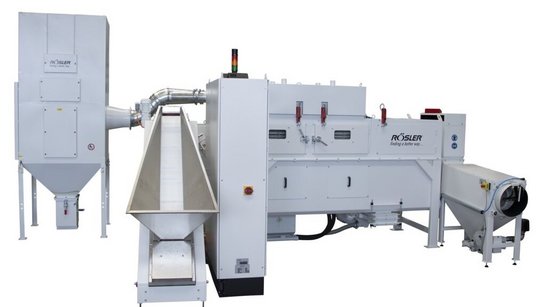
For nearly a decade, Sales Representative and Interim Product Manager of Turbine Blast Equipment Zack Murray has been one of Rosler’s top shot blasting experts. Working with customers and our global Customer Experience Centers , he helps develop and test surface finishing machines and media in addition to dialing in specific process parameters. At times, adhering to the Rosler motto and guiding principle of “finding a better way…” can be difficult and complicated. Luckily, Murray and the entire Rosler team are committed to delivering world-class surface finishing equipment, consumables, and service in a variety of industries . In this post, Murray shares the most challenging issue he has tackled at Rosler and how the team developed a solution. The Problem A customer contacted Rosler for help in processing relatively large magnesium automotive parts. Considering the need for high throughput speeds in combination with the size of the parts, Murray knew a turbine blast machine would be the best option. Shot blasting turbine “In turn, the indication of a turbine blast machine meant that we were limited to metallic blast media,” Murray said, “as these machines are not typically suitable for mineral-based blast media such as aluminum oxide or glass beads. “Magnesium is a tricky material to blast in a turbine machine since it is prone to sparking with most metallic media. In addition to the fact that magnesium dust is highly flammable and combustible, we needed to avoid a potential recipe for disaster.” The process had to safely and efficiently deliver deburring and edge radiusing while minimizing the potential for sparking. The Solution Understanding that a relatively soft metallic media was required for safety and effectiveness, the team was left with the choice of aluminum or zinc blast media. Testing both media types demonstrated that results from the aluminum media most closely aligned with the customer’s desired process results. “Unfortunately, aluminum dust is also highly flammable and combustible,” Murray said. “The combination of the magnesium and aluminum dust was potentially dangerous enough to warrant an St3 Dust Hazard rating, which is the most severe rating, indicating a very high potential for fire and/or explosion. “Since the customer was not at a point in their product development cycle where they could get a dust hazard analysis performed as a result of part availability, we had to assume that the dust would be rated at St3.” As such, a wet dust collector with an anti-oxidizing compound dosing system was suggested for the customer with the further recommendation that the dust collector be installed outside, away from areas that commonly see human traffic, and that exhaust air was absolutely not allowed to feed back into the building. Rosler RF 550 NS including sludge drag conveyor and high-efficiency design to reduce residual dust The Rosler Way With more than 80 years of experience and a portfolio containing more than 15,000 equipment and consumable products, solving challenges is what we do at Rosler. Testing for safety and efficiency is an important step in achieving a stable and repeatable surface finishing process. Contact us today to request free test trials in one of our global Customer Experience Centers and allow us to develop a solution for your unique challenges!

Blade Technology: Straight vs. Curved Blades Explained

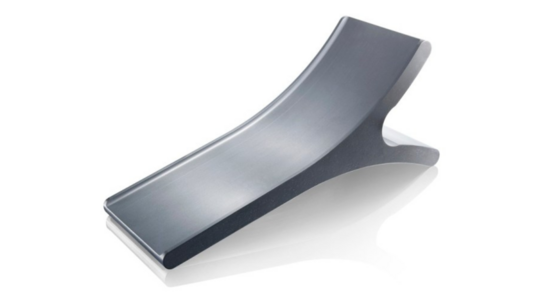
As an expert in the shot blasting industry, Rosler knows about blade technology. All shot blasting machines require blades to propel media towards workpieces. While both straight and curved blades are used, each type offers advantages and disadvantages. What are the Differences? Straight blades are, as the name suggests, blades that do not have curvature when viewed from the side and do not possess tangential curvature with respect to the turbine. Curved blades are blades that have some degree of curvature when viewed from the side. As the newer design, curved blades are generally better than straight blades, but they also have some drawbacks related to longevity, maintenance, and cost of ownership. Wear Rates Historically, the largest disadvantage of the curved blade design is that the blade will wear at a disproportionate rate along the length of the curvature, meaning that the curved blade design would wear through quicker than straight blade design. Modern technology has allowed the industry to overcome this particular flaw through the careful selection of curvature angle of the blade based on blade material properties to the point that curved blades now have similar usable lives to straight blades. Change Out Times A further disadvantage that has historically plagued the curved blade design is that the shape of the blades and fixturing take longer to change out than straight blades. The Rosler Gamma G turbine with forged metal blades overcomes this issue through the use of a retaining pin allowing for rapid blade change outs . This problem still currently persists for hard metal blade designs. Cost The final disadvantage is that curved blades tend to be more expensive than the straight blade designs, depending on the blade material. For cast and forged blades, the price difference is relatively small; however, for hard metal machined blades, the cost difference can be quite significant. Advantages Despite the disadvantages, curved blades also offer advantages over traditional straight blades. The largest advantage that the curved blades offer over straight blades of equivalent size is that the curved blades have a greater radial component to their velocities while maintaining an equivalent tangential component. This provides a higher throwing speed of the blades on the media (at equivalent turbine rotational velocities and equivalent turbine diameter) and therefore greater impact energy being transferred to the workpiece, allowing for the removal of more severe contaminants. Alternatively, if greater impact energy is not needed, the turbine’s rotational velocity can be controlled via a variable frequency drive to slow the turbine down which, in turn, provides a greater media throughput at equivalent media throwing speeds when compared against a straight blade turbine. Curved blade designs function at their best when the parts have very difficult finishing requirements or when greater part throughput is necessary. Orientations Curved blades have two types of orientation that can be used: a γ (The Greek letter gamma) shape and a C shape. The C shape has a greater curvature angle, allowing for a greater velocity/energy efficiency; however, the γ shape blade has a blade longevity factor in that once one side has been worn down, the blade can be flipped for a second use, effectively doubling the blade’s life. This is also an advantage over most straight blade designs. C-shaped blade Furthermore, the C shape does not have the ability to utilize a retaining pin for rapid blade changeout . The curvature angle of the blade (and therefore the blade's velocity and energy gain in comparison to a straight blade design) provides an equivalent lifetime based off of the material properties of the blade, namely its metal hardness. For modern metals, a cast blade can support a nearly negligible curvature without severely impacting its life, while a forged blade is capable of supporting a curvature angle that provides approximately a 7% increase in velocity (approximately 15% increase in energy) and a hard metal machined blade supports a curvature giving up to approximately 15% increase in velocity (approximately a 32% increase in energy) (utilizing a C shaped blade for maximum gain). The Rosler Way You can count on Rosler to help you find a better way when it comes to blade technology. Contact us today to discuss your unique challenges so we can identify the right blade for your needs.
Handshake

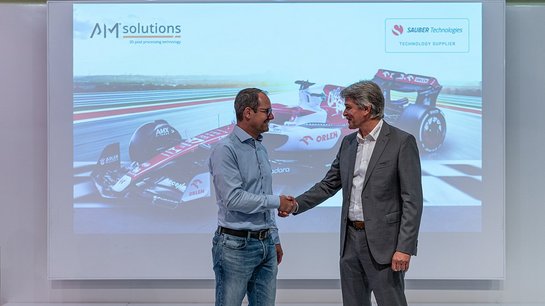
Sauber Technologies continues pursuing technological innovation as it extends partnership with AM Solutions, a brand of the Rösler Group

Sauber Technologies has extended its technology partnership with AM Solutions – 3D post processing technology, a brand of the Rösler Group, taking a further step forward in the field of technological innovation. The partnership, which was sealed in 2021, has been prolonged for two additional years, as a logical consequence of a valuable and trustful business relationship that has been providing both parties with excellent results. Automated post processing of additive manufactured parts is essential for Sauber Technologies for the economical production of repeatable and high-quality printed parts, especially on an industrial scale. Over the last year, the company benefited from Rösler's decades of experience in surface finishing, by using post processing equipment provided by its brand, AM Solutions – 3D post processing technology. Several 3D printed parts have also been featured on the Alfa Romeo F1 Team ORLEN C42, bringing the strategic partnership from the factory to the track. Under AM Solutions – 3D post processing technology, the Rösler Group bundles all activities related to additive manufacturing with an outstanding range of products and services, including systems, consumables and process engineering for the series-ready and automated post processing of additively manufactured parts. Rösler's many years of cross industry experience in surface finishing in a real production environment as well as its own mechanical engineering form a strong backbone of AM Solutions offerings. As part of the relationship between Sauber Technologies and AM Solutions, the two partners are currently collaborating in the field of SLA (stereolithography) in post processing, to develop solutions to maximise the efficiency of the cleaning process and support removal, a further milestone in surface technology. In addition, Sauber Technologies is already using several mass finishing and shot blasting machines from AM Solutions. Christoph Hansen, COO Sauber Technologies: “Over the past year, the partnership with AM Solutions has been of fundamental importance, as several business practices of our Group have been employing them, from the wind tunnel models to the most experimental components, and, of course, our Formula One cars. AM Solutions have brought their excellent experience and solutions to Sauber Technologies, helping us creating 3D printed parts faster and in a more efficient way, two essential qualities for an ever-evolving business like ours. I am glad to be extending our partnership with the Rösler Group, and I am already looking forward to seeing what else we could achieve together in the future.” Volker Löhnert, Managing Director of Rösler Oberflächentechnik GmbH: "The extension of our partnership with Sauber Technologies is an important milestone for AM Solutions – 3D post processing technology. The team has a long tradition of using additively manufactured components in its Formula One cars and has been therefore interested in exploring the vast opportunities that 3D printing offers in terms of design, material selection, and lightweight construction. High-quality and repeatable post processing is of great importance for the optimization of the entire process chain, and that is where we bring our decades of expertise in surface finishing, together with our customized solutions developed specifically for the peculiarities of AM-manufactured parts. For these reasons, we have the perfect partner at our side in Sauber Technologies."
centrifugal disk finishing machine

Husqvarna relies on intelligently linked Rösler equipment

In its chain link production Husqvarna is utilizing three Rösler FKS 35.1 A2-So centrifugal disk finishing machines along with a fully automatic Z1000 process water cleaning centrifuge. For over 10 years these machines have reliably handled highly demanding finishing processes in a 24/7 manufacturing environment. Because of this outstanding track record and the excellent cooperation Husqvarna called on Rösler to provide technical assistance with a capacity expansion project. The company installed an additional centrifugal disk finishing machine with convincing new technical features and a second automatic centrifuge equipped with the software package “digital process water management” developed by Rösler’s Smart Solutions team. The seamless integration and intelligent linking of the new with the already existing equipment made the production of chain links more flexible and more cost-efficient. Above all, it resulted in a higher overall stability of the finishing operation. Elimination of capacity bottlenecks in the surface finishing operation Prior to the expansion and modernization project the centrifugal disk finishing machines were assigned to specific mass finishing processes. The strict assignment was intended to prevent the mixing of different process liquids and, thus, facilitate the process water cleaning operation. However, this rigid organization of the centrifugal disk finishing machines did not allow their flexible use. For this reason, the available finishing capacity could not be utilized in a cost-efficient manner and caused frequent manufacturing bottlenecks. To provide more flexibility, the new centrifugal disk finishing machine is equipped with a dual dosing unit allowing the machine to be connected to two process water recycling systems. This allows running different finishing processes in the same machine. In combination with the new process water cleaning centrifuge and the resulting increased cleaning capacity the finishing machines can now be flexibly assigned to the actual processing jobs without affecting the overall surface finishing quality of the chain links. Innovative technical features increase the process stability and reduce the cycle times The new centrifugal disk finishing machine is equipped with a custom-engineered work piece loading system. In addition, the special design of the processing bowl offers a higher working volume. But that is not all: Special flow guide segments along with anti-slip bars, a special spinner design and an increased drive power ensure a much better mixing of the work piece batches weighing several hundred kilograms. All this brought about a higher finishing intensity with shorter cycle times, increased the overall productivity and produced more consistent finishing results. Husqvarna was also impressed by the fully automatic adjustment of the gap between spinner and processing bowl. Manual gap adjustment and time-consuming gap measurements could be completely eliminated. The “intelligent” control system is automatically setting the gap to a size that matches the work pieces to be processed. Moreover, the control system continuously monitors the gap size during the entire finishing process and automatically adjusts the gap as needed. Rösler is the only company that offers such an advanced gap control system! Of course, with this sophisticated technology even very thin work pieces cannot get stuck in the gap. This prevents premature wear and potential machine crashes. Besides a much higher process stability the automatic gap control also increases the equipment availability by eliminating the time required for manual gap adjustment. Complete process control and traceability The purchase order from Husqvarna also included the linking of the mass finishing machines with a subsequent manufacturing operation. It covered not only the transfer of processing programs and process data but also the integration of the finishing machines into the existing Manufacturing Executive System (MES) at Husqvarna. This ensures not only a complete process control but also the monitoring of the equipment status and the finishing parameters. Digital process water management – up to 50 % lower water usage and longer uptime of the process liquid The process water cleaning process at Husqvarna is quite demanding. Therefore, the company was pleased to integrate the digital process water management system from Rösler Smart Solutions into its modernized process water cleaning and recycling operation. This innovative, interactive monitoring system for semi- and fully automatic centrifuges allows the monitoring, collection and evaluation of all essential process parameters. Suitable problem-solving recommendations are automatically issued. This helps to significantly reduce the water consumption and increase the uptime of the process water resulting in considerable cost savings. Based on a preliminary analysis the time periods between process water changes could be extended by 50 %. The resulting increase of the process water uptime also amounts to about 50 %. On-time completion of this challenging project The capacity expansion and modernization project could be implemented within a tight and quite challenging time frame. Despite the current supply chain difficulties Rösler not only met the agreed upon delivery date but could commission the equipment at Husqvarna two weeks earlier. Rösler Smart Solutions – Improved surface finishes and lower reject The Rösler Smart Solutions system is also used at the Scherdel Waldershof GmbH & Co. KG. This company produces stamped and bent components as well as parts for the automotive industry from steel alloys, stainless steel and non-ferrous metals. The mass finishing operation requires not only excellent deburring and edge radiusing results, but the work pieces must also be perfectly clean for the subsequent optical quality control. The process water is cleaned with a semi-automatic centrifuge. In the past the somewhat limited quality control procedure for the process water checked only a few parameters resulting in unwanted media and metal residues on the finished work pieces. This required costly rework, before the components could be delivered to the customers. With the digital process water management from Rösler Smart Solutions the situation could be completely turned around. The well-organized data output and the easy-to-understand action points from the “digital guide” ensure that the process water remains stable at a high quality. In turn, this produces absolutely clean work pieces. With the digital process water management system the rework and scrap rate could be cut in half. Digital process water management improves process stability and increases cost-efficiency At the Wegmann Automotive GmbH, global leader in the field of balancing weights, the process water from the mass finishing operation is cleaned in a fully automatic centrifuge. In principle, the operator manages the water cleaning and recycling operation quite well. Nevertheless, the company decided to install the digital process water management system from Rösler Smart Solutions. Because of different technical requirements the company recently had experienced some difficulties. Weights made from steel receive a corrosion protection in the mass finishing process, while zinc components must have a specified surface tension for a subsequent coating operation. These different requirements led to either a too high or too low compound concentration in the process water, resulting in considerable rework and large quantities of scrap parts. The customer had not considered the consequences of a microbiological contamination. In this case the interactive digital process water monitoring system from Rösler Smart Solutions produced a much more stable process and drastically reduced the rework and scrap rate.

How to Use a Vibrascope to Measure Vibratory Bowl Amplitude and Frequency

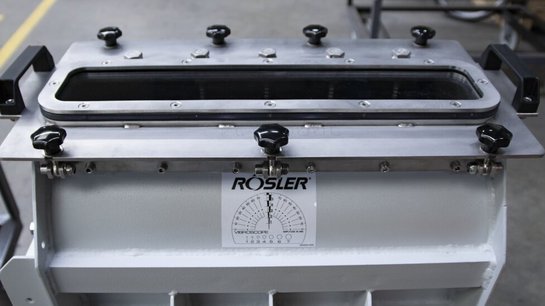
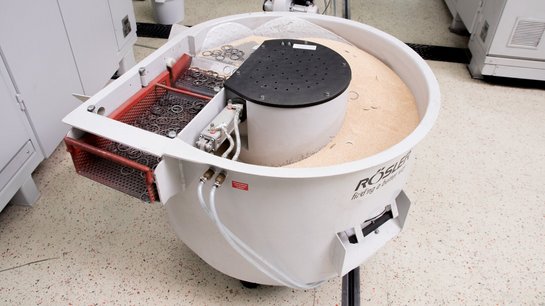
When it comes to mass finishing , amplitude and frequency require balance and careful consideration. Amplitude is a measure of movement and intensity while frequency refers to the rate of repetition. The wrong amplitude, for example, can create lackluster finishing results and longer processing times if it is too low. If too high, it can cause unnecessary wear and tear on the machine. Creating Vibratory Energy Whether rotary or tub style , mass finishing vibrators always include two key components: a work bowl containing the finishing media and the work pieces. Firmly attached to this work bowl is a vibratory drive system generating the energy to put the media and work pieces in motion. The work bowl with an attached vibratory drive system sits on a number of coil springs – in some cases on air cushions – which in turn sit on a machine base. The springs, respectively, act as air cushions allowing the work bowl to “free float” up and down within a certain distance. Example of vibratory drive The force from the vibratory drive system moves the media and work piece mix within the work bowl. Depending on the type of finishing machine, this force is generated by vibratory motors or electric motors driving a shaft with one or multiple imbalance units attached to it. Imbalance units are made up of a rotating shaft with out-of-balance counterweights at each end of the shaft. Due to its imbalance, the rotating shaft causes an intense wobbling effect. Common drive systems in vibratory bowls and tubs include foot motors for small tub vibrators, flange motors for rotary vibrators, and multiple imbalance units with electric drives for large tub vibrators. The Effects of Vibration Since the work bowl with attached vibratory drive system is loosely sitting on the coil springs or air cushions, the energy induced by the vibratory drive system causes the work bowl to move up and down within a relatively narrow distance band at the speed of the rotary drive system. The maximum up and down displacement of the vibrating work bowl from its position of rest is an indicator of the vibratory intensity and is called amplitude. Measuring & Reading Amplitude Understanding your machine’s amplitude is part of the process to dialing in precise surface finishing results. The amplitude – actually the double amplitude from upper to lower peak – is mostly measured in mm. In finishing vibrators, the amplitude is usually between 3 and 6mm. Rosler uses a visual devise called a vibrascope, a sticker applied to the outside wall of the work bowl, to visually measure amplitude. This sticker contains a row of 7 circles with diameters from 1 to 7 mm. Example of Rosler's Vibrascope sticker The simplest way of reading the amplitude is by observing the vibroscope sticker as the machine is in operation. The vibration of the work bowl has the visual effect of showing two rows of circles, with some circles being completely apart and some overlapping. The two circles which are apart but nearly touch each other represent the observed amplitude value. Adjusting Amplitude The vibratory intensity or amplitude of a machine is determined by three factors. Adjusting one or more of these factors will adjust the resulting amplitude. Speed of the Vibratory Drive System – Higher rotary speeds produce higher amplitude. Mass of the Imbalance Weights – Heavier imbalance weights produce higher amplitude. Angle or “Lead Angle” Between the Two Imbalance Weights – Smaller angles produce higher amplitude. The highest intensity is produced at zero degrees, while the lowest – practically no vibration – is produced at 180 degrees. Rosler advises adjusting one factor at a time for the most accurate fine tuning as well as safety and longevity of the machine. The speed and amplitude in finishing vibrators cannot be increased beyond a certain value; otherwise the machine would destroy itself. The acceleration, consisting of rotary speed and amplitude must not exceed 6g. At high rotary speeds, the imbalance weights must be set for a low amplitude (mass of the imbalance weights and lead angle). At lower speeds, the imbalance weights can be set for a higher amplitude. The Rosler Advantage Machines built by Rosler run with more frequency and less amplitude, meaning our media contacts a workpiece more times and is gentler than competing machines. This unique advantage of Rosler equipment creates less wear on media and machines while producing greater longevity. The ability to reduce amplitude yet deliver the desired surface finishing produces less machine shaking and part damage while slowing the rate of machine wear. When using vibratory bowls and tubs, most of Rosler’s competitors hit harder. While impressive, the force of those hits may not produce the most efficient results. Finding the Right Settings In the above graph, the numbers highlighted in yellow are the optimal combination of amplitude and frequency. Amplitude settings depend on the machine set-up, workpiece condition, and desired outcome. Not sure what amplitude is best for your unique needs? Trust the experts at Rosler to conduct a trial and dial in the results before you purchase a machine. The Rosler Way Whatever your mass finishing needs are, you can count on Rosler to help you find a better way. Contact us today to discuss your unique challenges and request a free trial in one of our Customer Experience Centers .

New Deflashing Equipment Assists 30-year Customer Increase Production

For over 30 years, Berker GmbH & Co KG (Berker) has trusted Rosler shot blasting equipment in its manufacturing processes. A member of the Hager Group since 2010, Berker is one of the leading manufacturers of high-end electrical components, from timeless classical switches to intelligent electrical systems for buildings. The company also supplies switches for electrical appliances and automobiles. The Situation Berker primarily uses continuous feed systems such as loop and flat belt machines to deflash plastic components including switching elements, electrical outlet covers, frames, and more. Increased production volume at its Wenden-Ottfingen manufacturing location led Berker to decide to invest in an additional shot blast machine in 2018. The new investment was intended to replace an existing continuous feed loop belt system with the latest deflashing technology. Its specifications called for increased capacity and high equipment availability. The Solution After the capacity requirements had been established, Rosler developed a system concept that fully met the customer’s technical and economic demands known as the RSBS 1702 continuous feed loop belt blast machine. Equipped with two direct-drive blast turbines , the new Rosler machine produces excellent deflashing results combined with an extremely high degree of process stability. The machine includes a host of technical features including modern PLC controls, an optimized media cleaning and recycling system with a vibratory screen and air wash separator, a sensor-controlled media replenishment unit, automatic replenishment and mixing of anti-static compounds, noise protection, an automatic standby module, and a dust collector. The new machine design also allows the automatic deflashing of large work pieces which could not be handled with the old equipment and has been in operation since 2020. The Advantages Rosler is grateful to have the opportunity to assist a 30-year customer achieve new efficiencies even in the midst of a global pandemic and labor shortage. Automated aspects of Berker's new system went beyond improved efficiency and capabilities to provide an additional advantage in the reduced need for manual labor. Like many employers, Berker has faced increasing competition for manpower. The use of work piece handling systems, conveyor belts, and robots have helped bridge the gap in human resources and maintain production rates. Additionally, in the world of manufacturing, this mitigation of human intervention offers even greater and more measurable efficiencies and consistent quality. The Rosler Way “Finding a better way…” is more than a motto at Rosler; it’s our mission. With more than 80 years of experience and a portfolio containing more than 15,000 equipment and consumable products , solving challenges is what we do. Contact us to learn how we can help you achieve more efficient, automated surface finishing.

Hot Air and Media-Based Systems Offer Drying Options for Mass Finishing

With few exceptions, mass finishing processes require the addition of water and compounds to produce the desired results. That means finished work pieces discharged from the finishing machine are wet. Since possible corrosion or problems with subsequent manufacturing steps are possible, the finished work pieces must undergo a drying operation. While not as complex as the mass finishing process itself, drying nevertheless requires careful consideration to ensure that the work pieces are completely dry and free of any water or dirt spots. Rosler has extensive experience developing dryers for a wide range of work pieces and the expertise to assist with process parameters and settings. Work Piece-Based Machine Settings Machine settings for speed and temperature must be matched to the work pieces and their surface condition to ensure the lowest possible energy use to complete the task. For work pieces with complex shapes, including undercuts and/or internal passages, the dryer speed may have to be lower for a longer dwell time in the machine. In addition, the temperature setting may have to be higher. Work pieces with simple shapes can be dried at a higher speed and a somewhat lower temperature. Machine Types Dryers are categorized by their drying method, specifically based on whether they use a drying medium or hot air. Rosler offers a variety of machine options in both categories, each with its own unique capabilities. Rosler rotary dryer with supervelat Rotary Vibratory Dryers Known as the RT model range, rotary vibratory dryers utilize a drying media and are ideal for small- to mid-sized work pieces with relatively simple work piece shapes. Rotary vibratory dryers are the most common drying systems. Rosler belt dryer Belt Dryers The BT model range of belt dryers uses hot air to dry work pieces. These machines are ideal for mid-sized to large work pieces with complex shapes. Belt dryers are also widely used, especially when drying media might get lodged or trapped in the parts. Rosler drum dryer Drum Dryers Utilizing a drying medium, the TT drum dryer model range is particularly useful with mid-sized, cup-shaped work pieces as well as for parts that require gentle handling to prevent part-on-part damage. Rosler drying centrifuge Drying Centrifuges The hot air drying and work piece handling of the HTZ model drying centrifuge is capable of processing very small work pieces that are too small to be treated in other devices. The centrifugal force in combination with heated air ensures efficient drying of parts that are processed in batches. Special Rosler vibratory dryer Special Rotary Vibratory Dryers For drying operations that must be absolutely free of dust, such as polished coin blanks, special rotary vibratory dryers utilizing hot air are available. Determining the best options of various designs requires careful consideration of the overall process. Drying Media Maizorb drying media Made from crushed corn cobs, maizorb is the most common type of drying media. Its granule sizes range from approximately 0.002 to 0.2 in (0.5 to 5 mm). Regular replacement with new media is important to reduce the impact of residual contaminants, such as oil, media fines, and undersized media pieces, picked by the drying media. If not regularly refreshed, these contaminants can be transferred to work pieces. Stampings, for example, carry large amounts of oil into the finishing machine, requiring media replacement every few days. Conversely, media used in die casting processes can be used for a few weeks before being replaced. Work Piece Action Points As with any manufacturing process, regular observation is advised even with automated systems. For hot air and media-based operations, regularly check if the work pieces are dry when coming from the dryer. If not, change the machine settings (speed, temperature, airflow) to ensure that the work pieces are dry. In machines utilizing drying media, check dried work pieces for dirt spots on the surface. If spots appear, quickly replace the drying medium. The Rosler Way Decades of experience and ability to design, service, and maintain machines as well as the consumables and accessories to get the finish you require make Rosler a well-rounded surface finishing expert. Contact us to discuss your drying and general mass finishing needs.
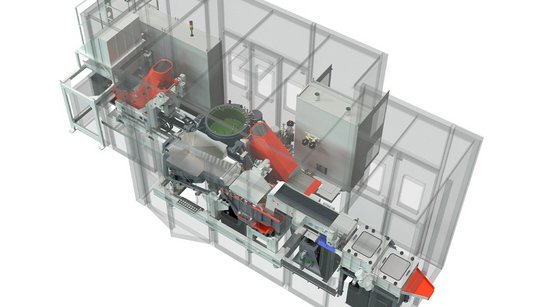
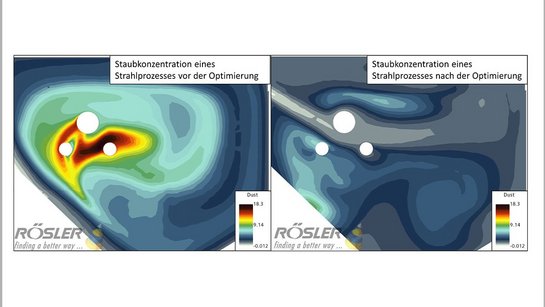
Simulation der Staubbelastung

Besser, schneller, wirtschaftlicher durch Simulationstechnik

Die Bedeutung der Oberflächenbearbeitung wächst in zahlreichen Industriebereichen. Die Forderung dabei lautet: Definierte Qualitätsanforderungen in kurzen Prozesszeiten bei geringstmöglichen Kosten ressourcenschonend erzielen. Diesem Anspruch wird Rösler unter anderem durch den Einsatz von Simulationssoftware bei der Konstruktion von Strahl- und Gleitschliffanlagen sowie der Prozessauslegung und -optimierung gerecht. Zeit- und kostenaufwendige Versuchsreihen im Customer Experience Center können durch den Einsatz der Software reduziert werden, Anlagen und Prozesse stehen schneller und mit größtmöglichem Kundennutzen zur Verfügung. Optimale Strahlergebnisse in kürzerer Zeit mit weniger Strahlmittel und effektiverem Lufthaushalt Der multiphysikalische Ansatz dieser modernen Simulationslösung ermöglicht anspruchsvolle Strahlprozesse anhand von 3D-Daten zu simulieren und optimal auszulegen. In die Simulation fließen alle prozessrelevanten physikalischen Randbedingungen ein. So lässt sich Strahlmittel virtuell auf beliebige Werkstücke applizieren, die sich wie bei der späteren, realen Bearbeitung bewegen. Die korrekte Darstellung der Strahlbilder und der Strahlmittel-Massenströme erlaubt dabei eine zuverlässige Auswertung und Anpassung des Trefferbilds und der Strahlleistung auf dem Bauteil. Der daraus resultierende, effektivere Strahlprozess sorgt dafür, dass geforderte Strahlergebnisse effizienter erzielt werden. Gleichzeitig verringert die gezieltere Applikation des Strahlmittels auf das Bauteil Verschleißerscheinungen innerhalb der Strahlkammer, wodurch Maschinenstillstandszeiten sowie Instandhaltungskosten deutlich reduziert werden. Ein weiterer Aspekt, der bei der Simulation betrachtet wird, ist die Staubbelastung in der Strahlanlage. Auf dieser Basis lassen sich konstruktive Maßnahmen für eine bessere Absaugung von Staubfrachten sicher und einfach definieren, sodass eine mögliche Staubexposition im Umfeld der Strahlanlage erheblich vermindert werden kann – und das auch bei bestehenden Anlagen, unabhängig vom Hersteller. Schnell zu idealen Gleitschliffprozessen für komplexe Werkstücke Die Entwicklung von Gleitschliffprozessen für geometrisch komplexe Bauteile, wie beispielsweise Knieimplantate, erforderten bisher aufwendige Versuchsreihen. Bei diesen Anwendungen bietet die Simulationstechnik ebenfalls entscheidende Qualitäts-, Zeit- und Kostenvorteile. Durch die Darstellung der Schleifkörperbewegung, wobei Schleifkörper in beliebigen Geometrien abgebildet werden können, und der effektiven Schleifwirkung auf dem Bauteil, lässt sich die ideale Kombination von Schleifkörper und Maschinenparametern ermitteln. In die Partikelsimulation kann darüber hinaus der Verschleiß der Anlage analysiert werden. Ein weiterer Vorteil der Simulation im Vergleich zu realen Versuchsreihen ist die Untersuchung von noch nicht gefertigten Bauteilen oder Systemen aller Art anhand von CAD Daten.

Mass Finishing Work Piece Handling Series, Part 2 – Preventing Drop Height Damage

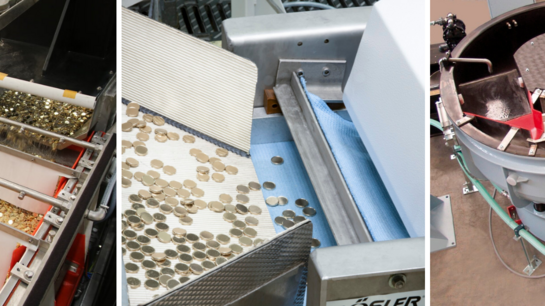
Ensuring drop heights are not too high when raw work pieces are loaded into and exiting a mass finishing machine is an important consideration. Rosler has extensive experience developing mass finishing machines as well as material handling accessories to create a productive and efficient surface finishing system and prevent drop height damage. When evaluating drop heights and machine configuration needs, it is recommended that you consult an experienced equipment provider to help review key machine aspects and suggest solutions tailored to your unique needs. Issues to Avoid Falling from a loading container into a machine as well as moving from the machine into a post-process collection can cause damage to work pieces in the form of nicking and scratching caused by contact among work pieces as well as with the machine itself. More delicate and/or sharp work pieces, therefore, require extra consideration and evaluation of drop heights than sturdy and rounded components. For example, components with critical sealing areas, parts requiring a tight fit, and parts that need a high gloss polish must be handled with extra care. If big height distances must be overcome, chutes should be employed allowing the work pieces to gently slide down instead of just being dumped on top of each other, essentially “de-sharpening” the effect of contact. Similar caution must be employed at the various transfer points within a mass finishing system, for example, the transfer of the finished work pieces from the finishing unit to the separation station or from the finishing machine to a dryer, collection table, etc. The prevention of high drop heights should be one of the key questions for a supplier when considering the purchase of a new mass finishing system or modifying an existing system. Rosler offers a variety of transfer sections and attributes, including (from left) separation systems for coin blanks, separation screens to dryer to prevent part-on-part damage with gentle drop heights, and separation system with linear drive for extra gentle transport of parts. Media Considerations In addition to issues with work pieces, excessive drop heights can also cause issues with media . For example, unusual splintering or chipping of ceramic media may occur at transfer points if drop heights are too high or media is returned to the machine too quickly when external media separation is utilized, such as with inline trough machines . Media return conveyor of an inline trough machine. Media may also be prone to fracturing if heavy parts are dropped into the machine too aggressively. These media chips and fragments can lodge in the work pieces and cause problems in downstream processes or when the product is in use. Working with your equipment supplier is key to ensure that all transfer points in a finishing system allow a gentle media transfer as well as work piece transfer. The Rosler Way Our team of experts can help design, service, and calibrate a mass finishing system for your unique needs. Contact us to discuss your mass finishing and work piece handling needs. The complete Mass Finishing Work Piece Series includes: Part 1 – Selecting the Best Work Piece/Media Separation Method . Part 2 – Preventing Drop Height Damage . Part 3 – Maintaining Wear Linings .
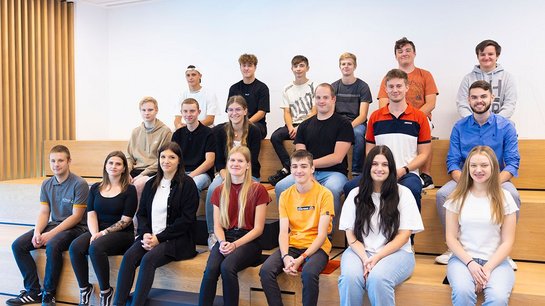
19 Auszubildende und Duale Studenten

Die „Rösler-Familie“ freut sich über 19 Neuzugänge

Die Rösler Oberflächentechnik GmbH bleibt in der Region einer der wichtigsten Partner beim Thema Ausbildung: 14 junge Schulabgänger beginnen zum 1. September eine Lehre in einem technisch-gewerblichen oder kaufmännischen Beruf in Memmelsdorf und Hausen. Dazu kommen fünf Studenten, die bei Rösler den praktischen Teil ihres dualen Studiums absolvieren. Mit der Zahl der abgeschlossenen Ausbildungsverträge ist Anja Süppel, Abteilungsleiterin für den Bereich Ausbildung bei Rösler, durchaus zufrieden. Doch auch bei dem familiengeführten Industrieunternehmen wird es zunehmend schwieriger, die Stellen zu besetzen. "Der heutige Tag ist für uns alle immer wieder etwas ganz Besonderes", so Anja Süppel, Abteilungsleiterin für den Bereich Ausbildung bei Rösler. "Wir sind uns bewusst, was für eine Bedeutung der Tag für unsere jungen Berufsstarter hat. Deshalb wollen wir ihn so positiv wie möglich gestalten. Wir füllen diesen Tag mit viel Information und Wissen, aber auch mit der Möglichkeit, sich kennenzulernen. Sollten die jungen Leute Ängste oder Bedenken haben, dann versuchen wir ihnen diese zu nehmen. Damit sie mit viel Freude ins Berufsleben starten können." Doch nicht nur der erste Tag soll etwas Besonderes sein für die jungen Berufsanfänger bei Rösler. In der zweiten Woche stehen die „Projekttage“ an, bei denen die Neu-Azubis ihren Ausbildungsbetrieb und die Unternehmenskultur intensiv kennenlernen dürfen. Das große Finale ist am Freitag der Outdoor-Tag auf dem CVJM-Gelände in Altenstein. Zusammen mit einer Trainerin lernen sich die Auszubildenden dort als Gruppe kennen. „Sie erfahren, dass keiner allein ist und dass wir als Unternehmen eine tragfähige Gemeinschaft sind. Das ist dann der Tag, an dem spätestens die Handynummern ausgetauscht und erste Verabredungen getroffen werden,“ so Anja Süppel. „Viele Azubis erinnern sich noch Jahre später daran zurück, und für uns als Ausbilder ist es immer wieder schön zu sehen, wenn aus vielen Einzelnen ein Team wird.“ Zufriedene Auszubildende sind die beste Werbung Ein hohes Engagement und viel Wertschätzung für die Azubis sind bei dem Mittelständler selbstverständlich. Denn zufriedene Auszubildende sind für das Unternehmen auch eine wichtige Werbung. Auf diese Werbung kann ein Unternehmen wie Rösler heute nicht mehr verzichten, da die Zahl der Bewerber seit Jahren rückläufig ist. Besonders im Bereich Produktion. In einem dieser schwierigen Bereiche geht das Unternehmen jetzt dennoch in die Offensive. Geplant ist, in einem Pilotprojekt ein- bis zwei Bewerber im neu geschaffenen Ausbildungsberuf „Maschinen- und Anlagenführer“ auszubilden. Dabei sollen neue Zielgruppen angesprochen werden, neben Berufsanfängern etwa auch ungelernte Arbeitskräfte aus dem eigenen Unternehmen oder von extern, die ihr praktisches Wissen spezifizieren und einen Berufsabschluss erwerben wollen. Die Ausbildung soll in der Abteilung Compoundfertigung angesiedelt werden. „Wir sehen es als gute Chance, Fachpersonal für die Produktionsbereiche selbst auszubilden. Gerade weil wir die richtigen Infrastrukturen dafür haben: Produktionsanlagen, engagierte Ausbilder und eigene Ausbildungswerkstätten,“ unterstreicht Anja Süppel. Die Suche nach geeigneten Auszubildenden für Herbst 2023 hat bereits begonnen. Für die jungen Schulabgänger bietet der Ausbildungsmarkt dann erneut enorme Möglichkeiten. Das Rösler-Ausbildungsteam freut sich auf viele Bewerbungen. Die Rösler-Gruppe sucht für das Jahr 2023 folgende Auszubildende: Industriekaufleute, Chemielaboranten, Technische Produktdesigner, Konstruktions-mechaniker, Industriemechaniker, Mechatroniker, Elektroniker für Betriebstechnik, Fachkräfte für Lagerlogistik, Maschinen- und Anlagenführer und Fachinformatiker. Ein dualer Studiengang ist möglich im Bereich Wirtschaftsingenieurwesen oder Elektrotechnik. Die Partnerhochschule von Rösler ist die Duale Hochschule in Mosbach. Online-Bewerbungen sind ab sofort möglich über die Internetseite: www.rosler.com Bei Fragen zu Ausbildung/Dualem Studium gibt Anja Süppel gerne Infos unter Tel.: +49 9533 / 924-442 oder per E-Mail an: a.sueppel@rosler.com

Comprehensive Mass Finishing System Provides ‘Shear’ Results for Gardena

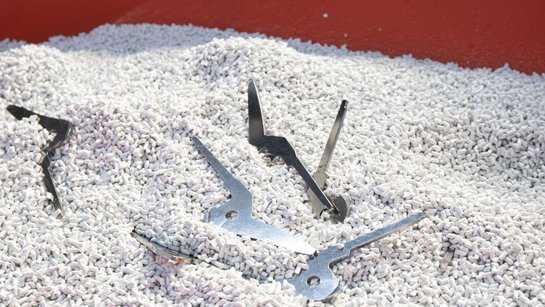
Improved productivity, increased production capacity, better quality, and lower costs—a leading garden tool manufacturer tasked Rosler with developing a new mass finishing system to improve the deburring and polishing of garden shear knives. Rosler provided a solution in the form of a tailor-made Keramo-Finish ® process carried out within a double-batch centrifugal disc finishing machine. Known as the FKS 35.1 A2-So , the system includes fully automatic work piece handling and a two-stage process that deburrs and polishes stamped and laser-cut knives. Work pieces are subsequently dried in an energy-efficient rotary dryer and prepared for the next manufacturing step. The Situation For more than 60 years, the Gardena division of Husqvarna Group has developed a variety of gardening products and tools. The company’s broad product range includes innovative systems for irrigation, soil cultivation, and lawn, tree, and shrub care. Gardena products are used in more than 80 countries worldwide. To ensure easy and simple handling, produce excellent cutting performance, and guarantee long service life, the Gardena’s shear components are produced with state-of-the-art manufacturing technologies. Stamping or laser cutting of the upper and lower knives followed by surface finishing is an important step. Gardena shear components in a Rosler mass finishing machine Previously, the lower knives required two separate finishing operations: one in a rotary vibrator and one in a centrifugal disc finishing machine . Since Rosler originally provided systems for the two separate operations, Gardena trusted Rosler to develop a combined solution with upgraded manufacturing capabilities and increased automation. In streamlining the mass finishing process, Gardena sought to optimize its process, improve productivity, increase capacity, and reduce operating costs. The Solution Keeping subsequent manufacturing steps in mind, engineers ran a series of trials with various processing media and different parameters in one of Rosler’s Customer Experience Centers . Gardena Keramo-Finish® process in use A Keramo-Finish ® process in a centrifugal disc finishing machine produced the best results. The specific process includes the use of a ceramic media with minimal abrasive characteristics in combination with a grinding and polishing paste and a cleaning compound with a distinct brightening effect. Most importantly, the new process allows the deburring and polishing of all knives with a single machine. The rotary vibrator was no longer required, and the work piece handling was simplified. Moreover, depending on the work piece type, the new Keramo-Finish ® process has reduced processing times significantly and now allows for bigger work piece batches. These improvements have helped reduce operational costs by approximately 10% while delivering improved finishing results. The Process The new double batch centrifugal disc finishing machine was perfectly integrated into the manufacturing flow at Gardena. Work piece specific processing programs stored in a PLC controller allow targeted finishing of the various knife types. After stamping and laser cutting, the work pieces are collected in perforated metal bins. An operator utilizes a swing crane to dump the raw knife components into a loading device that transfers them into a vibratory feed hopper. Once the respective finishing program has been manually selected, the hopper automatically feeds a work piece batch into the work bowl for processing. Following the preset finishing time, the work bowl gently dumps the mix of finished work pieces and media onto a vibratory hopper. The mix then passes through a vibratory separation unit where a screen separates work pieces from media. The media mix itself is further screened to discharge undersized media that is no longer suitable for the finishing process and guarantee a continuous high process stability. Gardena rotary dryer with direct heating While usable media is returned to the work bowl, the finished knife blanks are transferred to a drying station filled with a maize-cellulose product. The rotary dryer RT 550 Euro-DH is equipped with an innovative new direct heating system that guarantees not only fast, reliable, and spot-free drying of the work pieces but also produces energy savings of up to 40% compared to conventional rotary dryers. After completion of the drying cycle, knives are transferred to another vibratory hopper that loads them into small transport carriers made from plastic. A fully automatic Z 1000 centrifuge cleans the process water for re-use in the finishing process. This recycling helps save valuable resources by drastically reducing water consumption and promoting sustainable and efficient operation of the new mass finishing system. Automated Advantages The automated aspects of Gardena’s new system went beyond improved efficiency and capabilities to provide an additional advantage in the reduced need for manual labor. Like many employers, Gardena has faced increasing competition for manpower. The use of work piece handling systems, conveyor belts, and robots have helped bridge the gap in human resources and maintain production rates. Additionally, in the world of manufacturing, this mitigation of human intervention offers even greater and more measurable efficiencies. The Rosler Way Decades of experience and ability to design, service, and maintain machines as well as the consumables and accessories to get the finish you require make Rosler a well-rounded surface finishing expert. Contact us to discuss your mass finishing needs.
advanced version of the digital process water management system

Rösler Smart Solutions: Advanced version of the digital process water management

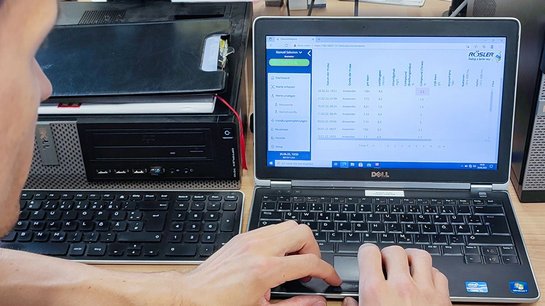
Sustainable and cost-efficient surface finishing of balancing weights Today centrifuges are the most commonly used systems for cleaning and recycling the process water required in mass finishing operations. For example, the globally leading supplier of balancing weights, Wegmann Automotive, is utilizing a fully automatic Rösler centrifuge, model Z1000. As a pilot customer Wegmann expanded the software for its centrifuge with the “advanced version” of the innovative digital process water management system from Rösler Smart Solutions. Compared to the previously practiced manual process control the new software package with its digital algorithms has produced considerable benefits. It helped not only to improve the overall product quality but also resulted in substantial cost savings. When it was founded in 1882, the company initially was building carriages. From these modest beginnings Wegmann expanded into a corporate entity with three different business units. In their respective fields all three units are global market and technology leaders. The Krauss-Maffei Wegmann GmbH & Co. KG develops and produces a wide range of products in the field of national defense. The Schleifring GmbH is a leading provider of systems for the transfer of energy, electrical signals, data and electronic media. With a huge portfolio of balancing weights, tire valves, battery terminals, tire pressure control systems, including suitable service kits and special weights, the Wegmann Automotive GmbH supplies not only numerous automobile manufacturers but also serves the entire automotive aftermarket. The company, located in Veitshöchheim, Germany, produces more than one billion components per year. As global leader for balancing weights Wegmann Automotive produces percussion and adhesive weights for steel and aluminum wheels. A mass finishing operation that must meet stringent demands The balancing weights are made as stampings from steel and galvanized steel as well as die-castings from zinc or zinc alloys. Eugen Weizel, the department manager for mass finishing and coating at the Wegmann Automotive company, explains: „After the stamping or die-casting process the weights undergo a part-on-part mass finishing operation in a rotary vibrator. The goal is to completely remove the residual oil left over from the stamping process and the water-based mold release agent left over from the die-casting operation. At the same time the utilized compound provides a corrosion protection for the steel parts. On the other hand, the zinc die-castings require a certain surface tension for the subsequent coating step. The surface tension is carefully monitored and controlled.” Mr. Weizel’s colleague Manuel Salomon, as WAPS (short for Wegmann Automotive Production Systems) responsible for setups in the coating department, trainings and Lean Management, adds: “A high compound concentration in the process water is beneficial for the corrosion protection on the steel parts. But if it is too high, we will not achieve the required surface tension on the zinc components. This can cause inadequate coating results and may even force us to scrap some products.” The product quality depends on the quality of the process water Since the process water is recycled, the process water cleaning operation with a fully automatic Z1000 centrifuge from Rösler and the control of the compound concentration are key factors that determine the quality of the balancing weights. Manuel Salomon continues: „When the mass finishing machine and the centrifuge were commissioned, we quickly recognized that there is a close correlation between the process water quality and the quality of our products. Therefore, we carefully measured the compound concentration once per week and recorded the measured results. This allowed us to precisely define the compound concentration for our finishing process and correct it as needed.” Since measuring and recording the concentration values was quite time consuming, Wegmann gladly accepted Rösler’s offer to utilize the advanced version of the “digital process water management system” as a pilot user. Eugen Weizel concludes: „We quickly recognized the benefit to further develop and refine the software package together with Rösler, and, at the same time, to deepen our process knowledge.” The new, interactive monitoring and control system for process water cleaning and recycling with semi- and fully automatic centrifuges is integrated into the centrifuge controls and allows the monitoring, recording and evaluation of all relevant process parameters. At Wegmann this includes measuring the compound concentration by titration or refraction (BRIX), the pH value, the process water conductivity, the water hardness, the microbiological contamination with bacteria, yeast and fungi, chloride contents, CSB value (chemical oxygen demand) and BIT concentration (biocide in the process water. The system also monitors the appearance and the smell of the process liquid. The process water parameters to be monitored can be individually selected and their values adapted to the respective finishing requirements. In the basic version of the digital process water management system from Rösler Smart Solutions the samples are taken manually and analyzed with suitable measuring devices that can also be supplied by Rösler. After the data have been entered into the system, the algorithm in the software determines if the measured values are within the specified limits. In case of deviations the dashboard displays suitable actions, which can be immediately implemented. In addition, the technical background and corrective actions are explained in detail. This allows the operator to undertake the measures required to bring back the values into the acceptable range and to secure the desired process stability. Since all parameters are stored in the system, they can be retrieved at any time, for example, in the form of a table or a chart. The latter helps to prevent unwanted and costly downtimes by carrying out necessary process water changes during periods, when they are not interfering with the manufacturing operations. The complete documentation of the operational parameters is also a valuable tool to prove the process quality and process stability during quality audits as well as for validation purposes. Recommended actions can also be called up in case of events that affect the overall quality of the mass finishing process. This includes foaming during the process, corrosion of the work pieces or insufficient work piece cleanliness that could negatively affect subsequent manufacturing steps. Manuel Salomon comments: „The pointers and recommended actions are extremely helpful. In the past we measured the process parameters. But when it came to the necessary corrections, we were entirely on our own. And in case of process problems we had to search for solutions ourselves, or we had to ask for help by telephone. Today the digital system provides all the support we need. This is especially helpful for colleagues with little knowledge of mass finishing and process water cleaning and recycling.” A simple solution that can be quickly implemented The smart process water management system has been in operation at Wegmann Automotive since the middle of March this year. Eugen Weizel remarks: „The software structure is well organized and easily understandable. And the system can be fully utilized after a short training. All critical data are arranged so that they can be viewed at a glance. And the entire information is presented in an easy-to-understand manner.” While in the past the compound concentration was only measured once per week, now it is measured twice, once in the morning and once in the afternoon of a particular day. In addition, the pH value is recorded, and the appearance and smell of the process water is monitored. „This approach provides us with valuable information about our process. For example, the development of the compound concentration tells us that due to a higher volume of oily work pieces we must increase the compound dosing rate to maintain the required process water quality,” explains Manuel Salomon, who continues: „Another example is the microbiological contamination. In the past we did not control this at all. If the contamination is too high, it can have an adverse effect on the corrosion protection of steel parts.” Significantly improved process stability and cost-efficiency For monitoring the various parameters with the digital process water management system Wegmann Automotive needs about 20 minutes per week. Compared to the once-per-week measurement of the compound concentration this requires about 15 minutes more. But the technical and economic benefits achieved by the digital system are so significant that the company gladly accepts the fact that a bit more time must be invested. Eugen Weizel concludes: „With the digital process water management system we find out quickly, if for example, the compound concentration is no longer adequate. Since this could have an adverse effect for subsequent manufacturing steps, we are grateful to have such a valuable, early warning system. Our finishing process is now not only a lot more stable but also more economical.” Therefore, it is not surprising that the company is interested in the next version of the digital process water management system from Rösler Smart Solutions. This allows the automatic measurement, evaluation and recording of the process parameters.
Foundry-Specific Shot Blasting Achieves Increased Efficiency

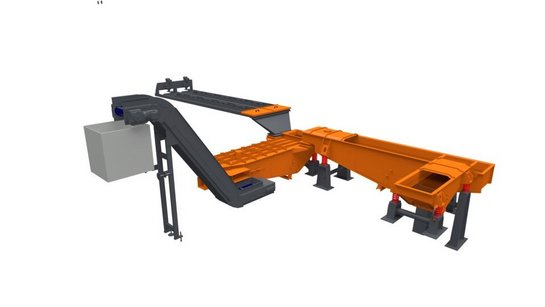
Replacing a shot blasting machine for a long-time customer requires finding a better way to deliver efficient finishing in a faster, smaller, and more maintenance-friendly way. That’s exactly what Rosler delivered when Linde Material Handling (Linde) returned to us for a shot blasting upgrade. Linde is a supplier of forklift trucks and warehouse equipment and also provides technical intralogistics solutions and services. With a sales and service network spanning more than 100 countries, the company has a global footprint. For this particular partnership, Linde’s foundry in Weilbach, Germany, challenged Rosler to supply a new shot blasting system capable of finishing and maneuvering the counterweights it manufactures for forklifts. Our solution was a sturdy foundry version of a continuous hanger shot blast machine known as the RHBD 22/27-F. The Situation Linde continuously strives to improve its manufacturing operations. As such, the new machines had to accomplish several goals, including faster processing, more flexible material flow, optimized utilization of available space, improved access to all critical maintenance areas, and increased overall efficiency. Working closely with the Linde project team, Rosler identified ways to optimize the material flow and increase overall flexibility within the shot blasting technology utilized. To fulfill the demand for better utilization of space, these technology enhancements were built into a customized version of the RHBD continuous feed spinner hanger blast machine. The Solution The newly created machine is setting new standards for surface finishing in the foundry industry, and its fully automatic and flexible operation integrates seamlessly into Linde’s existing manufacturing systems. Within the scope of the newly laid out material handling process, raw castings are deposited in a specially reserved and clearly marked staging area in front of the blast machine’s inlet chamber. An operator then manually positions the castings and prompts the system to transport the work pieces through the shot blasting chamber. Different PLC programs define and store specific shot blasting and transporting parameters based on the specific work piece being processed. This ensures that the various counterweight types are perfectly clean and free of residual molding sand after shot blasting. The work pieces also display highly homogeneous surface roughness and the typical casting structure even after subsequent painting. The Process After work pieces have been manually positioned in the staging area, trolleys on a power and free work piece transport system pick up and carry them through the different machine sections, including the inlet, blast, and outlet chambers according to predetermined indexing time intervals. A rendering of the RHBD 22/27-F’s blast media return and cleaning systems Despite being housed in a very tight space, Linde’s new RHBD is easily accessible for maintenance thanks to placing the return system for blast media and sand underneath the shot blasting machine. The system also includes a return system for sand left on the staging area after manual positioning. Both collections of sand and debris as well as any sand and blast media from the outlet chamber are transferred to the central screening hopper below the blast chamber where sand clumps, burrs, and metal flashings are separated, transferred to a sturdy Z conveyor belt, and discharged from the machine. The remaining sand/media mix is transported to an elevator and into a highly efficient media cleaning system. Consisting of a dual-stage magnetic separator and an airwash system, the media cleaner ensures high cleaning efficiency, guarantees trouble-free operation, and minimizes wear and tear on the shot blasting machine. The Specifications The three-chamber design of Linde’s RHBD shot blast machine also helps to minimize the escaping of sand, blast media, and dust into the immediate environment. The RHBD 22/27-F blast chamber At the center of the entire shot blast system is the blast chamber with five specially placed blast turbines. The chamber is made from wear-resistant austenitic manganese steel, grade X120Mn12. For additional wear protection, the blast chamber is also lined with 25 mm thick replaceable cast chromium plates. A large maintenance platform, easily accessible by stairs, greatly facilitates these and other required maintenance activities. The Rosler Way “Finding a better way…” is more than a motto at Rosler; it’s our mission. With more than 80 years of experience and a portfolio containing more than 15,000 equipment and consumable products, solving challenges is what we do. Contact us today to discuss your surface finishing goals and how we can deliver improvements!
Stüken rotary vibrator separation

Perfect finish for deep-drawn precision components

For tiny precision components with dimensions of < 1 mm and deep-drawn from 100 micrometer thick sheet metal, the surface finishing operation can be quite a challenge. Stüken, a worldwide leading manufacturer of such products, is meeting this challenge with custom-engineered equipment and specially developed media and compounds from Rösler. The solutions, offered by Rösler, guarantee a safe, risk-free deburring and edge radiusing process and ensure that the customer’s surface finishing specifications are fully met. A pioneering spirit, a forward looking company philosophy, an innovative approach and the conviction that efficient solutions can only be achieved in a cooperative environment - with this business approach Mr. Hubert Stüken started his business in 1931. 90 years later the Hubert Stüken GmbH & Co. KG is the world’s leader in the field of deep-drawn metal precision components. Stamped and bent parts, plastic-coated components and complex assemblies are complementing the product range of this family-owned company operating five manufacturing plants in Europe, the United States and China. The small high-precision parts are generally not visible after assembly. They are made from all metals that can be shaped by deep-drawing, such as stainless steel, copper, brass, aluminum, titanium and molybdenum. Stüken components are utilized in numerous technical products. For example, on average a fuel-driven passenger car contains about 40 Stüken parts. For vehicles with alternative drive systems this number tends to become even higher. The company’s components are also used in the products of such diverse industries as electronics, information and communication technology, medical engineering, pharmaceutical, household appliances and a wide range of consumer goods. However, they also play an important role in many other industries. Joint development of solutions – also for surface finishing To ensure that it can offer technically and economically optimal solutions to its customers, the company maintains its own R&D and development department at the corporate headquarter in Rinteln, Germany. Andreas Hellmann, sales manager at Stüken, comments: „For many of our customers we are a development partner. To perfectly adapt new products to their intended use, we are not only working with our customers but are also cooperating with partners from various technological sectors“. When it comes to issues around surface finishing that can be resolved by mass finishing, for 30 years the company has been relying on the experience and knowhow of the Rösler Oberflächentechnik GmbH. The sales manager continues: „Our partnership is based on Rösler’s excellent quality, reliability and high uptime of the equipment and the good technical service. We also appreciate the company’s comprehensive knowhow and Rösler’s flexibility for developing solutions as a team. A major advantage is that Rösler has a technical presence at all locations, where we are manufacturing our components”. At its manufacturing locations around the world this deep-drawing specialist is using around 15 rotary vibrators, 10 centrifugal disk finishing machines and 18 centrifuges for cleaning and recycling of the process water. The deep-drawn components are generally characterized by an extensive degree of material shaping, complex geometries and extremely small dimensions requiring a high dimensional accuracy. This results in especially demanding specifications for deburring, edge radiusing and polishing of external and internal work piece areas. Equally challenging are the surface roughness and surface quality requirements. Dirk Schulz, project engineer at Stüken, explains in more detail: „On the one hand we must ensure that all pieces within a work piece batch receive the same high-quality surface finish. On the other hand, the metal removal rate on components with very thin walls and a large surface area must be limited so that the mass finishing operation does not damage or deform them. Furthermore, after completion of the finishing process the work pieces and the media must be reliably separated. A carry-over of work pieces and/or media into the next batch must be prevented at all costs!” This requires not only the precise adaptation of the finishing process to the work pieces. Likewise, the equipment and consumables must also be matched to the work pieces and the finishing goal. Frequently, this requires conducting special feasibility studies. Process development, equipment specification and media selection through processing trials For complex new components, the finishing processes are usually developed in the Rösler Customer Experience Center. This is equipped with ultra-modern machines that allow running a wide variety of different finishing processes. In extended processing trials the most suitable equipment technology and machine specification is defined. The trials frequently demonstrate that the usually smooth wear lining of the processing bowl of a mass finishing machine must be structured, in other words, must be somewhat rougher. „This prevents very small and light-weight components from adhering to the wall of the processing bowl. Also, to ensure a complete and reliable separation of the finished work pieces from the media, the separation units and screens must be frequently specially engineered”, explains Dirk Schulz. Of course, equally important is the optimal adaptation of the ceramic or plastic media type and shape to the respective finishing task. In order to achieve consistently good surface finishes, very often the media must have extremely tight dimensional tolerances. In a final step the process parameters, for example, the motor speed of the mass finishing machine, the batch size and cycle time must be defined. In this respect the comprehensive mass finishing experience and knowhow at Stüken plays an important role. Highly effective process water cleaning and recycling The finishing operation is not the only factor that determines the quality and cost-efficiency of a mass finishing process. Equally important is the system for cleaning the process water. The project engineer explains: „The finishing process is removing material from the work pieces and the media that contaminates the process water in the form of small metal and media fines. These fines must be reliably removed from the process water, before it can be re-used in the finishing process. For this purpose we are utilizing cleaning centrifuges, which are also supplied by Rösler”. The perfect technical adaptation of the Rösler centrifuges to the respective cleaning tasks ensures a high cleaning effect so that the cleaned process liquid can be recycled to the mass finishing process for re-use. This saves not only valuable resources but is also very eco-friendly. The optimal and consistent surface refinement of precision components made with the deep-drawing method requires the perfect interplay between equipment technology, consumables and process water cleaning. Generally, the best results are achieved by close cooperation with the customer.

New Compounds Double Process Water Usability

Experienced manufacturers know that optimum mass finishing process water handling, dosing, and recycling can significantly reduce operational costs and improve finishing results. With approximately 15,000 different products and the largest, continuously expanding range of media and compounds in the world, Rosler has the machines, consumables, and the experience to develop and maintain precise, efficient, and sustainable surface finishing processes. Our latest innovation in the field of consumables, Long Life Compounds known as LF compounds , allows mass finishing operations to further optimize their process water cycles. Advantages LF compounds utilize a special combination of raw materials to guarantee a remarkably high degree of sanitary stability. So much so that, in most cases, the addition of biocides to process water can be eliminated or greatly reduced when using these new compounds. Cleaner water, in turn, extends the usable life of your process water by nearly twofold. These savings in water and compound usage as well as associated disposal costs produce cost savings of up to 60%. These compounds also assist in optimizing mass finishing operations by lowering maintenance costs of the water recycling/circulation system itself and producing increased system availability and productivity. Applications Generally, any process with a recirculation system can utilize LF compounds. Finishing applications in need of increasing bactericides and hazardous substances, in particular, are good candidates for the use of LF compounds. Processes in need of defoaming compounds or additives also benefit from switching to LF compounds. Options Typically used to reduce issues of foaming, Rosler’s ZF compounds have been further optimized leading to the introduction of the long life LF compounds range. Effective properties of these existing compounds have been integrated into the new products along with improved system hygiene features. The LF compound line will continue to grow. Currently available formulas and their defining characteristics include: LF 110 – Offers the highest corrosion protection. LF 113 – Designed for universal application. LF 138 – Designed for universal application with good degreasing properties. The Rosler Way We understand that your work pieces deserve special treatment. When it comes to placing the optimal finish on their surface, you can rely on Rosler’s consumables and equipment. With more than 80 years of experience and an ever-evolving catalog of developments and innovations, we are confident that we can improve your surface finishing processes. Contact us to discuss your mass finishing and process water needs.