Solution Finder
SOLUTION FINDER

Su guía a través del
mundo de productos Rösler

Con unos pocos clics encontrará la máquina adecuada a sus necesidades.

Resultados: 237 Artículo - 51 Productos

Wet Blasting Equipment & Media, Part 1 – Machines Range in Complexity, Uses

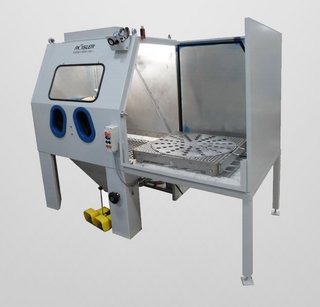
Because of its many technical advantages and versatility, wet blasting is the fastest-growing segment in the field of shot blasting . As with dry blasting, the available scope of wet blasting machinery ranges from simple, low-cost blast cabinets to sophisticated, partially or fully automated systems . Customers can choose between a wide spectrum of standard wet blasting equipment, however, for certain applications, special custom-engineered systems may offer the most efficient and cost-effective solution. The machine type is usually determined by the processing task, the size and shape of the work pieces, and the desired degree of automation. Frequently, multi-axis robots are used for work piece handling or guiding the blast gun movement. Rosler has extensive experience in wet blasting technology and the development of customized solutions. We have even developed the Rosler PureFinish® system for cleaning stainless steel components for the chemical, food, and pharmaceutical industries through wet blasting. This system cleans the work piece surface while facilitating cleaning, sterilization, and prohibiting bacterial growth. Learn more about common types of wet blasting systems and examples of machine use for a glimpse into the technical capabilities wet blasting offers. Manual Blast Cabinets Capable of processing work pieces weighing up to 500 lbs (230 kg), the Rosler VB 100 H manual blast cabinet with retractable turntable removes radioactive particles from stainless steel components in nuclear power plants. Blast cabinets are ideal when a variety of part sizes and materials are processed by a single wet blast system. The cabinets can be equipped with turntables, baskets, blast nozzles, pressure blasting systems, oscillators, and other special auxiliary equipment, making them very versatile. The large side access doors provide clear access to the complete blast chamber. Satellite Table Machines The Rosler Satellite Table Machine RWB 72 12/4 is equipped with three blast stations and one load/unload station. Each of the three blast stations houses four blast guns. Customized to meet the customer’s work piece size and ideal batch times, satellite table machines are built with an indexing satellite table and equipped with a variable number of work stations and blast guns. The various configurations allow one or more stations to operate while a designated station is loaded/unloaded to allow for continuous processing. Robotic Wet Blast Machine Rosler’s robotic RWB models feature robotic movement of the blast gun(s) for treating small- to midsized-work pieces including de-powdering, general cleaning, and surface smoothing. Capable of processing plastic and metal work pieces, robotic wet blast machines offer all the advantages of regular wet blasting machines with less need for human intervention. Drop Door Wet Blast Machines with Robotic Gun Movement Capable of cleaning work pieces of up to 1,000 lbs (460 kg), Rosler’s special ASPE 1520 RH machine with robotic movement is used to remove machining lines from high-precision components. Ideal for large, heavy work pieces, wet blast machines featuring drop doors and robotic gun movement are often used for oversized and specialized work pieces. The drop door allows for easy loading and precise positioning of the work piece. The robot can reach all critical areas of the part. Blast Rooms Rosler’s Wet Blast ABR 10 x 8 is used for general surface cleaning including the removal of welding lines for all kinds of large, stainless steel components specifically made for the chemical, food, and pharmaceutical industries. For manual wet blast cleaning of large, bulky stainless steel components, blast rooms offer useful versatility. They can be built in practically any size. Finding a better way… Rosler has more than 80 years of experience in shot blasting. Whatever your wet blasting challenges are, we are confident that we can deliver a solution. Contact us to discuss your needs today! Previous posts in the Wet Blasting Equipment & Media series include: Part 1 – “Machines Range in Complexity, Uses.” Part 2 – “Technical Components Combine for Systematic Success.” Part 3 – “Maintain Slurry Concentrations for Finishing Consistency.” Upcoming posts will include: Part 4 – “Internal Cleaning, Rebuilds Prolong Machine Lifetime.” Part 5 – “Careful Media Selection, Additive Use Impact Results.” Sign up for enews alerts to be notified of new posts!

New shot blast machine increases capacity, improves quality and optimizes manufacturing efficiency

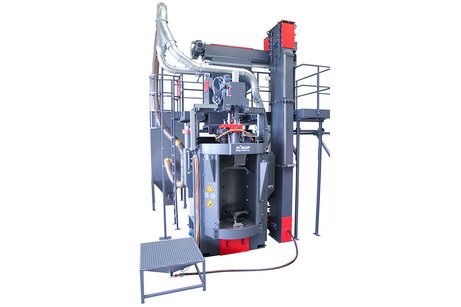
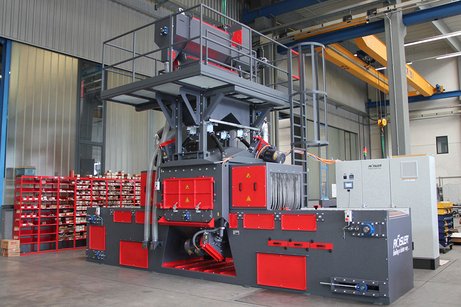
Due to continuously growing demand for its products a globally leading supplier of iron castings had to increase its shot blasting capacity. At the same time, the new shot blast machine was intended to improve overall product quality and streamline the production flow. The company chose the Rösler wire mesh belt blast machine RDGE 1250/300-8, because it offered a custom-engineered solution and because of the customer’s positive experience with Rösler from previous projects. The Gienanth GmbH, located in Eisenberg in the German Palatinate area, has a long history that reaches back to the 15th century. This history has been characterized by tradition, comprehensive knowhow and innovation in the field of cast iron components. Today, Gienanth produces its products at four locations in Germany, Austria and the Czech Republic. Besides engine blocks for large engines, utilized in ships, railways and generators, the company also produces components for all kinds of machinery as well as parts for the automotive and utility vehicle industry. This cast iron specialist considers himself as a solutions provider, who supports the customers along the entire value-added chain covering the generation of ideas, product development, material selection and production of the ready-to-mount components. With this integral approach the company has experienced a continuously growing worldwide demand for its products. It was also the reason for Gienanth receiving the German Innovation Award 2019 for the bionic re-design of the carrier plate for the brake pads in utility vehicles. High technical standards and difficult installation conditions Due to a steadily growing demand for the cast iron products the existing shot blast machines could no longer handle the higher production volume. Jens Eckel, project engineer at Gienanth in Eisenberg, summarizes the technical requirements as follows: „With the new shot blast machine we intended not only to increase our capacity, but we also wanted to make the shot blasting operation more efficient and improve the overall quality.“ To achieve an acceptable uptime of the critical machine components the equipment design had also to take into consideration the highly aggressive, angular and extremely hard blast media and the fact that every hour around 200 kg of sand are carried into the shot blast machine. Another challenge was the building, where the shot blast machine had to be placed: Because of the sawtooth roof with its complex support structure the overall machine height had to be reduced by installing a split elevator. Custom-engineered wire mesh belt blast machine in particularly robust design "Rösler was willing to customize the wire mesh belt blast machine RDGE 1250/300-8 exactly to our technical requirements. Of course, another important factor in our decision for Rösler was the excellent experience we had with this supplier through previous equipment projects”, reports Jens Eckel. To adequately deal with the extremely harsh operating conditions for de-sanding and cleaning, the shot blast machine was equipped with eight high-performance Rutten Gamma 330-HD turbines, each with an installed power of 18.5 kW. The machine handles a blast media throughput of up to 2,520 kg per minute. The eight blast turbines are equipped with six throwing blades in the innovative “Y” design. Compared to conventional turbines this special blade geometry generates an up to 20% higher shot blast performance with a lower energy consumption. Another significant advantage of the “Y” blades is that both blade sides can be utilized by simply turning them around. For optimal shot blast results four turbines are placed in the roof and the other four turbines are located in the bottom of the blast chamber. The special requirements of the customer were a key factor for the particular placement of the turbines: To prevent the smaller work pieces, weighing only 1.0 to 1.5 kg, from changing their position, moving on top of each other or getting blown off the wire mesh belt, the turbines are mounted at a slight angle. This allows the blast patterns of the upper and lower blast turbines to meet precisely at the wire mesh belt so that the blast stream from the upper turbines holds the work pieces in place. At the same time, the somewhat higher blast performance of the lower turbines causes the work pieces to get slightly lifted from the belt. This eliminates the risk of shadowing. Fully automatic shot blasting operation that is fully integrated into the manufacturing flow A vibratory conveyor transports the raw castings directly from the casting cell to the shot blast machine. This vibratory movement already removes some of the sand from the castings. At the inlet section of the shot blast machine the work pieces are transferred onto the 1,250 mm wide wire mesh belt. An employee makes sure that the work pieces are evenly distributed on the belt. After the shot blasting operation the castings are transferred to a 15 m long transport system that was also supplied by Rösler. This special foundry conveyor, equipped with a particularly robust transport belt, transports the finished castings directly to the shipping department. Blast media recycling and cleaning system with a high cleaning efficiency The blast media recycling and cleaning system was also designed for optimal wear protection. The media/sand mixture is initially passing over vibratory screening conveyors placed below the shot blast machine. This allows discharging larger chunks of sand as well as residual scale and slag from the system. Subsequently, the mix is transported to a magnetic separator. There a finely tuned guide system distributes the media/sand blend over the entire width of the magnetic drums, thus generating a very thin curtain of media and sand. This precise curtain, in combination with the extensive magnetic force of the high performance magnets built into the drums, produces a cleaning efficiency of up to 99.8 percent. Dosing of the blast media also takes place automatically. For this purpose the media hopper is equipped with a level sensor. As soon as the media level falls below a pre-defined value, small media quantities are added to the system through a special media replenisher. This approach ensures a highly homogeneous media operating mix and guarantees consistent shot blasting results.

Hands-on research for knowledge-based mass finishing processes

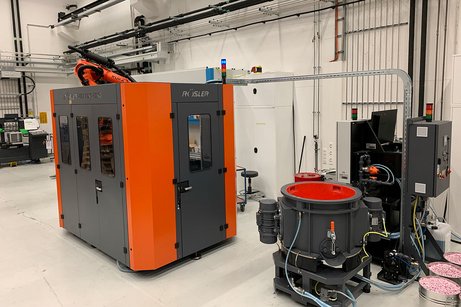
Innovative solutions are the driving force for the continuous creation of added value. In this respect the cooperation between science and industry plays a central role. A good example is the cooperation of the research department technological planning and grinding technologies at the machine tool institute WZL at the RWTH Aachen university with the Rösler Oberflächentechnik GmbH in the field of mass finishing. For more than 10 years the two partners have been working together. The RWTH Aachen is one of the eleven German universities that are recognized as “universities of excellence”. When it comes to the fields of technology and natural sciences, the Aachen university is one of the most renowned academic and research institutions. For decades the machine tool institute, one of the largest and oldest establishments at the Aachen university, has been a globally recognized beacon for future-focused research in the field of manufacturing technologies. One reason for this success has been the close cooperation between the four academic sectors “measuring technologies in manufacturing”, “quality management”, “manufacturing systems” and “manufacturing and machine tool technologies” combined with a balanced mix of basic and practical research. Marius Ohlert, project manager for grinding technologies in the field technology planning and grinding methods, that is integrated in the academic sector manufacturing technologies, comments: „Through the close cooperation with a variety of industrial companies we make sure that our research projects are based on industrial needs and that the results can be quickly transformed into practical results”. Mass finishing as a research subject he mass finishing technology is a widely used system for all kinds of surface refinement tasks such as deburring, edge radiusing, surface smoothing, polishing, descaling and de-rusting. Despite the importance of this technology for many industries most mass finishing processes are still based on the knowhow of experienced experts. Mr. Ohlert describes one research goal as follows: „With our basic research we want to achieve that mass finishing processes are knowledge-based, thus allowing a quicker, more efficient and goal-oriented process development. For this purpose we study in detail the physical effects of the various mass finishing methods”. With application-oriented finishing tasks one objective is to improve already existing mass finishing processes so that the work piece quality can be improved. On the other hand, surface finishing processes must be developed for work pieces made from innovative new materials or for work pieces produced with new manufacturing technologies. For example, this is the case with fiber re-enforced ceramics, which are still under development. For the necessary processing trials the WZL uses its own equipment but also the comprehensive range of mass finishing machinery at the Customer Experience Center of the Rösler Oberflächentechnik GmbH. Around ten years ago the manufacturer of mass finishing equipment and consumables entered a strategic alliance with WZL machine tool institute. „With Rösler we have a partner, who is highly motivated to further develop the mass finishing technology, not only within the company but also in cooperation with us. For this purpose we are constantly communicating with the company’s R & D department. From this information exchange about developments in the field of science and the experience in the industry we frequently identify questions and subjects for future projects”, explains Marius Ohlert. Additive manufacturing promotes investments in new finishing methods For example, such projects deal with the post processing of components, which are produced by either 3D printing or hybrid manufacturing technologies in such diverse industries as aerospace, automotive, medical engineering and tool manufacturing. The project manager continues: „The high design freedom of additive manufacturing allows the creation of components not possible with traditional manufacturing methods. For the post processing of these complex components the mass finishing technology is, compared to classical machining systems, much better suited. The activities in this field, which Rösler pursues under the brand name AM Solutions-3D post processing technology, are especially valuable for the cooperation with the WZL institute. They were also the reason for investing in two new finishing machines, which we purchased in close cooperation with the colleagues from a partner institute that deals intensively with additive manufacturing”. Moreover, this investment allows the WZL institute also to further demonstrate the possibilities of the mass finishing technology for the basic research as well as for specific industrial projects. The institute purchased a surf finisher 700, a special rotary vibrator R 150 DL-2 and a semi-automatic centrifuge Z 800 K-HA Turbo-Floc for cleaning and recycling the process water from the mass finishing machines. State-of-the-art technology for optimal process development BThe surf finisher is a mass finishing system that allows the fully automatic, precise processing of entire work pieces or the targeted finishing of selected work piece surface areas with a wet or dry process. The plug-and-play system is equipped with an integrated robot that holds the work piece into the rotating processing bowl filled with grinding media. If required, the robot can also guide the work piece through the processing bowl with pre-programmed, computer-controlled movements. This allows the finishing of different work pieces with an individualized, pre-programmed process. The special rotary vibrator allows the surface grinding, smoothing or high gloss polishing of work pieces with complex shapes. The components, attached onto special fixtures, are mounted in the processing bowl of the vibratory system. Imbalance motors attached to the processing bowl induce a vibratory movement into the mounted work pieces. In turn, during the entire cycle time the processing media flows evenly through and around internal channels, undercuts and the work piece contours. The new, semi-automatic centrifuge thoroughly cleans the process water from both mass finishing machines so that the cleaned liquid can be re-used for the finishing operation. This is not only advantageous for environmental reasons but also for reasons of sustainability. Exchangeable processing bowls ensure maximum flexibility The processing bowls of the surf finisher and the special rotary vibrator can be easily exchanged. This allows a highly flexible utilization of the new finishing machines and, therefore, fulfills a key requirement of the WZL institute. The processing results depends not only on how the work pieces are handled but also on the selection and the flow characteristics of the media in the processing bowl. Marius Ohlert concludes: „For our studies it is essential to vary the media flow as well as the work piece handling, be it through a robot, mounting the work pieces to a fixture or having them loosely tumbling in the media. Of course, our studies also include the use of different media types, shapes and sizes. In this respect it helps that Rösler develops and produces all its media in-house so that we can rely on the company’s entire spectrum of ceramic and plastic media”. The studies concerning the stability and repeatability of mass finishing processes and the increased use of the new finishing systems for the post processing of 3D printed components require a lot more processing trials with higher work piece quantities. Rösler and the WZL institute at the RWTH Aachen university are jointly meeting this challenge to be ready for the mass finishing requirements of tomorrow.

Mass Finishing Water & Compounds, Part 1 – Identifying, Correcting Hard and Soft Water Issues

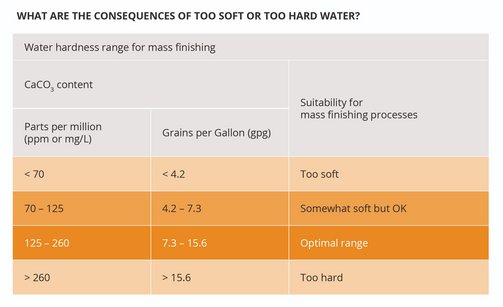
Achieving the desired surface conditions in a mass finishing process requires the machinery, consumables , compounds , and process water to work together in a balanced manner. Independent of the other process elements, the process water itself must be evaluated for hard and soft water issues. Rosler has more than six decades of experience designing mass finishing machinery, supplying consumables and compounds, and developing processes. Understanding the ramifications of too hard or too soft process water is a key to our success. Classifications and Measurements Depending on its geological source, the water used in mass finishing processes may have varying mineral content levels, specifically calcium and magnesium carbonates, bicarbonates, and sulfates. A high amount of mineral content is used to classify the water as "hard", whereas low mineral content classifies it as "soft". Based on the contents of calcium carbonate (CaCO3) in the water, the U.S. Geological Survey further describes water as soft, moderately hard, hard, and very hard. The most common classification systems measuring the amount of calcium carbonate in the water are parts per million = milligrams per liter (ppm/mg per L) or grains per gallon (gpg). Utilizing water that is too hard or too soft can create processing issues including ineffective finishing and system damage. Water hardness ranges and possible mass finishing consequences include: Extremely Soft Water (under 70 ppm) - Because of extensive foaming, compounds can only be used at low concentrations. This dosing is too low for the desired cleaning and/or rust protection effect. To overcome these issues, add a water hardener or defoamer. Somewhat Soft Water (70 ‐ 125 ppm) – Water within this range is marginally okay. Foaming may be problematic or manageable depending on the specific water condition and processing needs. Optimal Range (125 ‐ 260 ppm) – This is the ideal range for mass finishing operations. No additional accommodations are needed for water hardness levels. Very Hard Water (over 260 ppm) – In this range, a higher compound dosing rate is required to prevent calcium salts from leaving spots on work pieces. The compound concentration should be increased until the work pieces are clean and free of spots. In some extreme cases, spots may not be totally preventable. Types of Foam Excessive foaming in a mass finishing process is an issue. This foam can have different causes. Thus, understanding what specific type of foam is being produced can help remedy the issue. Types of foam in mass finishing processes and possible resolutions include: “Dirt” foam – This type is often caused by plastic media fines. By increasing compound dosing rates or, if possible, changing from plastic to ceramic media , dirt foam can be reduced or eliminated. At times a change in the flocculant concentration or type might be needed to solve the problem. The mass finishing process utilizing plastic media pictured above created dirt foam resembling dense, dirty foam sometimes found on beaches. “Surfactant” foam – Excessive compound dosing rates and/or process water that is too soft produces foam. Reducing compound dosing rates is the first step. In case of too soft water, a hardener compound such as Rosler additive CA may be required. A defoamer such as Rosler ES might also be needed to reduce foam. Surfactant foam resembles foam caused by bubble bath. Rosler Smart Solutions Many, if not all of these potential issues with mass finishing water and compound rates can be identified and solved with Rosler’s new Rosler Smart Solutions technology. Using data from water monitoring tests and dedicated sensors, the patent-pending offering monitors conditions and identifies potential problems. Rosler Smart Solutions brings process knowledge and troubleshooting right to the fingertip of the operator. The interactive troubleshooting guide steers the operator through the corrective actions to prevent unnecessary process downtime and equipment damage. Versions of the technology are available for shot blasting and mass finishing processes. Rosler Smart Solutions’ first solution in the field of mass finishing deals with process water cleaning and recycling with centrifuges, an area that can be challenging for operators and maintenance personnel alike. A dashboard displays all relevant equipment and process data, allowing the user to obtain suggestions for immediate corrective action in case of detected problems or deviations. The Rosler Smart Solutions interface provides machine and process insights. The Rosler Way “Finding a better way…” is more than a motto at Rosler; it’s our mission. With more than 60 years of experience and a portfolio containing more than 15,000 equipment and consumable products, solving challenges is what we do. Contact us today to discuss your process water challenges! The Mass Finishing Water & Compounds Series continues with, “Part 2 – Precise Water Flow, Dosing Drive Results. Sign up for enews alerts to follow the Rosler Blog and be notified of new posts!
swing chamber shot blast machine RWK 6/12-2

De-sanding and deburring of aluminum castings in tight spaces

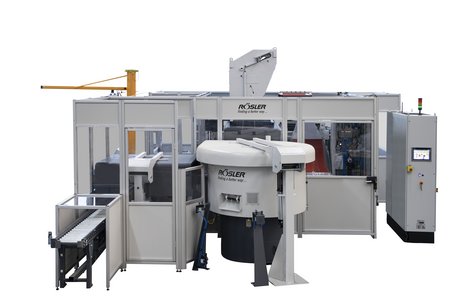
A smart shot blasting solution for integrated manufacturing lines Increasing demand for electric vehicles forces the automobile manufacturers to expand their manufacturing capacities. Among others, this also includes production lines for stator carriers. The surface refinement of these components after the casting operation with a Rösler swing chamber blast machine RWK 6/12-2 must be achieved in very short cycle times within an interlinked manufacturing process. For the fully automatic de-sanding and deburring of different stator carrier versions the Landshut plant of the BMW group has integrated the swing chamber blast machine RWK 6/12-2 into interlinked, digitized manufacturing lines. The compact dual chamber shot blast machine from Rösler allows the blast cleaning of the aluminum castings within a cycle time of 50 seconds. With the dual chamber equipment concept and robotic loading/unloading the unproductive equipment times could be drastically reduced. Efficient processing with practically no idle times and a small footprint Within the stator carrier manufacturing line the RWK 6/12-2 – including a part feeding system, robot, a blast media discharge station and a small storage area – requires a space of only 10 square meters. The RWK can handle carriers with a height of up to 1,200 mm and a diameter of max. 600 mm. The work pieces arrive on a conveyor belt from the de-sanding station, where most of the molding and core sand has been removed from the castings. The robot, placed in front of the shot blast machine, picks up one stator carrier at a time and places it on a special work piece fixture in the chamber facing the load-unload zone. In case of a work piece change the fixture can be exchanged within a few seconds. In the course of the casting process a data matrix code is inserted into the carriers. To protect this code from getting damaged during the shot blast operation, it is protected with a cover. For this purpose the Rösler engineers developed a mechanism that automatically moves the protective cover over the code after the carrier has been placed on the fixture. After completion of the loading stage the chamber turns by 180 degrees. This turn moves the chamber containing the raw part into the blast zone and the chamber containing a finished part into the load/unload zone. The robot removes the shot blasted stator carrier, moves it to the media discharge station for shaking out residual blast media and then places it into an intermediate storage location. Optimal equipment configuration allows short cycle times AFor this application the customer is using a zinc cut wire blast media. The media is accelerated and thrown at the stator carriers by two Gamma 300G turbines with a drive power of 15 kW each. These high performance turbines, developed by Rösler, are equipped with curved throwing blades in Y design. Compared to conventional turbines, the precisely calculated blade curvature generates a much higher media throwing speed. In turn, this results in an up to 20% higher shot blast intensity and a significantly lower energy consumption. The high blast intensity, combined with the dual chamber machine design, allows cycle times of max. 50 seconds. Another benefit of the gamma turbines is that the special Y design of the throwing blades allows the use of both blade sides. This practically doubles their usable life. With a quick change system the throwing blades can be replaced without having to dismount the turbine from the housing. Because of the work piece material (aluminum) and the blast media (zinc), the shot blast machine had to be designed with special protection against explosions. This included special ducting for the exhaust air and an explosion protected dust collector. Digitization increases process stability and operational safety In close cooperation with an automation specialist the Rösler engineers implemented a partial digitization of the shot blast machine. For example, a sophisticated visualization of the shot blasting operations and blast patterns of the two turbines allows changing the process parameters during the actual shot blasting process. In addition, the operator can observe “live”, which turbine is blasting on which work piece section. If needed, he can initiate changes, reposition the work piece in the blast chamber or modify the blast time. This may become necessary, if, for example, a worn casting mold causes more sand to be deposited on a certain work piece section than defined during the initial programming of the shot blast machine. The operating time is also continuously monitored. After having reached a certain operating hour threshold, the machine automatically provides information about necessary controls and maintenance work, for example, for the throwing blades, work piece fixtures or the protective cover for the matrix code. This helps minimize unplanned equipment down times and significantly increase the uptime of the machine. These are aspects, which are especially important for the cost-efficiency of automated manufacturing lines. Within the framework of its efforts to expand the digitization of its products, by mid 2021 Rösler will present further innovative digital developments in the shot blasting field under the brand name “Rösler Smart Solutions”.
Rösler now offers its employees an additional vaccination service.

In the fight against the corona pandemic: Rösler Oberflächentechnik GmbH vaccinates workforce

Incidence rates are falling, the number of first and second vaccinations is increasing daily, yet many people in Germany still do not have sufficient protection against COVID-19 disease. Rösler now offers its employees an additional vaccination service. Rösler Oberflächentechnik GmbH does everything in its power to protect the health of its employees and makes it possible for its workforce to be vaccinated accordingly. In this context, almost 70 vaccinations were carried out on 14.06.2021, on a vaccination line specially set up at the Untermerzbach plant. "With the introduction of the Corona vaccination service, we as the Rösler company would like to offer our employees the opportunity to protect themselves from COVID-19 disease in the best possible way. This is a voluntary offer of the company health management that we implement in close cooperation with various doctors from the region. In addition to the local vaccination centers and general practitioners, we would like to make an active contribution to combating the Corona pandemic," emphasizes Stephan Rösler, President & CEO of Rösler Oberflächentechnik GmbH. Vaccine procurement proves difficult Despite a high level of commitment to procurement, the availability of the vaccine is causing difficulties, as demand far outstrips supply. Nevertheless, about 70 vaccine doses from the manufacturers Johnson & Johnson and Biontec could be procured and vaccinated. When distributing the vaccine, care is taken to give priority to those employees who do not have or have not had the opportunity to work in a home office. "Hopefully, when sufficient additional vaccine is available soon, we will be able to pass on even more vaccination offers to our workforce," adds Stephan Rösler. Extensive measures to combat COVID-19 The additional vaccination offer represents another important building block in the fight against the Corona pandemic. In addition, Rösler Oberflächentechnik GmbH continues to rely on extensive infection control measures and a comprehensive testing strategy. For this purpose, the company has developed a Corona concept, which is regularly adapted to current conditions. This includes compliance with the hygienic rules, regular testing, consistent implementation of the mask requirement and, wherever possible, mobile working from home.
continuous feed wire mesh belt machine, model RDGE 1000-4

Shot blasting, mass finishing and cleaning solutions, including consumables, from one single source

The services offered by the B+S Metallbearbeitung GmbH include all kinds of mass finishing operations like deburring, polishing, etc., as well as shot blasting, part cleaning and packaging. The company handles a broad range of work pieces with different shapes, made from different materials, requiring different finishes and coming from all kinds of industries. To ensure continued excellent quality and on-time deliveries in a cost-effective manner this service company is counting on well-trained employees and utilizes modern equipment and consumables from Rösler. The beginning of the B+S Metallbearbeitung GmbH dates back to the year 1959. The company, founded by Herbert Bickel, specialized early on in jobshop services in the field of mechanical surface treatment, such as mass finishing. In 1991 Mustafa Sahin became an employee of the B+S Metallbearbeitung GmbH located in Murr in Southern Germany. Since 2004 he held a 50% share in the company. When the founder decided to withdraw from the business in 2007 for health reasons, Mustafa Sahin became the general manager. He recognized quickly that in order to remain competitive and run the business successfully in the future, the outdated equipment had to be replaced with modern machinery. In addition, to strengthen the company’s competitive position in the market he decided to expand the service portfolio with additional finishing operations. An important aspect of this expansion strategy was to process the customer’s work pieces safely and consistently and to use high-quality equipment that could be operated round-the-clock. The best equipment technology for each mass finishing application The general manager remembers: „In a first step I talked with different suppliers of mass finishing equipment. Among them was also a Rösler employee. I was impressed by the broad Rösler equipment range and the excellent engineering of the high-performance machines, which can be utilized for all kinds of finishing tasks. Another important consideration was that Rösler produces all its mass finishing consumables in-house. This means that equipment, media and compound can be perfectly adapted to our requirements and that I can resort anytime to the experience and knowhow of the Rösler test lab. Above all, the relationship with the colleagues from Rösler is excellent.” In 2008 Mustafa Sahin decided to purchase a linear, continuous flow mass finishing vibrator, model R 425/6600 DA, that was technically adapted to the company’s requirements. In subsequent years the company purchased two additional continuous flow machines, 14 rotary vibrators and three centrifugal disk finishing machines, all from the equipment manufacturer in Untermerzbach. Service portfolio expanded by shot blasting and work piece cleaning Irrespective of the first negative effects of the financial crisis, in 2008 the entrepreneur invested in a shot blast machine to expand his service package. In this case Mr. Sahin decided to also purchase Rösler equipment. „I assumed that the quality of the shot blast equipment was comparable to the excellent quality of the mass finishing machinery. Through intensive consultations and the deep knowledge about shot blasting we could gain through our discussions with the Rösler experts, we determined that a continuous flow shot blast machine was the right product for us,” reports Mustafa Sahin. A major characteristic of the shot blasting process is that the equipment is subject to considerable wear. Therefore, a good technical service with short turnaround times were key factors in the decision for Rösler. „As a job shop we cannot afford long wait times for a service engineer and spare parts,” adds the general manager. Through the continuous expansion of its shot blasting job shop services, in the meantime B+S Metallbearbeitung has purchased six additional shot blast machines. The general manager continues: „Generally, shot blast equipment is subject to significant wear. Therefore, depending on how intensively they are used, we are selling our shot blast machines after 3 to 5 years as used equipment. This allows us to always be technologically up-to-date and to offer our customers the best possible results at competitive prices. With the work piece cleanliness requirements becoming more demanding, the company took advantage of another opportunity to expand its service portfolio. Mustafa Sahin reports: „In numerous conversations with our customers we learnt that many companies wanted to outsource the cleaning of their work pieces and that they were looking for a reliable job shop for this service. We found that work piece cleaning was an excellent opportunity to expand our surface treatment activities.” After comprehensive research and a thorough market analysis the customer chose a water based cleaning system from Rösler. The work piece cleaning operations are taking place in conjunction with mass finishing, shot blasting, a 100% quality control and/or packaging. But the cleaning services are also offered separately. In the meantime, work piece cleaning has become a core competency of the company and will be further expanded. In this respect the general manager is looking for a cooperation with a laboratory specializing in cleanliness analytics that will assist him to prove that the cleanliness demands for certain cleaning jobs have been met. A market position that has been achieved by quality, flexibility and taking calculated risks With its philosophy to react to the individual customer requirements with excellent quality, a high cost efficiency and on-time deliveries B+S has successfully established itself in the market. In the meantime renowned companies from various industries, such as car manufacturers and automotive suppliers, machinery building companies, furniture manufacturers, medical engineering companies, as well as foundries and stamping companies are relying on the services offered by the jobshop. The company handles work pieces made from aluminum, steel, stainless steel, magnesium, copper, brass and plastic components. The decision to utilize modern finishing technologies, high-quality equipment and consumables and the courage to invest during difficult times are certainly one reason for the success of B+S. Mustafa Sahin concludes: „Our success in the field of mechanical surface treatment depends on the right equipment, the best consumables and knowledgeable partners who can inform us about the latest developments and provide a comprehensive knowledge transfer. We get all this from a single source, namely Rösler.
Centrifuge Technology, Part 4 – Pre-Conditions and Consumables Enhance Process Efficiency

Establishing and maintaining an effective and cost-efficient process water recycling system requires consideration of a few essential points. Without the proper compounds , additives, and monitoring, even a well-designed piece of centrifuge technology is bound to falter and, eventually, fail. Rosler has extensive experience in mass finishing , including designing and manufacturing equipment, fine-tuning processes, and supplying the right consumables for a variety of processes. With our knowledge, preconditions and consumables can be calibrated for maximum process efficiency. Special Recycling Compounds Mass finishing compounds fulfill numerous tasks such as degreasing/de-oiling work pieces, burnishing/brightening surfaces, and providing a temporary corrosion protection. Above all though, the primary task of the compounds is to keep the media and work pieces clean to achieve the desired finishing goals and keep the mass finishing process stable. Since compounds stay in the process water rather than being collected and discharged with contaminants, compounds used in recycled process water must have special technical attributes. In addition to their standard properties these recycling compounds must: Have better dirt dispersing capabilities than single-use cleaners. Create very little foam. Be highly compatible with the process water cleaners. Prevent bacteria growth in the system. Cleaners designed for single-use processes would not provide adequate cleaning of the water or the work pieces and may allow contaminants to reenter the equipment with recycled water, potentially damaging the machine. Process Water Cleaning Additives Whether in liquid or powder form, cleaning additives known as flocculants must be added to the process water to support the cleaning effect of the centrifuge. Certain process water cleaners combine tiny solid fines into larger and heavier particles, making it easier for the centrifuge to separate them from the liquid. Other cleaners pick up tiny droplets of emulsified oil and combine them with the solids into larger flocs, which are then separated from the liquid in the centrifuge. Finding Balance Rosler Water Recirculation System When work pieces enter the mass finishing machine, they carry a variety of contaminants as well as some sort of surface material that is in need of removal or texturing. During the finishing process, effluent or used process water is transferred to an effluent holding tank where it awaits cleaning. The centrifuge processes “dirty” process water using the centrifugal force of more than 2,000 G to separate clean, reusable water and compounds from sludge for discharge. The clean water is stored in a clean water tank ready to be re-used in the finishing process. Automatic and semi-automatic systems monitor the composition of the cleaned water to add additional water and compounds as needed. The process water is then sent back to the finishing machine for reuse. Consumable Expertise In conjunction with centrifuge technology, Rosler offers a complete range of suitable recycling compounds and process water cleaners. For best results, the compound concentration in process water must be approximately 2% although certain applications may have to be somewhat higher. Mass finishing processes utilizing process water recycling with centrifuges require special dosing systems to monitor and maintain compound and process water cleaner levels. They also require a water top‐up system to replace process water lost by carry‐out and evaporation. Automated and semi-automated options are available. The Rosler Way Whether ensuring that the precondition of recycled water is suitable for reuse or selecting the most effective cleaning consumables are used in and outside a centrifuge process, Rosler sticks to its motto of “Finding a better way…” Contact us to discuss your cleaning centrifuge challenges so we can get to work developing a solution. Previous posts in the Centrifuge Technology series include: Part 1 – “Water Cleaning Systems Replace Outdated Methods.” Part 2 – “Operational and Economic Benefits of Recycling Process Water.” Part 3 – “Mechanics and Limitations of Water Recycling.” Part 4 – “Pre-Conditions and Consumables Enhance Process Efficiency.” Upcoming posts in the Centrifuge Technology series will include: Part 5 – “Potential Issues and Remedies for Water Recycling.” Sign up for enews alerts to be notified of new posts!
non-foaming plastic media

Optimized finishing process with a new, non-foaming plastic media

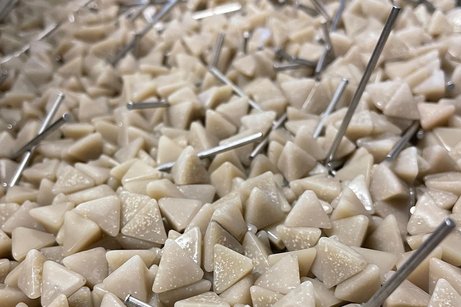
Better results, higher productivity and improved cost-efficiency In general, the optimization of mass finishing processes is mostly focused on the machinery. A finishing application at the job shop company Dörfler & Schmidt Präzisionsfinish has shown that by simply using a different media, a significant process optimization can be achieved. By switching to a new, non-foaming plastic media from Rösler the customer achieved a higher process stability, higher productivity and an improved efficiency. Founded in 1998, the Dörfler & Schmidt Präzisionsfinish GmbH offers a wide range of surfaces, such as deburring, edge radiusing surface smoothing, polishing, creating mat and structured finishes, descaling and cleaning. For these services the company is utilizing mass finishing, shot blasting and brush deburring equipment. The company is treating work pieces made from metal, plastic, ceramic, glass and wood. The work piece dimensions can range from a few mm up to 60 centimeters. The customers of this family-owned company, located in Kammerstein in the state of Bavaria, come from all kinds of industries like automotive, machinery building, electronics, medical engineering, jewelry and a variety of consumer goods manufacturers. A company utilizing different types of mass finishing technologies The highly heterogeneous clientele of Dörfler & Schmidt requires all kinds of surface finishing solutions. Felix Dörfler, executive assistant, comments: „We have to deal mostly with requests for deburring and edge radiusing. For example, on tools like milling tools and cutting inserts we have to create a precise edge radius. Other work pieces, such as bearing rings must have precisely defined surface roughness readings after the finishing operation. On the other hand, jewelry and accessories must have an optically pleasing finish.” To be able to offer its customers the technically and economically best solutions, the company operates 33 different machines that can handle a broad range of different mass finishing technologies. Felix Dörfler continues: „To handle the various work piece materials we employ different process water cleaning and recycling systems. For this purpose we are utilizing five centrifuges, which like the overwhelming majority of our mass finishing equipment, were supplied by Rösler.” When it comes to consumables, Dörfler & Schmidt is also primarily using Rösler products. “The consistently high quality of the Rösler media and compounds and the excellent support in the field of process development and optimization by the Customer Experience Center are just a few reasons that right from the beginning we relied on solutions from Rösler”, concludes the executive assistant. New plastic media suppresses foam that interferes with the finishing process Mass finishing processes with plastic media pose frequently a problem with foam, even when so-called foam-reducing media are used. The extent of the foaming issue depends to a large extent on the hardness of the process water used in the finishing process. For resolving this problem, frequently special additives are utilized. This was also the case with an application at Dörfler & Schmidt. Felix Dörfler explains: „For the deburring and edge radiusing of 40 mm long stainless steel wire segments we need an excellent grinding performance with a high metal removal rate. However, the foaming during the finishing process created a buffer between the work pieces and the media, which reduced the grinding effect. Therefore, the desired finishing results could no longer be achieved within the prescribed cycle time”. But the unwanted prolongation of the cycle time was not the only problem. The separation of the finished work pieces from the media was also affected and did no longer function properly. The foaming issue was even carried over to the process water cleaning system, where foam was seeping out of the centrifuges. This soiled the system itself and the immediate environment. When the responsible Rösler sales agent was informed about this problem in July 2020, he proposed the use of a non-foaming plastic media that had recently been developed by the Rösler process engineers. Since the beginning of 2021, Rösler offers all standard plastic media types also in the non-foaming “N” version, which regarding the shape, size and grinding performance is identical with the old product. Since the use of the new media required no modification of the finishing process at Dörfler & Schmidt, the company replaced the old media with the new, non-foaming version. Higher process stability, improved efficiency and higher sustainability Dörfler & Schmidt is one of a selected group of companies who have tested the new media. The company has now been working with the non-foaming version for about nine months. The first test phase demonstrated impressively that the required processing results are safely achieved within the prescribed cycle time and that the separation phase also works well. The media switch to the non-foaming version has also greatly simplified the monitoring of the finishing process. Since the time for unwanted re-work could be completely eliminated, the overall cost-efficiency was significantly improved. Another benefit of the new media is that the usable life of the process water could be extended. This helped reduce the consumption of additives, a big plus for the environment and for achieving sustainability. Felix Dörfler summarizes: „We have been using the non-foaming media in two machines. And we have found that the grinding performance and the wear rate are absolutely identical with the standard version. The new media helped us to make our processes more cost-efficient without affecting the quality of the finishing results. For this reason, we will switch more plastic media types to the non-foaming version”.

Wet Blasting Technology, Part 5 – PureFinish® Offers Food-Grade Excellence

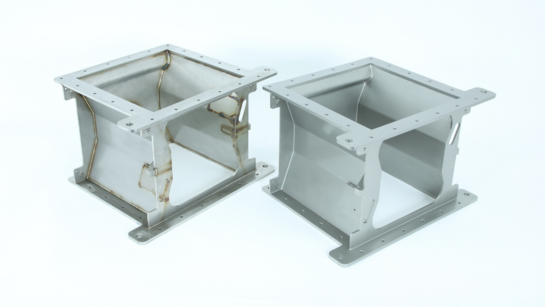
Within the food, chemical, and pharmaceutical industries , hygiene is a top priority. For safety and quality assurance, the occurrence of contamination through bacteria, proteins, or other elements must be prevented. Process plants require a defined, homogeneous, and reproducible surface for all parts that come in contact with food, beverages, chemicals, and pharmaceutical products. Rosler delivers full compliance cleaning for stainless steel surfaces with PureFinish® , a unique wet blasting process. What is PureFinish®? Rosler developed this proprietary blasting process to deep-clean stainless steel components. Media specifically designed by Rosler for this environmentally friendly process remains suspended in water and is propelled onto the work piece surface with velocity. In the example shown, oxidation from welding on stainless steel components is completely removed after treatment with PureFinish®. Optimum Surface Finish The key advantage of PureFinish® is the optimum surface finish it achieves. The process creates a highly homogeneous surface profile with roughness readings of Ra = 0.25-0.60 µm. Not too rough and not too smooth, this profile is ideal for preventing bacteria from growing on and adhering to the surface. As shown below, bacteria growth only occurs if a surface is too rough or too smooth. Surface characteristics and goals This optimum surface profile allows easy removal of dirt and bacteria and, therefore, facilitates cleaning and sterilizing the surface. Additional advantages include: PureFinish® meets all hygienic requirements of the EHEDG (European Hygienic Engineering & Design Group) . Much lower ratings on the Soil Retention Index (SRI) compared to stainless steel surfaces cleaned with other cleaning methods. Considerably fewer contaminants left on the surface. The purely mechanical process does not require any hazardous pickling chemicals. PureFinish® creates a peening effect on the surface that makes the component more durable and prevents premature corrosion due to stress cracking. A welded work piece before and after PureFinish® treatment The Rosler Way With more than 80 years of experience in surface finishing, the Rosler team has expertise in the wet blasting field. This experience allowed us to create PureFinish® and its unique capabilities. To demonstrate our capabilities, we offer FREE sample processing in our global test centers . Contact us to discuss your wet blasting goals and challenges. The complete Wet Blasting Technology Series includes: Part 1 – “Wet Blasting Gently Delivers Dramatic Finishing Results.” Part 2 – “Comparing Attributes, Advantages to Dry Blasting.” Part 3 – “Technical Features, Slurry Control Achieve Precise Finishing.” Part 4 – “Typical Wet Blasting Applications.” Part 5 – “PureFinish® Offers Food-Grade Excellence.” Sign up for enews alerts to be notified of all Rosler blog posts!

Preservation Lines Deliver Multi-Step Surface Finishing in a Single Machine

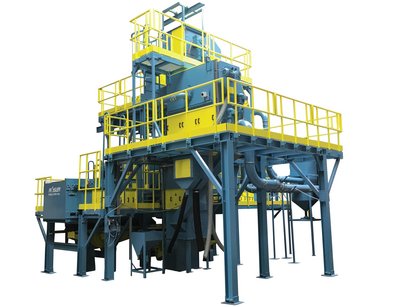
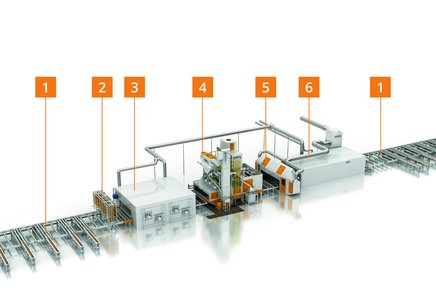
Complete systems for blast cleaning and placing a protective coating, preservation lines are extremely useful on plates and profiles that require multiple treatments. For example, structural steel components are commonly processed by preservation lines because they are prone to rust quickly and fail with potentially catastrophic consequences if not covered with a suitable, protective coating. Rosler has extensive experience preparing structural steel components for use in construction , shipbuilding , and the production of all kinds of heavy-duty vehicles, trucks, railway vehicles, agricultural implements, or construction equipment. We understand the importance of applying proper surface finishing processes to these components for safety and longevity. Offering shot blasting , painting, and more in a single source, preservation lines are a great option for a variety of industries , especially those utilizing structural steel components including steel plates, beams, round bar stock, and tubes. Components & Functions Preservation lines incorporate material handling, blast cleaning, and protective coating and/or painting in a single process. While customized options and accessories can be added in, preservation lines typically include six key components. Rosler's preservation lines are customizable to your needs. This diagram shows common components included. Material Handling (1) These integrated transport systems utilize roller conveyors, cross transport units, and other methods to move sometimes large and heavy work pieces before and after processing within the preservation line. Blow-Off Units (2) Designed to remove water, dust, leaves, and other loose contaminants before blasting, these stations help ensure components are clean enough for the subsequent finishing process. They may also be combined with brush-off units. Rosler blow-off unit Pre-Heaters (3) Used in front of the shot blast machine to melt snow and ice, pre-heaters ensure that the work pieces do not carry any moisture into the shot blast machine. The pre-heater also serves a dual function, bringing work pieces to the optimum temperature of about 100° F (40° C) for the subsequent cleaning coating process. Shot Blast Machines (4) Using propelled media , this section of the machine removes rust and scale from the work piece and creates the correct pre-paint surface profile/roughness. Work pieces move through the shot blasting area on roller conveyors . Paint / Coating System (5) Automatic, high-speed, gantry paint systems apply paint and protective coatings in this step of the process. The paint cabin also contains any overspray and paint fumes through mist filtering, roller brush systems, and the air filtration systems. Paint Dryers (6) Post treatment of components within the drying station ensure that paint and coatings applied in the paint cabin are appropriately dried and cured for improved adhesion and life expectancy. These dryers frequently utilize excess heat from the pre-heater to minimize power use by up to 10 kW. Rosler paint dryer The Rosler Way Rosler has the experience and expertise to solve your surface finishing challenges by developing a preservation line to meet your needs. We partner with you to find a better way, the best machine, and the best finishing results. Contact Rosler today to discuss your unique challenges.

Optimized finishing process at Gardena increases productivity and lowers costs

Improved productivity, increased production capacity, better quality and lower costs. These were the demands of a leading garden tool manufacturer, when he invested in a new mass finishing system for deburring and polishing of garden shear knives. Rösler met this challenge with a tailormade Keramo-Finish process that is run in a double batch centrifugal disk finishing machine FKS 35.1 A2-So with fully automatic work piece handling. In a two-stage process the stamped and laser-cut knives are deburred and polished in the FKS finishing machine. Subsequently they are dried in an energy-efficient rotary dryer and prepared for the next manufacturing step. For more than 60 years, Gardena, a brand of the Husqvarna Group, has been offering everything ardent gardeners need. The broad product range includes innovative systems for irrigation, lawn, tree and shrub care, as well as soil cultivation. Gardena products are used in more than 80 countries all around the world. A transformation to ultra-modern equipment and process technologies To ensure easy and simple handling, produce excellent cutting performance and guarantee a long service life, the shear components are produced with state-of-the-art manufacturing technologies. Important steps are the stamping or laser cutting of the upper and lower knifes followed by a deburring and polishing process in mass finishing equipment. Previously the lower knifes required two separate finishing operations, one in a rotary vibrator and one in a centrifugal disk finishing machine. To combine these two operations into one and adapt them to the latest manufacturing requirements, the existing mass finishing equipment, used over many years, was replaced. Gardena chose a finishing solution from the Rösler Oberflächentechnik GmbH, who had already supplied the machinery used to date. By investing in new equipment the customer was looking for a comprehensive optimization of the finishing process that improved not only the productivity and offered a higher capacity but also resulted in lower costs. A finishing system that produces shorter cycle times and improved operational efficiency Based on the surface finishes of the steel knifes that are required for the next manufacturing steps, the Rösler process engineers ran a series of processing trials in their test lab with various processing media and different process parameters. The best results were achieved with a Keramo-Finish process in a centrifugal disk finishing machine. This includes the use of a ceramic media with minimal abrasive characteristics in combination with a grinding and polishing paste and a cleaning compound with a distinct brightening effect. The new process allows the deburring and polishing of all knifes in one single machine. The rotary vibrator was no longer required, and the work piece handling was simplified. Moreover, depending on the work piece type, the new Keramo-Finish process reduces the processing times by 25 % to over 100 % and also allows bigger work piece batches. This helped to reduce the operational costs by around 10 % with, at the same time, greatly improved finishing results. Fully automatic processing in a double batch system The new double batch centrifugal disk finishing machine was perfectly integrated into the manufacturing flow at Gardena. Work piece specific processing programs stored in the PLC controller allow the targeted finishing of the various knife types. After stamping, respectively, laser cutting the work pieces are collected in perforated metal bins. The operator utilizes a swing crane to dump the raw knife components into a loading device that transfers them into a vibratory feed hopper. After the respective finishing program has been manually selected, the hopper automatically feeds a work piece batch into the work bowl for processing. After the preset finishing time the work bowl gently dumps the mix of finished work pieces and media onto a vibratory hopper from where the mix is transferred to a vibratory separation unit. There, with a precisely sized hole screen, the media and finished work pieces are separated from each other. At the same time, a special undersize media screen is discharging media that is no longer suitable for the finishing process. This guarantees a continuous high process stability. While the media is returned into the work bowl, the finished knife blanks are transferred to the drying station filled with a maize-cellulose product. The rotary dryer RT 550 Euro-DH is equipped with an innovative new heating system that guarantees not only fast, reliable and spot-free drying of the work pieces but also produces energy savings of up to 40 % compared to conventional rotary dryers. After completion of the drying cycle the knifes are transferred to another vibratory hopper that loads them into waiting small transport carriers made from plastic. A fully automatic Z 1000 centrifuge is cleaning the process water and recycling it back to the mass finishing system for re-use in the finishing process. This helps save valuable resources. The drastically reduced water consumption, along with the innovative finishing solution and well-planned process controls ensure a sustainable and efficient operation of the new mass finishing system.

Centrifuge Technology, Part 3 – Mechanics and Limitations of Water Recycling

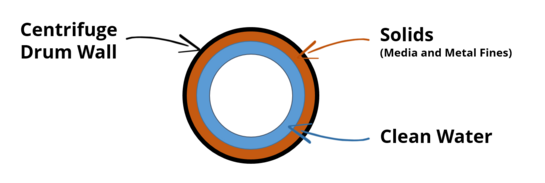
Combining the direction of rotation and centrifugal force, Rosler’s centrifuge technology takes advantage of the weight difference between the liquid phase and the solids in the process water to separate “dirty” solid particles from clean, reusable process water. The effectiveness of this technology lies in the centrifugal force that is created. For example, a modern fighter jet develops a G-force of about 10-15 while a high-speed centrifuge drum generates a force of more than 2,000 G. The physics of centrifuge technology combined with mass finishing equipment creates efficient and ecologically sound manufacturing processes, albeit with some key limitations. Collection by Force The solids, primarily consisting of media and, to a lesser degree, of metal fines from the work pieces, found within “dirty” process water are heavier than the water itself. As the drum spins, heavier solids are deposited on the drum wall in the form of sludge, whereas the lighter-weight liquid remains on the inside of the drum. With the addition of special cleaning additives known as flocculants, even oil carried into the mass finishing process can be removed from the process water. As shown in the diagram below, dirty process water is pumped down into the centrifuge drum (1) which is then accelerated by the applied centrifugal force. While the cleaned water is picked up by a so-called collection tube (2) for reuse, the sludge (3) is collected and periodically removed from the drum by mechanical or manual means. Limits of Cleaning The presence of solids in the process water is a must. Centrifuge technology works best when the process water contains a certain amount of solids and there is a notable weight differential between the liquid phase and the solids. Through the addition of special water cleaners, centrifuges can also remove oil from mass finishing process water, provided, of course, that the oil content is not too high. There are a few exceptions in which certain applications produce no or only very few solids in the process water, making centrifugal cleaning difficult or impossible. This is the case with: Ball burnishing and pressure deburring when steel media is used instead of ceramic . Part-on-part finishing when no media is used at all. High-end polishing operations where residual solid particles in the recycled process water might negatively affect the polishing quality. While process water from these applications is not suitable for centrifugal cleaning and recycling, it must be cleaned with other cleaning methods prior to discharge. Disposal of the Depleted Process Water If properly maintained, process water can last for a long time, usually between 3 to 12 months. Once it becomes too contaminated for cleaning, it must be replaced with a new batch of fresh water and compound. Reasons for depletion include: An abundance of solid fines which are too small to be picked up by the centrifuge. Too much oil carried into the finishing process. A bacteria buildup due to poor maintenance. The build-up of salts in the water that affect the finishing process. In such cases, the depleted process water must be cleaned in a “floc & drop”, membrane, or evaporation system prior to disposal. Depending on the type and level of contamination in the “dirty” water, straight sewer discharge could be illegal, costly, and/or unsafe. The Rosler Way The experts on the Rosler team can help identify the best centrifuge technology for your unique process challenges and develop solutions accordingly. Contact Rosler today to learn how we can improve and enhance your mass finishing process. Previous posts in the Centrifuge Technology series include: Part 1 – “Water Cleaning Systems Replace Outdated Methods.” Part 2 – “Operational and Economic Benefits of Recycling Process Water.” Part 3 – “Mechanics and Limitations of Water Recycling.” Part 4 – “Pre-Conditions and Consumables Enhance Process Efficiency.” Upcoming posts in the Centrifuge Technology series will include: Part 5 – “Potential Issues and Remedies for Water Recycling.” Sign up for enews alerts to be notified of new posts!