Solution Finder
SOLUTION FINDER

Ihr Wegweiser durch die
Rösler-Produktwelt

Mit nur wenigen Klicks finden Sie die richtige Maschine für Ihre Belange!

Ergebnisse: 237 Artikel - 54 Produkte

Automation, Part 5 – What Automation Hardware is Available?

As previously discussed in our Automation Blog Series, building a robotically assisted process requires evaluating your surface finishing system along with its problems and goals and selecting the right machine and consumables . Automating a mass finishing or shot blasting process also requires selecting the automated hardware that will best achieve your overall goals and provides the most efficiency in terms of time and manual labor. An experienced partner such as Rosler Metal Finishing can provide insight and advice on the numerous material handling tools specially designed or adapted to mass finishing and shot blasting process improvement. Work Piece Loading Systems Including skip loaders, lift and tip loaders, vibratory feed hoppers, and other tools, work piece loading systems are ideal for small- to mid-sized work pieces handled in bulk. A lift and tip loader with integrated vibratory hopper is included in this Rosler FKS mass finishing system. These loading systems can be movable—for example, on rails—to serve several machines. They can also be placed on weighing cells to determine the exact work piece quantity by weight and adjust machine loads accordingly. This RMBC Tumblast Machine from Rosler is equipped with a skip loader. Conveyor Belts Used for loading and intermediate transport, conveyor belts are commonly used for mid-sized to larger work pieces. These belts must be able to withstand moisture and sometimes harsher industrial conditions. They must also be well-sealed to prevent aggressive liquids or abrasive media from destroying their drive systems and bearings. This Rosler DA system is equipped with part and media conveyors on an inline vibratory machine. Part and media conveyors on an inline vibratory machine Roller Conveyors Commonly used to transport large, heavy work pieces such as large steel beams and plates, roller conveyors are also utilized for automatic staging of raw parts and backfilling finished parts into part bins. Roller conveyors on this Rosler FKS mass finishing system stage finished work pieces. Steel plates and beams are transported through this Rosler RRB shot blast machine via roller conveyors. Robots Increasingly utilized for work piece loading and unloading, robots are also used to manipulate work pieces in a mass finishing or shot blasting machine. In conjunction with robots, special quick-connect couplings and grippers allow for the automatic attachment and release of the work pieces to and from special workstations. This Rosler RROB Roboblaster includes robotic manipulation of work pieces. Additional examples of automated material handling equipment include: Gantry systems, which can handle very large work pieces. Walking beam cross conveyors for staging steel plates and beams in roller conveyor blast systems and preservation lines. Backfill systems, which gently return finished parts back into waiting part bins or buffer tables for intermediate storage of the finished work pieces. Robot attachment and removal of work pieces from the work station of this Rosler SF drag machine is achieve with quick connect couplings. Rosler Expertise With more than 80 years of expertise, Rosler has worldwide experience in finding solutions to challenging surface finishing solutions. Developing automated hardware and integrating robotic solutions is one of our many strengths. Contact us today to learn how we can improve and automate your finishing system. The complete Automation Series includes: Part 1 – How Robots are Improving Mass Finishing and Shot Blasting Processes. Part 2 – Why Automation is Beneficial for Your Business. Part 3 – What Problems Do You Want to Solve? Part 4 – How Do I Select the Right Machine and Consumables? Part 5 – What Automation Hardware is Available? Part 6 – Environmental Considerations of Automation. Part 7 – The Top 3 Mass Finishing and Shot Blasting Machines. Sign up for enews alerts to be notified of all Rosler blog posts!

Consumable Innovations Improve Finishing Outcomes

True to our mantra of “finding a better way…” Rosler Metal Finishing is constantly working to optimize our consumables . These improvements and additions to our offerings improve process stability, cost efficiency, and productivity of surface finishing processes. From media composition and compounds to wastewater handling, Rosler is dedicated to constant enhancement in the area of consumables as well as our mass finishing and shot blasting technology. Media One such example is Rosler’s development of a plastic media with the grinding and non-chip characteristics of ceramic media . Minimizing the risk of work piece damage, this range of high-density plastic media exactly achieves this frequently requested combination. High-density plastic media Through their special composition, these plastic grinding media have the same grinding and metal removal characteristics as their ceramic “siblings” yet demonstrate a higher elasticity. This media type also allows faster processing of delicate work pieces made from non-ferrous metals as well as parts that tend to bend during the finishing process. Liquid, Pumpable Pastes Another breakthrough are the liquid pastes in the RSP and RPP 8 range. These innovative KeramoFinish® pastes, even though relatively viscous, can be delivered into the machine through a pump and thus can be dosed more precisely in line with the given processing requirements. Liquid, pumpable paste in the RSP and RPP 8 range Automatic dosing systems allow further optimization of the overall process. The utilization of such sophisticated dosing systems helps improve process controls and has proven that the desired finishing results can be achieved with less personnel. Granulated Wastewater Cleaners New developments can also be reported from the field of wastewater cleaning with recycling systems. Granular pellets are replacing the powder products that were previously used for flocculation and improvement of the sludge consistency. Granualated flocculant Granulated flocculants have several advantages. They allow optimized handling without the risk of dust, thus contributing to improved workplace safety. Granular versions also prevent so-called “bridge building” in the dosing units, which can lead to a dosing fault. The new granulated flocculants can be dosed with existing dosing units and achieves more precise dosing. Precision is very important for processes where process water tends to foam. All these characteristics, in combination with the mechanical stability of the granules and short reaction times, ensure a significantly improved process stability. New development consumables The Rosler Way Finding a better way is more than a saying at Rosler; it’s our passion. We strive to outdo ourselves with each innovation and upgrade in order to offer our clients the most-advanced and best-suited finishing technologies and products. Contact us to discuss your unique challenges and how we can innovate a solution for your needs and goals.

Forge & Foundry, Part 9 – Frequently Used Shot Blasting Machines for Forgings, Non-Sand Castings, and Powdered Metal Components

Rosler Metal Finishing has worked in the forge and foundry industries for decades. With more than 80 years of experience, we have developed sophisticated shot blasting systems for countless work pieces including forgings, non-sand castings, and powdered metal components. Our Forge & Foundry Blog Series continues with an overview of our shot blasting machines most frequently used on these specific types of work pieces. It is important to understand your work piece and process requirements including whether components will be processed continuously or in batches. When it comes to finishing forgings, non-sand castings, and powdered metal components, our shot blasting machines are divided into three categories based on how the work pieces are fed into the machine: continuous, batch, and specially engineered shot blasting machines. Continuous Shot Blasting Machines RMBD Continuous Tumble Belt Machine Rosler RMBD Continuous Tumble Belt Machine The high-capacity, continuous feed RMBD is available in a heavy-duty version for large forgings and castings, which is equipped with 6 x 40 HP turbines, a steel-slatted work piece transport belt, and a magnetic separator. Work pieces processed by Rosler's RMBD Ideal Work Pieces — Large volumes of small- to mid-sized work pieces such as connecting rods, transverse car links, parts for automatic transmissions, locking systems, brake pads, oil pans, cylinder head covers RHBD Continuous Spinner Hanger Machine Rosler RHBD Continuous Spinner Hanger Machine With an overhead monorail trolley transport system, the RHBD is capable of processing single, large, and heavy work pieces in continuous feed mode while batches of small- to mid-sized work pieces can be placed on a special work piece fixture shaped like a Christmas tree. The special foundry version features extra wear-proof lining in the blast chamber and a magnetic separator. Work piece processed by Rosler's RHBD Ideal Work Pieces — Forged levers, crankshafts, impellers, large pistons RDGE Continuous Wire Mesh Belt Machine Rosler RDGE Continuous Wire Mesh Belt Machine Work pieces pass through the shot blast area on a wire mesh belt, never touching each other during the shot blast process within the RDGE . Work pieces processed by Rosler's RDGE Ideal Work Pieces — Delicate mid-sized components such as chassis frame components for cars, housings, all kinds of gears, door pillars for passenger cars Batch Shot Blasting Machines RMT Multi-Tumbler Batch Shot Machine Rosler RMT Tumbler Bast Shot Blast Machine Barrel The RMT’s specially shaped rotary drum optimizes work piece mixing. Work pieces processed by Rosler's RMT Ideal Work Pieces — Very small to mid-sized, sturdy components such as bushings, fittings, small shafts, chain links, levers RMBC Batch Tumble Belt Blast Machine Rosler RMBC Batch Tumblast Machine The heart of the RMBC batch machine is an endless belt made from rubber or steel slats forming a trough. Work pieces tumble intensively within the trough. Work pieces inside Rosler's RMBC Ideal Work Pieces — Relatively small and mid-sized, sturdy components including cast turbine blades, all kinds of fittings, small pump housings, shafts, small gears, springs RHBE Batch Spinner Hanger Machine Rosler RHBE Batch Spinner Hanger Machine with heavy-duty crane An electric trolley running on an overhead rail, usually in the shape of a Y, drives the work pieces in and out of the RHBE shot blast machine. Work piece processed by Rosler's RHBE Ideal Work Pieces — Mid-sized to very large and heavy work pieces weighing up to 15 tons including very large crankshafts, gears RDT Rotary Table Machine Rosler RDT 250 Rotary Table Machine with an empty table Single, large components or small batches of smaller work pieces are placed on a rotary table within the RDT and blasted from above. A mold cleaned by Rosler's RDT Ideal Work Pieces — Mid-sized to large, heavy components; frequently used for cleaning of forgings and other molds RWK Turning Chamber Machine Rosler RWK Swing Chamber Machine The RWK is equipped with a circular chamber divided into two 180° sections with one section in the blast chamber and the other section at the load/unload station. After each cycle the chamber rotates 180° to allow for simultaneous loading/unloading and processing. A bevel gear processed by Rosler's RWK Ideal Work Pieces — Circular and semi-circular parts up to 48 in high such as drive shafts, bevel gear components, automotive wheels RWT Turning Table Machine Rosler RWT Turning Table Machine Much like the RWK, the RWT includes a circular chamber divided into two 180° sections with one section in the blast chamber and the other section at the load/unload station. After each cycle the chamber rotates 180° to allow for simultaneous loading/unloading and processing. Differing from the RWK, the RWT is better suited for smaller, delicate work pieces. Work pieces processed by Rosler's RWT Ideal Work Pieces — Circular and semi-circular parts including sprockets, small drive shafts, small pistons, fuel pump wheels Specially Engineered Shot Blasting Machine RKWS Crankshaft Shot Blast Machine Rosler RKWS 3 x4 Crankshaft Shot Blast Machine Designed to blast clean various sizes of crankshafts, the RKWS features a carousel divided into three or four chambers to create multiple blast chambers and one load/unload station. Fully automatic operation is enabled with the use of robotic work piece handling. Crankshafts before and after processing by Rosler's RKWS Ideal Work Pieces — Crankshafts in lengths of 12-28 in and weights of 14-55 lbs The Rosler Way Backed by more than 80 years of experience, Rosler has the expertise to develop the right machine and process for your forgings, non-sand castings, and powdered metal components. Contact us today to learn how we can help improve your finishing processes and schedule a free sample processing in our test center . The complete Forge & Foundry Series includes: Part 1 – Shot Blasting Systems. Part 2 – Efficient Recycling. Part 3 – Shot Blasting & Sand Castings. Part 4 – Selecting a Shot Blasting Machine for Sand Castings. Part 5 – Cleaning Features & Dust Precautions for Sand Castings. Part 6 – Selecting a Shot Blasting Machine for Die Castings. Part 7 – Selecting a Shot Blasting Machine for Forgings, Non-Sand Castings, and Powdered Metal Components. Part 8 – Frequently Used Shot Blasting Machines for Sand Castings. Part 9 – Frequently Used Shot Blasting Machines for Forgings, Non-Sand Castings, and Powdered Metal Components. Part 10 – Shot Blasting Machines Commonly Used for Die Castings. Part 11 – Top Mass Finishing machines for Cleaning Die Castings Part 12 – Media and Compound Selection, Effluent Handling Drive Success Sign up for enews alerts to be notified of all Rosler blog posts! https://vimeo.com/467660633

Automation, Part 4 – Choosing the Right Machine and Consumables

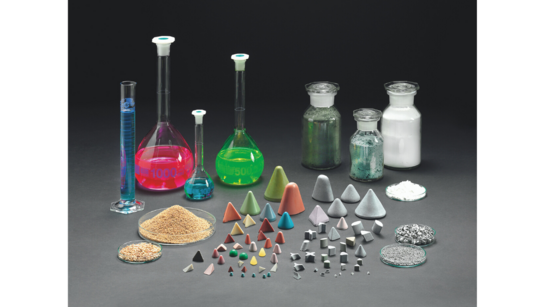
Rosler Metal Finishing understands that automation integration requires careful planning to ensure the best, most efficient results. Whether for mass finishing or shot blasting , we have more than 80 years of experience helping customers match machines and consumables . Taking time to evaluate your process needs as a whole will help you and a trusted partner such as Rosler determine what machine and consumables will best suit your automation needs and goals. How do I choose the right machine? Selecting the right machine is the most critical step to ensure the success of any automation project. Without the right machine, your automation process is sure to fail or produce disappointing results. In order to choose the right machine for your needs, consider: The size, shape, and weight of the work pieces – If you were looking to deburr the links for chainsaw chains, for example, you would need a completely different machine than one that de-sands/descales sand castings which weigh substantially more. Batch vs. continuous feed operation – Can the work pieces be collected in batches and processed as such or must they be continuously fed into the machine, one after the other? Part-on-part interaction – Are the work pieces sturdy and able to tumble over each other or must part-on-part contact be prevented? This determines whether each work piece must be placed on a fixture and processed individually to avoid contact or whether contact between work pieces is acceptable. Rosler’s Tumblast Machine model RMBC is an example of a batch-based process. Sturdy work pieces that are not subject to nicking as a result of part-on-part contact freely tumble inside. Work pieces are continuously processed in Rosler’s R 650/6600 DA Inline Continuous Flow Vibrator and automatically loaded and separated. How do I choose the right consumables? Selecting the most appropriate consumables is as important as deciding on the right machine. Just as mass finishing and shot blasting machines offer different strengths and capabilities, so do the media and compounds used within a given process. Therefore, special care must be taken in choosing the best-suited consumables and making sure that they are fully functional within the scope of an automatic operation. Choosing the wrong mass finishing media can produce poor finishing results and cause media to lodge in the work pieces, which can defeat the whole purpose of automation. Poorly selected media shapes and sizes can lead to problems such as ineffective finishing and media lodging within the work pieces as shown. The surface finishing experts at Rosler can help match consumables to your process needs and incorporate automation to load, unload, classify, recirculate, and monitor the levels of consumables including: Compounds . Ceramic media . Plastic media. Polishing and drying media . Shot blasting media . Along with choosing the right consumables, it is also important to include a good separation system within an automated process. In a mass finishing system, work pieces must be safely separated from the grinding or polishing media. Media carry-out with the work pieces could result in disaster for subsequent assembly or machining operations and must be prevented. Methods of separation include screen separation and magnetic separation. This Rosler rotary vibrator features screen separation. Magnetic separation is also available on Rosler machines. While undersized media may not travel outside the machine with a work piece, these pieces must be removed within an automated system. Maintaining an optimum operating mix of new (large) and worn (small) media is just as important as separation. This requires that worn media is removed once it has reached a certain size and is no longer effective. If these smaller pieces are not removed, processing results will deteriorate and the process itself will eventually fail. In some instances, worn media must be removed from the process to prevent lodging. Undersized media screens are the most common way to remove media past its efficiency by allowing only small pieces to exit the mix, retaining larger pieces for further use without human intervention. Maintaining an optimum media operating mix of larger and smaller media requires that worn undersized media is regularly removed from the system. Undersized media screens allow media that is too small to be effective any longer to fall through screen holes and remove it from the media mix. Rosler has the answers. We are true to our motto of “finding a better way…” When immediate answers aren’t available, we work with you to find solutions. Contact us today for help evaluating your machine and consumable needs for automated success. The complete Automation Series includes: Part 1 – How Robots are Improving Mass Finishing and Shot Blasting Processes. Part 2 – Why Automation is Beneficial for Your Business. Part 3 – What Problems Do You Want to Solve? Part 4 – How Do I Select the Right Machine and Consumables? Part 5 – What Automation Hardware is Available? Part 6 – Environmental Considerations of Automation. Part 7 – The Top 3 Mass Finishing and Shot Blasting Machines. Sign up for enews alerts to be notified of all Rosler blog posts!

Innovative Vibratory System Offers Precision Finishing of Delicate Work Pieces

Innovation is at the heart of engineering. At Rosler Metal Finishing , our engineers are constantly finding a better way to help our customers meet their surface finishing needs. That’s why they developed the R 150 DL-2 rotary vibrator . In addition to uses in the aerospace , automotive , tool and die making , electrical engineering, and equipment manufacturing industries, the R 150 DL-2 has proven its worth in the medical industry as well. In fact, this machine helped Waldemar Link GmbH & Co KG (LINK®) process its endoprosthetic components. The R 150 DL-2 was an excellent choice for LINK’s new “bi-mobil” hip implant. The implant offers patients a higher degree of mobility by inserting a movable PE joint in the acetabular cup. The PE-joint in turn is clamped to the ball of the hip stem. To minimize friction and prevent premature wear, the inside of the cup requires an extremely smooth surface, which can only be achieved with a high gloss polished finish—something the R 150 DL-2 easily achieves where other surface finishing companies failed. The perfectly smooth, polished inside of the acetabular cup minimizes friction and prevents premature wear. Unmatched Expertise LINK was searching for a mechanical method to achieve ambitious results in the concave surface area of the cup. The finishing task was especially challenging because of the relatively large depth and small diameter of the acetabular cups. Carsten Schöttler, production manager at LINK, explained why they chose to work with Rosler and selected the R 150 DL-2. “I contacted three equipment manufacturers, and only Rosler was able to achieve the surface finishes we needed,” he said. “Right from the beginning the Rosler sales and process engineers understood exactly what we needed. This made the cooperation not only easy, but actually very enjoyable.” Customer-Driven Results In its test center, Rosler developed a two-stage process with two machines. After machining, the work pieces undergo a wet surface grinding and smoothing step in the first machine. At the end of the cycle, approximately half of the processing media is removed from the work bowl. Then the fixture with the mounted work pieces is removed and bolted into the work bowl of the second machine where the work pieces receive their final high gloss polish in a dry process with special polishing media. With the increasing demand for improved surface finishes on high-value precision components such as LINK’s acetabular cups and more, the R 150 DL-2 provides an economical and repeatable option for surface finishing. The surface grinding and smoothing or high gloss polishing of internal surface areas once posed a significant challenge, but with surface finishing technologies from Rosler, batch-by-batch consistency for high-value, delicate parts can be achieved. The Rosler Way Do you have a surface finishing challenge? The experts at Rosler are eager to collaborate with you to find a better way! Contact us today to learn how we can help improve your finishing processes.

Forge & Foundry, Part 8 – Frequently Used Shot Blasting Machines for Sand Castings

With extensive experience in the forge and foundry industries, Rosler Metal Finishing understands that no two shot blasting processes and work pieces are alike. With that in mind, we continue our Forge & Foundry Blog Series with an overview of our machines offering excellent finishing for sand castings. If you demand precise, repeatable results when shot blasting sand castings, consider the following machines. As always, the experts at Rosler are also available to develop a customized machine to accommodate your unique work pieces and challenges. RMBD Continuous Tumble Belt Machine Rosler RMBD Continuous Tumble Belt Machine The high-capacity, continuous feed RMBD is available in a heavy-duty version for foundry applications equipped with 6 x 40 HP turbines, a steel-slatted work piece transport belt, and a magnetic separator. Die casting work pieces cleaned and processed by Rosler's RMBD Ideal Work Pieces — Large volumes of small- to mid-sized work pieces such as connecting rods, transverse car links, parts for automatic transmissions, locking systems, brake pads, oil pans, cylinder head covers RHBD Continuous Spinner Hanger Machine Rosler RHBD Continuous Spinner Hanger Machine With an overhead monorail trolley transport system, the RHBD is capable of processing single, large and heavy work pieces in continuous feed mode while batches of small- to mid-sized work pieces can be placed on a special work piece fixture shaped like a Christmas tree. The special foundry version features extra wear lining in the blast chamber and a magnetic separator. Iron castings processed by Rosler's RHBD Ideal Work Pieces — Pump housings, large crankshafts, windmill components, fire hydrants, valve bodies, turbocharger housings, impellers RDGE Continuous Wire Mesh Belt Machine Rosler RDGE Continuous Wire Mesh Belt Machine Work pieces pass through the shot blast area on a wire mesh belt, never touching each other during the shot blast process. The heavy-duty foundry version of the RDGE includes an extra 5/8-in-thick wear lining, special eight-bladed turbines, and a vibratory screen conveyor in place of a media auger. An oil pan after being processed by Rosler's RDGE Ideal Work Pieces — Delicate mid-sized components such as cylinder head covers, oil pans, transmission housings, gears, door pillars for passenger cars RMT Multi-Tumbler Batch Shot Machine Rosler RMT Tumbler Bast Shot Blast Machine Barrel The RMT’s specially shaped rotary drum optimizes work piece mixing. For foundry applications, a vibratory screen conveyor replaces the standard media auger and a magnetic separator and extra wear lining are added. Small investment castings processed by Rosler's RMT Ideal Work Pieces — Very small to mid-sized, sturdy components such as bushings, small shafts, ratchet braces, chain links, housings, levers RMBC Batch Tumble Belt Blast Machine Rosler's RMBC Batch Tumblast Machine The heart of the RMBC batch machine is an endless belt made from rubber or steel slats forming a trough. Work pieces tumble intensively within the trough. Nuts processed in bulk by Rosler's RMBC Ideal Work Pieces — Relatively small and mid-sized, sturdy components including cast turbine blades, all kinds of fittings, small pump housings, shafts, small gears RHBE Batch Spinner Hanger Machine Rosler RHBE Batch Spinner Hanger Machine with heavy-duty crane An electric trolley running on an overhead rail, usually in the shape of a Y, drives the work pieces in and out of the RHBE shot blast machine. Rosler's RHBE processes large, heavy parts Ideal Work Pieces — Mid-sized to very large and heavy work pieces weighing up to 15 tons including large wind power components, large crankshafts, large engine blocks, pump housings, fire hydrants, valve bodies RDT Rotary Table Machine Rosler RDT 250 Rotary Table Machine with an empty table Single, large components or batches of smaller work pieces are placed on a rotary table within the RDT and blasted from above. A forging die processed by Rosler's RDT Ideal Work Pieces — Mid-sized to large, heavy components including the cleaning of prototypes, large casters, pulleys; frequently used for cleaning of casting, forging, and other molds RWK Turning Chamber Machine Rosler RWK Turning Chamber Machine The RWK is equipped with a circular chamber divided into two 180° sections with one section in the blast chamber and the other section at the load/unload station. After each cycle the chamber rotates 180° to allow for simultaneous loading/unloading and processing. An automotive wheel processed by Rosler's RWK Ideal Work Pieces — Circular and semi-circular parts up to 48 in high such as drive shafts, torsion bars for automobiles, large coil springs, bevel gear components, automotive wheels RROB Roboblaster Rosler RROB Roboblaster Machine The center of the RROB is a robot, which does the loading/unloading as well as the handling of the work pieces in the blast machine. The robot picks up one, single raw work piece from the staging system (e.g. a conveyor), holds the work piece into the blast chamber while constantly rotating it, and deposits it back on the conveyor. A cylinder head casting processed by Rosler's RROB Ideal Work Pieces — Cylinder heads, engine blocks, transmission housings RMBS Blast Machine with Integrated Gripper Rosler RMBS Blast Machine with Integrated Gripper The RMBS is a specialized machine equipped with a gripper system that rotates and oscillates work pieces weighing up to 11,000 lbs in the blast chamber. Twin robots transfer the work pieces to and from the gripper system. An engine block processed by Rosler's RMBS Ideal Work Pieces — Large, heavy castings such as engine blocks The Rosler Way The experts at Rosler are available to collaborate with you to find the right machine and process for your sand castings. Contact us today to learn how we can help improve your finishing processes and schedule a free sample processing in our test center . The complete Forge & Foundry Series includes: Part 1 – Shot Blasting Systems. Part 2 – Efficient Recycling. Part 3 – Shot Blasting & Sand Castings. Part 4 – Selecting a Shot Blasting Machine for Sand Castings. Part 5 – Cleaning Features & Dust Precautions for Sand Castings. Part 6 – Selecting a Shot Blasting Machine for Die Castings. Part 7 – Selecting a Shot Blasting Machine for Forgings, Non-Sand Castings, and Powdered Metal Components. Part 8 – Frequently Used Shot Blasting Machines for Sand Castings. Part 9 – Frequently Used Shot Blasting Machines for Forgings, Non-Sand Castings, and Powdered Metal Components. Part 10 – Shot Blasting Machines Commonly Used for Die Castings. Part 11 – Top Mass Finishing machines for Cleaning Die Castings Part 12 – Media and Compound Selection, Effluent Handling Drive Success Sign up for enews alerts to be notified of all Rosler blog posts! https://vimeo.com/467660633
Automation, Part 3 — What Problems Do You Want to Solve?

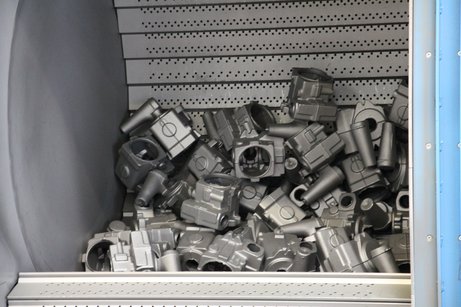
We’ve all heard the saying “If it’s not broken, don’t fix it.” At Rosler Metal Finishing , we often view automation as the solution—or fix, if you will—for mass finishing and shot blasting processes in need of added efficiency. Previous posts in our Automation Blog Series focused on how robots improve finishing processes and why automation is beneficial to your business . We now turn our focus to an organization’s potential motivation for considering automation with the question, “What problems do you want to solve?” Both mass finishing and shot blasting are specialized processes that require a lot of practical consideration. Automating these processes can deliver great benefits to a manufacturer when properly targeted to a prescribed need, but, if the engineers developing the machine don’t understand your challenges, the solution is likely to miss its mark. Rosler Surf Finisher 1800 with robot handling Common Issues Evolving from an automated concept to reality requires a substantial amount of exploration and planning. Before the first machine is ordered, a company must have developed a surface treatment process that fully meets its targets for the desired finishing outcome and communicate what the specific problems are for successful automation integration. Viewing these issues as challenges, the experts at Rosler compiled a list of common issues that we have provided automated solutions for, including: Inadequate finishing quality – The achieved finish ( surface smoothing/polishing , surface preparation for painting, meeting required Almen values of a shot peening process , etc.) is not good enough and must be improved. Inconsistent finishing results – The required finishes cannot be achieved in a consistent, repeatable manner. Costs are too high – The achieved finishes may be acceptable, but processing costs are not competitive. Poor operational flexibility – The current process is too rigid and does not allow for quick reaction to changing demand patterns resulting in long lead times. Not enough qualified labor – It has become increasingly difficult to find people who are trained and willing to do mechanical grinding and polishing or even more basic tasks like material handling. Evaluating Your Process Once you know what problem your finishing process is experiencing, it’s time to step through the entire process in order to identify places for automation and other solutions. The first considerations are the work piece itself, desired surface finish, and desired or required processing technique. Once you have all the requirements and goals for these areas, determining whether the work pieces can be processed continually or in batches must be made. Deciding whether the work pieces are sturdy enough to come into contact with one another during processing or if part-on-part contact is prohibited must also be determined. Machine selection is the next step. Based on the specific type of machine chosen, consumables must also be selected. Relevant consumables may include compounds and ceramic , plastic , polishing and drying , and shot blasting media . Once these process factors have been evaluated, the surface treatment process can be properly defined. That’s when the advantages of automation can be realized, including: Consistent, repeatable process results. Cost savings. Improved operational flexibility. Overcoming labor shortages. Finding a better way... Our motto is “finding a better way.” Whether that is by adding automation to your existing process or developing a new, automated system, we have the expertise you need. In our next Automated Blog Series post, we’ll discuss how to select the right machine and consumables in more depth. Until then, contact us to learn how we can help remedy your problems by automating your finishing process and improve finishing results and efficiency in the process. The complete Automation Series includes: Part 1 – How Robots are Improving Mass Finishing and Shot Blasting Processes. Part 2 – Why Automation is Beneficial for Your Business. Part 3 – What Problems Do You Want to Solve? Part 4 – How Do I Select the Right Machine and Consumables? Part 5 – What Automation Hardware is Available? Part 6 – Environmental Considerations of Automation. Part 7 – The Top 3 Mass Finishing and Shot Blasting Machines. Sign up for enews alerts to be notified of all Rosler blog posts!

Part-on-Part Mass Finishing, Part 3 – Effective Finishing for Ammunition Work Pieces

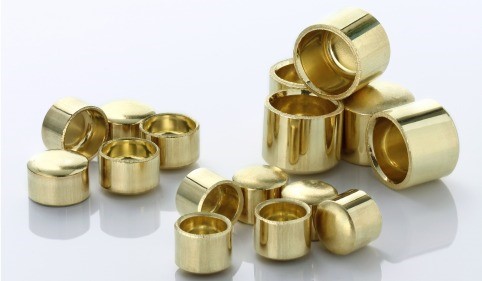
The gun ammunition manufacturing process requires numerous finishing operations. Since ammunition parts allow for part-on-part mass finishing , Rosler Metal Finishing’s washing and drying machines are ideally suited for ammunition manufacturers. Available as rotary vibrators and centrifugal disk finishing systems, Rosler’s part-on-part finishing machines can accommodate various ammunition pieces including blanks, cups, deep-drawn casings, cartridge primers, and bullets. While the manufacturing step and finishing operation of each component varies by work piece and desired result, common mass finishing operations for ammunition based on the specific work pieces are summarized below. Cups Cups Created by running a brass coil through a cupping press, these work pieces require annealing. Cups are occasionally made from a blank as well. After slow cooling to reduce ductility, cups must be cleaned, rinsed, pickled, and dried through finishing operations. Casings A number of manufacturing steps are required for casings. Finishing operations may be required in between and/or after each step. Deep-Drawn Casing Deep Drawing – This process requires three drawings and subsequent annealing. Between each drawing and annealing pass, the casings must be cleaned, washed, and dried. They must also be pickled, rinsed, brightened, and dried after each annealing pass. Casing with Pinch Trim Pinching Trim – After trimming raw casings, work pieces must be cleaned, washed, and dried. Casing with Primer Pocket Forming Primer Pockets – Once the primer pocket is formed, casings must be cleaned, washed, and dried. Casing with Extracting Rim Extracting Rims – After forming the extraction of the casing rim, work pieces are annealed and in need of pickling, rinsing, brightening, and drying. Tapered Neck Casing Tapering Necks – Much like deep drawing cups, tapering the neck of a casing requires three passes. After the final pass, casings must be cleaned, washed, and dried. Casing with Mouth and Neck Tapering Mouth and Neck Toughening – After annealing the mouth and neck of a casing, work pieces must be pickled, rinsed, brightened, and dried. Bullets and Primers Bullets Like casings, bullets and primers must undergo different finishing operations. These operations primarily include cleaning and brightening and are required before each can be installed in the cartridge. Primers For these operations, centrifugal disk finishing machines are frequently used. Cartridges Cartridges After individual manufacturing and finishing steps, ammunition components are assembled into a cartridge. These assembled workpieces must undergo an oiling and polishing operation prior to packaging and shipping. Centrifugal disk machines are most frequently used to oil and polish assembled cartridges. The Rosler Way Several necessary yet unseen finishing steps go into the ammunitions manufacturing process. When dealing with small pieces in bulk, the capabilities of Rosler’s WTA machines offer a great way to streamline finishing processes in a single machine. Doing so saves time and labor costs while increasing production. Contact Rosler today to discuss your part-on-part mass finishing needs for ammunition and other work pieces. We are confident that we have the expertise to overcome your challenges and find a better way. The complete Part-on-Part Series includes: Part 1 – Utilizing Work Pieces as the Media. Part 2 – Rotary Vibrators Versus Centrifugal Disk Machines. Part 3 – Effective Finishing for Ammunition Work Pieces. Sign up for enews alerts to be notified of all Rosler blog posts!

Automotive Crankshafts, Part 3 – Typical Mass Finishing Machines Used for Crankshafts

Crankshafts are an integral automotive component. Utilized to convert piston movement into rotational motion, these work pieces must provide reliable stability and withstand tensile, compressive, and shear stresses. Rosler Metal Finishing has extensive experience finishing crankshafts and other automotive work pieces with specially designed shot blasting and mass finishing equipment. Let’s take a closer look at mass finishing machines offering outstanding processing for crankshafts. Typical Machines Built with specific work pieces in mind, Rosler designs several machines to process crankshafts and other automotive work pieces. Due to their considerable size and weight, the only mass finishing machines capable of handling the deburring of crankshafts after machining are mid- to large-sized tub vibrators or linear, continuous flow vibrators. Selecting one machine type over the other largely depends on the work piece’s size. Tub Vibrators These machines are ideal for processing a wide range of crankshafts, from light-weight small work pieces to those weighing more than 500 lbs, with lengths of up to 20 ft (6,100 mm) or diagonal cross sections of 3.3 ft (1,000 mm). Rosler Tub Vibrator Because of the size of the work pieces they accommodate, tub vibrators require time consuming and costly manual loading and unloading of the work pieces. That is why their use is limited to relatively low production volumes. Linear, Continuous Flow Vibrators For high-volume production, fully or partially automated linear, continuous flow vibrators are the ideal solution. These machines can handle large volumes of crankshafts with lengths of approximately 12 to 30 ft. The use of robots or handling devices like gantry systems for loading and unloading allows fully automatic operation. Rosler DA Linear Continuous Flow Vibrator DA linear, continuous flow vibrators can handle the deburring of small- to mid-sized crankshafts at cycle times of less than one minute per part, more than 60 parts/hour. They can be directly linked to the preceding machining operation and the subsequent washing process. The Rosler Way Rosler has more than 80 years of experience in surface finishing. Trust us to provide mass finishing solutions to your unique automotive work pieces and challenges. Contact us and we will help you find a better way. The complete Automotive Series includes: Part 1 – Cost-Effective Surface Improvement for Key Engine Components. Part 2 – Shot Blasting Machines Designed for Crankshafts. Part 3 – Typical Mass Finishing Machines Used for Crankshafts. Sign up for enews alerts to be notified of all Rosler blog posts!

Automation, Part 2 – Why Automation is Beneficial for Your Business

It’s hard to dispute that technology, on the whole, has made our lives easier and more convenient. Myriad functions have been automated – and improved – to mitigate the effects of human intervention. We make purchases more intelligently, we manage data more efficiently, we can control devices with our voices and eye movements, and we ultimately move through life with less left to chance. In the world of manufacturing, this mitigation of human intervention promises even greater and more measurable, efficiencies. At Rosler Metal Finishing , quality improvements and cost benefits that have resulted from the mechanization and automation of mass finishing and shot blasting operations deliver dividends that transcend the manufacturing floor. Rosler Multichannel System Since the first microprocessor-controlled machine appeared on the manufacturing floor in 1974, hundreds of new varieties have been shipped across the world. With each improvement, these automated attendants encompass a larger footprint, are able to handle heavier loads and more axes, and require fewer controllers to do their work, according to a McKinsey study . Automation has revolutionized smaller tasks as well, including simple parts bin handling, lift assists, automatic media adding systems, or multi-step process control systems (like those where noxious chemicals are dosed, without human risk, into the process). So how do these automation upgrades pay off for you? Let’s start by taking a look at where mass finishing and shot blasting has fit into the manufacturing paradigm. Then we’ll dive deeper into the benefits of today’s automated processes which have a lasting impact on the finished product. Rosler R 220 SO System for small parts The Role of Mass Finishing and Shot Blasting in Modern Manufacturing When mass finishing and shot blasting were “invented” years ago, their sole purpose was to replace the tedious job of manual deburring, or the stripping of rust and paint from a surface. Early equipment was simple and required substantial operator involvement, but represented great strides productivity and quality improvement. Over time, both technologies grew into sophisticated surface treatment technologies that have become essential for the proper function of components used across many industries. Today, state-of-the-art mass finishing equipment is used to place the finishing touch on orthopedic implants like knee femorals, tibia plates, or hip stems before implantation. Complex shot peening systems are also used for extending the service life of critical aircraft components. Rosler RMT Multi Tumbler System Mass finishing and shot blasting have made a significant contribution towards zero-defect manufacturing with absolutely repeatable, highly cost-efficient, surface improvement processes. To a large extent, this only became possible through further mechanization and automation. What Are the Benefits of Automation? When deployed properly, automation offers numerous tangible technical and economic advantages, including: Improved surface treatment quality, including tighter tolerances. As an example, the automation of the shot peening of turbine blades has greatly improved the peening quality as measured by Almen values. Consistent, repeatable quality. A stable process environment means no variations in the output. This can be seen with the automated polishing of orthopedic implants in dedicated mass finishing equipment, which delivers consistent high qualities, batch after batch, day after day. Time savings with reduced manufacturing lead times. As an example, the direct linking of the blast cleaning of steel plates and beams and their corrosion protection in a single, automated preservation line process can drastically reduce turnaround times. Rosler KON-RRB Preservation Line with transfer system Improved operational efficiency, which translates to fewer rejects and lower costs. A manufacturer of outboard engines, for example, could reduce its reject rate from 12 percent to 0 by simply converting to an automatic drag finishing process for paint preparation. No need for trained mechanical labor . Automation relieves the pressure of finding qualified, well-trained mechanical labor that understands the complexities of surface finishing in a shrinking marketplace. Cost savings. Automation pays for itself through lower expenditures for personnel, faster turnaround times, and much lower reject rates. Rosler RDGE 800-8 Wire Mesh Belt System Is Automation Always the Best Solution? It’s clear that automated mass finishing and shot blasting systems produce better surface finishes in a consistent, repeatable manner, reduce the finishing costs, and help reduce lead times. Therefore, for industrial volume production, automation is a “no-brainer.” However, for work pieces that are produced in very small volumes or are particularly large, bulky and heavy, partial automation may offer a good compromise. This is definitely the case in prototyping shops or foundries and forges making special, custom castings or forgings. As with any business process, you’ll simply want to analyze what the right balance of automation is for your particular application and budget. Rosler R780 Bowl System with dryer The Rosler Way For more information or to discuss your automation needs and challenges, contact us . With more than 80 years of experience in the surface finishing industry, we are confident that we can deliver a solution for your process. Rosler Tandem R370_12 SE Multi Channel System The complete Automation Series includes: Part 1 – How Robots are Improving Mass Finishing and Shot Blasting Processes. Part 2 – Why Automation is Beneficial for Your Business. Part 3 – What Problems Do You Want to Solve? Part 4 – How Do I Select the Right Machine and Consumables? Part 5 – What Automation Hardware is Available? Part 6 – Environmental Considerations of Automation. Part 7 – The Top 3 Mass Finishing and Shot Blasting Machines. Sign up for enews alerts to be notified of all Rosler blog posts!

Part-on-Part Mass Finishing, Part 2 – Rotary Vibrators Versus Centrifugal Disk Machines

As described in Part 1 of our Part-on-Part Blog Series , some forms of mass finishing techniques encourage part-on-part contact to achieve the desired finish. In addition to viewing work piece impingement as an asset, this type of mass finishing also eliminated the need for ceramic, plastic, and other types of media . The only additives required for such part-on-part finishing are water and the respective compounds . Rosler Metal Finishing designs and manufacturers two machines specifically for part-on-part mass finishing known as WTA rotary vibrators and MK centrifugal disk machines. The applications and benefits of each machine provide a range of part-on-part mass finishing uses for sturdy parts in bulk. Let’s compare their designs. WTA Rotary Vibrators Rosler developed special WTA rotary vibrators especially for part-on-part processing. These machines not only allow running the finishing/washing process, but also the subsequent drying stage in one single machine. The WTA series’ unique, innovative equipment design is a key to finishing success. Design attributes as noted in the diagram include: Rosler WTA rotary vibrator machine design A rotary vibrator at the center of the finishing system with a pneumatic unload gate. An integrated hot air generator which blows hot air onto the finished work pieces in the work bowl. Special dual function drains in the work bowl which use a diaphragm pump to extract process liquid. A suction fan which extracts drying air. A condensation unit which filters drying air. A sophisticated compound dosing system allows for multiple finishing tasks within a single, automated process. Rosler WTA rotary vibrator compound dosing system Rosler WTA rotary vibrator machines allow fully automatic part-on-part cleaning/degreasing , pickling, passivation, and drying of the work pieces in one single machine without any media. https://youtu.be/ZXY1UPoWByY MK Centrifugal Disk Machines In addition to WTA rotary vibrators, Rosler also offers centrifugal disk finishing machines that allow part-on-part cleaning/washing and drying in a single machine. Compared to vibratory equipment, centrifugal disk machines offer the advantage of about 10 times higher processing intensity. However, disk machines should only be used for treating small, sturdy work pieces that will not be damaged (scratched, bent, etc.) by the higher intensity. Rosler MK centrifugal disk machine design As seen in the diagram, the rotating spinner at the bottom and the stationary work bowl of centrifugal disk finishing machine create the centrifugal force and the “vortex” needed to finish work pieces. The centrifugal force of the rotating spinner impels the mass of the parts and compound up the walls of the stationary work bowl. Once the parts have lost their kinetic energy, they collapse back to the center of the spinner. From there, they are accelerated again. The Rosler Way Not sure whether a rotary vibrator or centrifugal disk machine is best for your part-on-part application? We can help! Contact us today to discuss your surface finishing needs. The complete Part-on-Part Series includes: Part 1 – Utilizing Work Pieces as the Media. Part 2 – Rotary Vibrators Versus Centrifugal Disk Machines. Part 3 – Effective Finishing for Ammunition Work Pieces. Sign up for enews alerts to be notified of all Rosler blog posts!

Automotive Crankshafts, Part 2 – Shot Blasting Machines Designed for Crankshafts

As established in Part 1 of our Automotive Blog Series, “Cost-Effective Surface Improvement for Key Engine Components,” shot blasting is an effective technique for the surface treatment of automotive parts including crankshafts. Used in heavy trucks, heavy equipment, and, even, large ships, crankshafts enable an engine to move a vehicle by converting the reciprocating (up/down) movement of the pistons/connecting rods into a rotational movement that propels the vehicle forward. Depending on their size, weight, and production volume, crankshafts can be blast-cleaned in different machines. Rosler Metal Finishing offers solutions for a wide range of crankshaft types with weights from 15 to more than 500 lbs and lengths from 10 up to 80 in and more. Typical Machines Built with specific work pieces in mind, the machines designed to process crankshafts are as diverse as the work pieces they accommodate. RHBE Spinner Hanger Series For somewhat larger work pieces with relatively low production volumes, Rosler’s RHBE spinner hanger machines offer flexible options. Rosler RHBE 17/22 spinner hanger shot blasting machine For example, the RHBE 17/22 spinner hanger shot blast machine with a working envelope of 67 x 86 in allows the individual blast cleaning of crankshafts with lengths of up to 80 in and weights of more than 500 lbs In case of smaller crankshafts, a special work piece fixture permits the simultaneous processing of eight or more components. https://youtu.be/4jMmSm_dz4g Rosler RHBE Overhead Rail Machine RKWS Crankshaft Blast Machine Series In recent years there has been a trend towards specially engineered, dedicated shot blast machines allowing low-cost, efficient blast cleaning of large volumes of small to midsize crankshafts. Rosler RKWS 3 x 4 blast machine Responding to this trend, Rosler has introduced two specially engineered, highly compact shot blasters, the RKWS 2 x 2 and the RKWS 3 x 4. These machines offer cycle times of 20 seconds per part for the RKWS 2 x 2 and 15 seconds per two parts for the RKWS 3 x 4, including work piece loading and unloading by multi-axis robots. Gamma G Turbines The specific turbines used in a shot blasting machine greatly impact its effectiveness and efficiency. That’s why Rosler designed its Gamma 400 G turbines. Rosler Gamma G turbine blade These turbines produce 20 percent higher blast performance and lower energy consumption than conventional blast wheels. With a quick-change system, the Gamma blades minimize downtime caused by blade changes. To minimize wear and the need to purchase new blades, Gamma blades are curved to allow both sides of the blades to be used for added longevity. https://youtu.be/q-NlIOq-iL0 Maintenance demonstration for Gamma 400 G turbine blast machine blades The Rosler Way With more than 80 years of experience, Rosler has the technology and drive to develop a shot blasting application for your automotive crankshaft needs. Contact us to discuss your challenges and needs so we can help you find a better way. The complete Automotive Series includes: Part 1 – Cost-Effective Surface Improvement for Key Engine Components. Part 2 – Shot Blasting Machines Designed for Crankshafts. Part 3 – Typical Mass Finishing Machines Used for Crankshafts. Sign up for enews alerts to be notified of all Rosler blog posts! https://vimeo.com/467660633
Automation, Part 1 – How Robots Are Improving Mass Finishing and Shot Blasting Processes

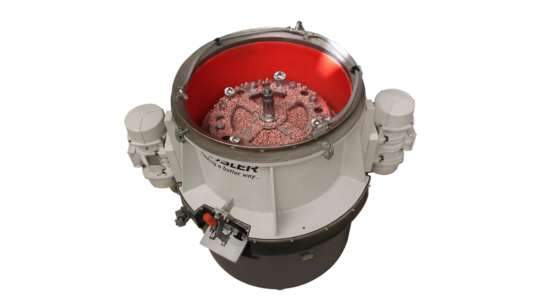
Automation is changing the way mass finishing and shot blasting processes are delivered. In this seven-part blog series, Rosler Metal Finishing will explain what has given rise to automation trends, the human factors of these manufacturing upgrades, and how such automated processes deliver benefits to your business. Those of us of a certain age remember a portrayal of robotics that, in hindsight, was rather quaint: human-looking automated machines would be crisscrossing our landscape, delivering us food and wardrobe, pumping our gas, collecting our garbage, or – in a more macabre rendering – leading a rise of the machines that would eliminate the human race. Rosler Surf Finisher with automation options In reality, Rosie the Robot and the Terminator have not ruled the world, as predicted by Hollywood. Today, faceless, automated machines, arms, and processors are streamlining the way in which products and services are delivered. In fact, a World Economic Forum article found that the 2020s will be the “age of automation,” with manual jobs making up only 35 percent of the manufacturing labor force by the end of this decade (a drop from 48 percent, as measured in 2016). Additionally, one study expects that more than 1.2 million automated machines will be deployed in industrial situations by 2025 – leading to an increase of automated manufacturing processes to fully 25 percent, from 10 percent today. The relatively low U.S. unemployment rate reinforces the pressure to mechanize. When unemployment is low, the labor force tends to be choosier. As of now, the labor force seems intent on moving toward less physical career choices. Rosler FKS with automation options That said, humans still will have a significant role on the manufacturing floor. Financial analyst Dave McKay noted that automation won’t “kill off your job,” but necessitate new advanced roles in manufacturing that require people who possess skills in critical thinking, complex problem-solving, and monitoring. This offers opportunities for existing employees to pursue a less laborious, and more analytical, career path – things like monitoring, operating, and handling minor maintenance on automated production systems. So, it is clear that mechanization, and partial- or full-automation of our working environment, is here to stay. At Rosler, we, too, are realizing the benefits of automation – developing equipment to support surface treatment technologies including mass finishing and shot blasting . Automated equipment is going a long way toward replacing processes that have had to be done by hand, and also boosting the overall safety, precision, and efficiency of our manufacturing operations. Automation is, simply expressed, a technology, by which a process or procedure is performed with the goal to minimize or completely eliminate human involvement. For mass finishing and shot blasting automation, this means the linkage of two or more finishing stages into a mechanized operation that requires a minimum of operator intervention. Rosler RMBS Today, and into the future, we see this technology evolving, into sophisticated, indispensable surface refinement technologies across many industries including automotive , aerospace , equipment building, medical engineering , power generation, and, even, additive manufacturing . So how will automation promote the factory of the future? How is it beneficial to our business and yours? How do equipment and environmental considerations fit into the paradigm? And what does the future hold? Stay tuned as we explore automation in greater detail in future posts within our Automation Blog Series. Rosler Roboblaster As always, we are eager to learn about your challenges in order to develop and deliver a solution. Contact us today to discuss how we can help you find a better – and perhaps, more automated – way. The complete Automation Series includes: Part 1 – How Robots are Improving Mass Finishing and Shot Blasting Processes. Part 2 – Why Automation is Beneficial for Your Business. Part 3 – What Problems Do You Want to Solve? Part 4 – How Do I Select the Right Machine and Consumables? Part 5 – What Automation Hardware is Available? Part 6 – Environmental Considerations of Automation. Part 7 – The Top 3 Mass Finishing and Shot Blasting Machines. Sign up for enews alerts to be notified of all Rosler blog posts! https://vimeo.com/467660633
Part-on-Part Mass Finishing, Part 1 – Utilizing Work Pieces as the Media

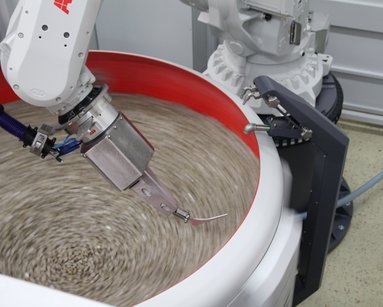
Mass finishing processes require pressure and constant rubbing to achieve the desired finishing results. In most cases, these applications require media specifically selected for its material, size, and shape to act upon work pieces and achieve the required effects. Some mass finishing applications also seek to eliminate or reduce part-on-part impingement or contact to protect delicate and high-value work pieces. Conversely, part-on-part mass finishing intentionally exposes work pieces to impingement and encourages contact between work pieces and the resulting pressure to create finishing effects without the need for ceramic, plastic, and other types of media . The only additives required for such part-on-part finishing are water and the respective compounds . Rosler Metal Finishing designs part-on-part mass finishing machines, known as WTA machines , which help reduce cost per piece through the elimination of media consumption and faster processing times. Ideal Work Pieces Part-on-part finishing is ideal for small, bulk parts that are made of brass, steel, aluminum, and even small ceramic components. Contact pins Pre-conditions for work pieces exposed to part-on-part finishing include: Small sizes, approximately 0.1 to 2” in length or width. Simple, compact shapes. Sturdy nature without a need for delicate handling. Zipper components Part-on-part finishing is commonly used for: Small chain components including rollers and bushings. Small eyelets and hooks. Small stampings such as electrical contacts. Metal buttons. Rivets. Small metal tubing. Zipper parts including sliders and pull tabs. Rollers for small roller and needle bearings. Electrical contact pins. Small spindles and shafts. Ammunition cartridge components including blanks and cups for casings, deep drawn casings, bullets, and primers. Rivets Finishing Processes With the right compound(s) and suitable dosing system, part-on-part finishing machines can handle nearly any type of surface finishing task. Descriptions of finishing tasks and the suggested compound include: Cleaning, degreasing, and de-oiling – In order to remove dirt, grease, or oil from the surface of the work piece, these tasks use pH neutral/slightly alkaline compounds. Pickling – This task utilizes a highly acidic compound to remove oxidation and light scale left over from annealing, brazing, or welding. Deburring and light edge breaking – Breaking and removing sharp edges, such as those left by machining, is achieved with a pH neutral compound. Surface grinding and smoothing – Grinding paste is added to help smooth surfaces. Polishing – To create very smooth surfaces, polishing paste is added. Brightening – pH neutral compounds are utilized to create bright, shiny surfaces. Passivation and corrosion protection – For protection from oxidation and short-term resistance to corrosion, pH neutral and slightly alkaline compounds are effective. Oil compounds are utilized for long-term protection against corrosion. By using several compounds, multiple tasks such as cleaning/degreasing, pickling, and drying or polishing, brightening, passivation, and drying can be combined into a single, fully automatic process. Rosler washing and drying system Operation Benefits In addition to the elimination of media costs and ability to use successive compounds and achieve various processes in a single machine, part-on-part mass finishing benefits include: Compact, space-saving designs since no additional space is required for a separate dryer. Simple material handling due to the elimination of work piece transfer between finishing machine and dryer. Fully automatic operation with suitable work piece loading and unloading equipment. No media issues such as lodging, chipping, or separation because no media is used. Batch operation with complete machine unload, eliminating the risk of parts getting mixed up. Different processing modes for different applications. Flow-through modes open drain valves allowing process liquid to flow straight through the machine. High water level modes close drain valves to retain process liquid in the machine. Use of multiple types of compound in one single process including acidic, pH neutral, and alkaline compounds as well as grinding and polishing paste. Standard Machinery Rosler developed special WTA rotary vibrators especially for part-on-part processing that not only allow running the finishing/washing process, but also the subsequent drying stage in one single machine. Rosler WTA Rotary Vibrator with drying system Besides WTA rotary vibrators, Rosler also offers centrifugal disk finishing machines that allow part-on-part cleaning/washing and drying in a single machine. Both machine types allow the complete unloading of a batch of finished parts to take place either by tilting the work bowl or by activating an unload gate in the bottom of the work bowl. Future posts in the part-on-part mass finishing blog series will compare these machines and their applications. The Rosler Way The experts at Rosler are eager to learn more about your part-on-part mass finishing challenges in order to learn about your needs, develop a solution, and deliver results. We are confident that Rosler can design a process and machine to fit your needs and supply the most appropriate compound for your process. Contact us today to discuss your needs. The complete Part-on-Part Series includes: Part 1 – Utilizing Work Pieces as the Media. Part 2 – Rotary Vibrators Versus Centrifugal Disk Machines. Part 3 – Effective Finishing for Ammunition Work Pieces. Sign up for enews alerts to be notified of all Rosler blog posts!

Automotive Crankshafts, Part 1 – Cost-Effective Surface Improvement for Key Engine Components

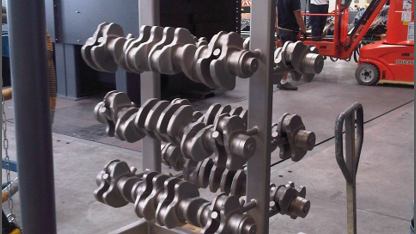
Crankshafts are a key component of internal combustion engines, be it mass-produced engines for motorcycles and automobiles , engines for heavy trucks, off-high highway equipment, and even large ships. Crankshafts convert the reciprocating (up/down) movement of the pistons/connecting rods into a rotational movement that drives the wheels and allows a vehicle to move forward. Rosler Metal Finishing understands the vital importance of these engine components and has developed specific shot blasting and mass finishing machines to process these pieces to perfection. A crankshaft with connected rods and pistons Materials & Production Methods Considering that automotive crankshafts weigh around 40-60 pounds and rotate approximately 100 times per second, these parts are exposed to tremendous tensile, compressive, and shear stresses. In addition, combustion forces and piston acceleration in an engine can also cause significant vibration. Therefore, crankshafts must be made from tough, wear-resistant materials, usually high alloy carbon steel. Typical alloying elements are manganese, chromium, molybdenum, nickel, cobalt, or vanadium. The most common materials are AISI/SAE 4340, EN-30B, 4330-M, 32-CrMoV-13, or 300-M. Crankshafts are made by: Casting – The production of cast iron crankshafts is limited to cheaper production engines, for example, low-performance diesel engines with lower overall loads. Hot forging – Today the most common manufacturing method is hot forging at temperatures of 1,700 to 2,100° F. Compared to casting, forged cranks offer a higher strength with – at the same time – lower weights and somewhat more compact dimensions. Depending on the utilized steel alloy, forged crankshafts may have to undergo a heat treatment process in the form of tempering and quenching. This is generally done after forging, but sometimes also after machining. Complete machining from a steel billet – This method is quite costly and is predominantly used for motorsport and high-performance applications, never for high-volume engine production. A hot-forged crankshaft After forging or casting, crankshafts must undergo an intensive machining process that includes: Turning of the journals, sometimes also called crankpins. Drilling of the oil holes in the journals. Drilling of the balancing holes in the counterweights. Milling of the drive sprockets, etc. Surface Treatment Tasks The main surface cleaning/treatment tasks for crankshafts include: Blast cleaning after forging or casting. Shot peening after machining. Deburring after machining. Blast cleaning after forging or casting is required because the forging/casting/heat treatment process leaves a relatively strong layer of scale on crankshafts and other work pieces. Prior to subsequent production processes such as machining and micro finishing, the work pieces must undergo a blast cleaning process to create a surface finish of SA 3, i.e. a pure white metal surface without any scale residues whatsoever. Crankshafts before and after blast cleaning The high compressive, shearing, and tensile stresses that crankshafts are exposed to as a result of machining can be relieved significantly by shot peening. In this application, the peening process focuses on the journals, especially the bearing surfaces as well as the journal fillets and journal cheeks (counterweights). Crankshaft peening is usually done by air blasting with relatively fine steel media. Deburring after machining is required to smooth edges including those of counterweight cheeks, drilled balancing holes in the counterweights, milled drive sprockets, and, sometimes, drilled oil holes in the journals. It is extremely important that the bearing areas on the journals are not damaged. The deburring operation is frequently done by mass finishing. Crankshaft machining The Rosler Way Whatever type of engine your crankshafts are designed for, Rosler can develop equipment and a process to provide accurate and repeatable finishing results. We are proud to lend our surface finishing expertise to the automotive industry. Contact us today to discuss your unique challenges. The complete Automotive Series includes: Part 1 – Cost-Effective Surface Improvement for Key Engine Components. Part 2 – Shot Blasting Machines Designed for Crankshafts. Part 3 – Typical Mass Finishing Machines Used for Crankshafts. Sign up for enews alerts to be notified of all Rosler blog posts!