Solution Finder
SOLUTION FINDER

Su guía a través del
mundo de productos Rösler

Con unos pocos clics encontrará la máquina adecuada a sus necesidades.

Resultados: 237 Artículo - 51 Productos

Auch in Zeiten von Corona: Rösler ist stolz auf seine Jubilare

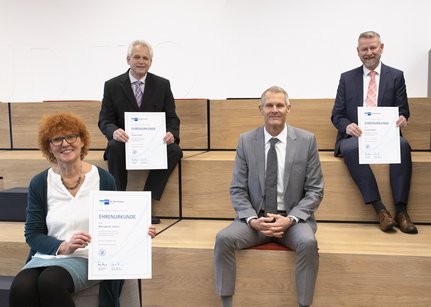
Die Rösler Oberflächentechnik GmbH dankt 48 langjährigen Mitarbeiterinnen und Mitarbeitern in diesen herausfordernden Zeiten für insgesamt 975 Jahre Treue und Loyalität – die Feierlichkeiten fanden im kleinen Rahmen unter strenger Einhaltung der Hygienevorschriften statt. Die feierliche Ehrung der Betriebszugehörigkeit und die Verabschiedung von Mitarbeitern in den Ruhestand hat bei Rösler eine lange Tradition. Angesichts der anhaltenden Corona-Pandemie musste die traditionell auf Kloster Banz stattfindende Feierlichkeit dieses Jahr leider abgesagt werden. Doch um die Wertschätzung gegenüber den Jubilaren zu zeigen, fanden die Ehrungen in Kleingruppen durch die entsprechenden Führungskräfte zu separaten kurzen Terminen unter Wahrung der erforderlichen Hygieneregeln statt. In diesem Zusammenhang dankten die Führungskräfte im Namen der Firma Rösler allen Mitarbeiterinnen und Mitarbeitern für die jahrzehntelange Treue und deren Engagement, insbesondere in so schwierigen und unsicheren Zeiten wie diesen. Die Rösler Oberflächentechnik GmbH gratuliert … zum 40-jährigen Betriebsjubiläum: im Werk Memmelsdorf: Bernadette Hertel, Frank Möller, Johann Wendler, Rüdiger Böhm sowie Karin Schaarschmidt aus dem Werk in Hausen. … zum 25-jährigen Betriebsjubiläum: Dirk Neupert, Ralf Müller, Jan Reinmann, Reiner Kirchner, Bernd Klett, Jürgen Geisler, Heiko Vogel, Georg Bornschlegel, Friedrich Steinepreis, Gerhard Wagner, Thomas Dillinger, Daniel Bätz, Uwe Michael, Bodo Helmert, Andreas Ereth, Denis Dorittke, Irene Walther, Uwe Lautensack, Thomas Dreßel, Gerhard Edelmann – alle tätig im Werk Memmelsdorf – sowie Alex Britner, Eduard Neimann und Heiko Traut im Werk Hausen. … zum 10-jährigen Betriebsjubiläum: im Werk Memmelsdorf: Jakob Koch, Florian Müller, Kathrin Bätz, Matthias Voigt, Leo Higgs, Andreas Schubert, Günter Elflein, Jürgen Buss, Ingo Staak, Sylvia Eichenberg, Michael Klemmt, Werner Vießmann, Igor Ratz, Daniel Jahn, Jessica Ebert, Sonja Tal, Daniel Schramm, Rainer Sauerbier, Alexander Jost und Björn Nesbor. Langfristiges Erfolgsdenken als Teil der Rösler DNA Stephan Rösler, Geschäftsführender Gesellschafter der Rösler Oberflächentechnik GmbH, bedankte sich darüber hinaus in einem schriftlichen Weihnachtsgruß bei allen Mitarbeiterinnen und Mitarbeitern für deren Einsatz und Loyalität. Trotz der momentan schwierigen wirtschaftlichen Situation, in welcher viele Unternehmen ihre Produktion und Neuinvestitionen deutlich zurückfahren und die Firma Rösler dadurch bedingt einen deutlichen Umsatzrückgang zum Vorjahr verzeichnen werde, ist es sein erklärtes Ziel, die Rösler Gruppe für eine langfristige, nachhaltige und erfolgreiche Zukunft aufzustellen. So wurden zuletzt zukunftsweisende Investitionen, wie z. B. in den Bereichen Compoundfertigung, Logistik, Keramikfertigung, mechanische Fertigung, Rösler Academy, Kunststoffschleifkörperfertigung sowie in ein neues Betriebsrestaurant oder in Photovoltaikanlagen, angestoßen. Auch im jüngsten Geschäftsfeld AM Solutions, welches sich mit den Herausforderungen des 3D-Drucks beschäftigt, konnte zuletzt ein prestigereiches Projekt mit dem renommierten Druckerhersteller HP erfolgreich umgesetzt werden. Er betonte zwar, dass man sicherlich keinen Einfluss auf alle Dinge habe, aber dass er und sein Führungsteam ihr Bestes getan hätten und auch weiterhin tun, um die Zukunft der Firma Rösler erfolgreich und nachhaltig zu gestalten.
Mass Finishing Media, Part 3 – Why Discharging Undersized Media, Maintaining Media Levels Are Crucial

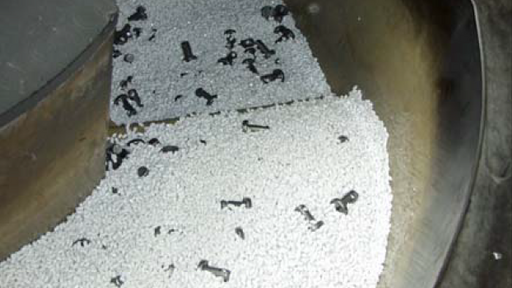
Mass finishing processes are effective because the motion of media against work pieces transforms the surface of the work pieces. The deflashing , descaling , edge rounding , polishing/smoothing , cleaning/oil removal/degreasing , and/or grinding effects change the surface of the media itself along with the work pieces. As a result, media wears down over time, losing its shape, size, and effectiveness. Known as undersized media, this worn media must be discharged and replaced with fresh media to ensure proper processing and safety. Whether a process uses ceramic , plastic , or polishing and drying media , Rosler stresses the importance of monitoring media levels and the mix of new and worn media for precise and safe mass finishing results. Worn Media Reduces Process Effectiveness Over time, media wears and becomes smaller. This undersized media can throw a process completely out of balance in several ways, including: Media lodging in the work pieces which could cause safety issues later in the process. Clogging drains within the finishing machine and causing flooding. Failing to meet finishing standards. Increasing required finishing times. Poorly selected media shapes and sizes can lead to problems such as ineffective finishing and media lodging within the work pieces as shown. Timely and effective discharge of the undersized media and replacing it with new media is, therefore, critical for the stability of any mass finishing process. Discharge can be done continuously by building suitable undersize screens into the actual mass finishing machine or in the vibratory screening unit. To prevent media clogging, undersize screens themselves must also be monitored. If lodging or clogged drains occur over time, undersize screens with larger holes should be installed. Undersized media screens allow media that is too small to be effective any longer to fall through screen holes and remove it from the media mix. In rotary vibrators with internal separation, the undersized media discharge can sometimes be inefficient. Running the complete media charge through an external vibratory screening machine equipped with special undersize screens every few days provides effective removal of undersized media and helps maintain the optimal media mix. New Media Offsets Undersized Loss Removing undersized media must be offset by the addition of new media. Without timely replacement, the media level in the machine will become lower, which may drastically impact the finishing process in several ways. Decreases in the media-to-work piece ratio will cause nicking and scratching of the work pieces. A higher portion of smaller media in the machine will prevent the process water from getting drained from the machine resulting in dirty work pieces. In vibratory machines, the spiral movement of the media/work piece mix will collapse if the media level drops too low resulting in poorer finishing results and longer cycle times. The media level in this rotary vibrator is too low In all cases, the process will completely collapse within a few days—sometimes within a few hours! Depending on the machine and media type, new media should be added at regular intervals such as with every work piece batch, once every few hours, or once a day. Your media supplier should be able to help you with frequency based on test batches and careful monitoring. Equipment updates may also be available to automate media replacement such as the installation of a timer- or weight-controlled media replenishment system to help maintain the right media working mix. The Rosler Way As a supplier of mass finishing media and machines, Rosler has the expertise to both engineer unique applications and supply the consumables and advice necessary to keep them operating efficiently. Contact us to learn how we can solve your unique challenges and meet your ongoing needs. The complete Mass Finishing Media Series includes: Part 1 – “Don't Navigate the Complex Selection Process Alone.” Part 2 – “Tips for Measuring Media-to-Work Piece Ratio.” Part 3 – “Why Discharging Undersized Media, Maintaining Media Levels are Crucial.” Sign up for enews alerts to be notified of all Rosler blog posts!
processing bowl

Radiusing of tooling components with the drag finishing technology

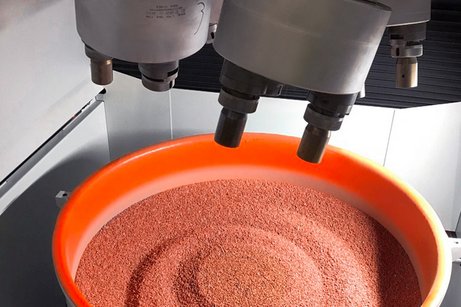
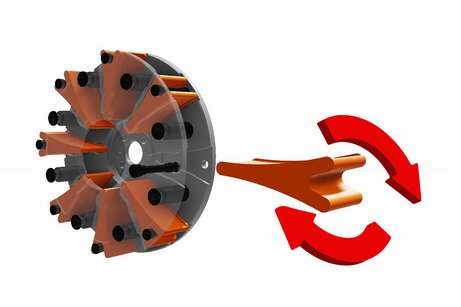
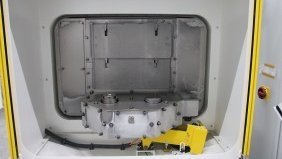
Radiusing of tooling components with the drag finishing technology To date the voestalpine Rotec GmbH, a global leader in the manufacture of precision steel pipes and tubes, has been using a manual process to place a radius on its stamping tools. Within the framework of its continuous process optimization program the company replaced this manual operation with an automated Rösler drag finishing system R 4/700 SF. With the single piece dry drag finishing process the usable life of the stamping tools can be at least doubled. For some tools the uptime can even be increased by a factor of ten. For this reason, the return on investment period (ROI) is well below two years. With eleven manufacturing locations in Europe, North-America and Asia the voestalpine Rotec is a globally operating company that is specialized in the manufacture, refinement and marketing of precision steel pipes and tubes. Since the company belongs to the internationally operating steel and technology corporation voestalpine, the customers have direct access to comprehensive knowhow ranging from steel liquification to the complete pipes and tubes. The development of innovative products and manufacturing technologies takes place in four divisions. Within the corporate structure the voestalpine Rotec, headquartered in Krieglach, Austria, belongs to the metal forming division. At this location the company manufactures primarily belt tensioning tubes for the automobile industry. The complex manufacturing equipment for making pipe and tube components is also designed and built at the same location. Hannes Winkler, assistant to the plant manager at voestalpine Rotec and responsible for process optimization, explains: „To be able to make our products at internationally competitive costs, our company is utilizing continuous improvement processes.” Cost reduction by increasing the usable life of tooling Even before wear became visible, stamping tools like arbors and die plates had to be replaced because of minor fracturing at the edges. Frequently the edges were reworked by hand. But this did seldom extend the usable life of the tools. With around 50 million manufactured components per year tooling supply was a significant cost factor. Therefore, it was not surprising that the process optimization specialist was looking for an automated, repeatable edge radiusing process for prolonging the service life of the tooling. Cost-efficient dry processing in a drag finisher Edge radiusing of the tools is an ideal application for the drag finishing technology. This unique mass finishing system allows the precise, targeted surface finishing of high-value, complex work pieces. Exactly defined process parameters guarantee absolutely repeatable finishing results. “From my previous occupation at a supplier of motor sport components I knew that Rösler Oberflächentechnik builds such equipment. That is why I contacted Rösler first. Of course, we also contacted other suppliers of mass finishing equipment and asked them to run processing trials for us”, continues Hannes Winkler. In the end the customer chose the R 4/700 SF system, because Rösler was the only supplier, who could offer a dry finishing process for the tools. Hannes Winkler adds: „The dry solution eliminated the process water cleaning system required with the wet processing solution. This reduced not only the capital expenditure but also resulted in lower operating costs. Of course, the quality and long service life as well as the high availability of the Rösler equipment also played an important role in our decision.” Automated finishing that is perfectly adapted to different tools At the heart of the compact, plug-and-play drag finisher is a carousel equipped with four rotary spindles, each spindle allowing the mounting of three work pieces. The carousel and the rotary spindles are outfitted with separate drive motors allowing the setting of totally different rotary speeds for carousel and spindles. The processing bowl is filled with processing media, which in this particular application consists of crushed walnut shells and aluminum oxide. A vibratory motor mounted below the processing bowl ensures the optimum mixing of the processing media. Required bowl changes can be quickly carried out with a forklift truck. For the actual process the tools to be finished are manually mounted to specially designed work piece fixtures, which in turn are attached to the spindles equipped with quick-connect couplings. To facilitate this operation, the operator moves the spindles to the load/unload station with the touch of a button. This allows quick, ergonomic and simple loading/unloading of the work pieces. Once the respective processing program, stored in the programmable system controls, has started, the carousel with the spindles is lowered so that the rotating spindles are immersed in the processing media. Carousel and spindles are moving clock- and counterclockwise at the defined rotary speeds. At the midpoint of the processing cycle – depending on the tools to be finished, the total finishing time varies between 15 and 45 minutes – the rotary direction is usually changed. This guarantees an even radiusing of the tool edges on all sides. Continuously growing work piece spectrum shortens the amortization period Initially it was planned to use the drag finisher for five frequently used tool types. Hannes Winkler reports: „The new mechanical drag finishing system produced such good results that the usable life of these components could be practically doubled. And in some instances it could even be increased by a factor of ten. Since commissioning the drag finisher about six months ago, we have increased the spectrum of work pieces to be finished mechanically to around 20 different tool types. This helped reduce the amortization period to well below two years. By continuously adding additional work pieces, the amortization time will decline even further”. This positive experience led the voestalpine group of companies to list Rösler as the exclusive supplier for this particular finishing application. Besides the mechanical edge radiusing of additional tool types, the process optimization specialist is also considering a polishing application. Hannes Winkler concludes: „At the moment we are conducting processing trials. If the results are as we expect, we will purchase a second processing bowl with the required processing media. A key advantage of the Rösler drag finisher is that processing bowls can be easily exchanged allowing us to quickly switch from one application to another”.

Monitor Wear Linings to Maintain Process Efficiency, Increase Equipment Longevity

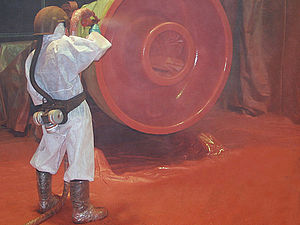
Mass finishing machinery is a major investment for most companies. Proper maintenance and preventative repairs over the life of these useful and necessary machines will greatly improve the return on such investments, drive productivity, and extend the working life of the equipment itself. Rosler stresses the need to regularly inspect the linings of vibratory tubs and troughs to identify repairable issues before permanent damage occurs. Media-Induced Wear To effectively finish work pieces, media must be matched to the specific finishing task and initial state of a work piece. For example, media used for deburring/edge radiusing and surface grinding can be very abrasive. If not properly protected by a suitable wear lining, the steel construction of a work bowl would be completely worn through in a few hours by contact with the media and work pieces. Polyurethane and, to a certain degree, rubber are excellent lining materials providing wear protection for thousands of operating hours. Even these materials wear though and must be periodically replaced with a new lining. (More information about specifying liner materials is available in a previous blog post .) Maintaining Process Stability Checking your work bowl lining for wear and replacing it in a timely manner is essential for the stability of your mass finishing process as a whole. In addition to worn work bowls, failure to ensure a proper protective lining can create other problems including: Work pieces getting stuck in the machine and, therefore, jeopardizing the integrity of different work piece batches. Media, water, and process chemicals can leak from the machine if the metal processing bowl is worn through and holes or cracks appear. Severe machine malfunction can occur when media or parts can get trapped in worn spots during the separation phase when the finished work pieces are separated from the media. Damage to the work bowl that is beyond repair, causing an unnecessary downtime and requiring costly replacement parts. A weakened bowl can crack and make the entire machine unusable Check your bowl lining at least monthly for wear or rips. Especially the areas around drains, the parts loading chute, and around the unload areas will see the highest wear. The “nail test” makes checking the liner thickness easy. Push a nail trough the liner until you hit the base metal and record the thickness of the liner. Keep track of the liner thickness over time to predict when you will need to replace your liner. Just as optimal media mix must be regularly monitored, so must the condition of a work bowl. If not, the entire process and downstream operations may suffer. Reline Expertise This work bowl is being relined with sprayed‐on polyurethane at a Rosler reline shop. Rosler maintains a shop offering reline services for work bowls of all types and makes. With the unique Rosler ThermoStrip procedure, we can patch and repair worn work bowls to restore process efficiency and extend the life of your equipment whether Rosler designed it or not. The Rosler Way Our worldwide network of service providers is positioned to provide expert service and guidance. Contact us to discuss how we improve your process and increase the lifespan of your equipment.
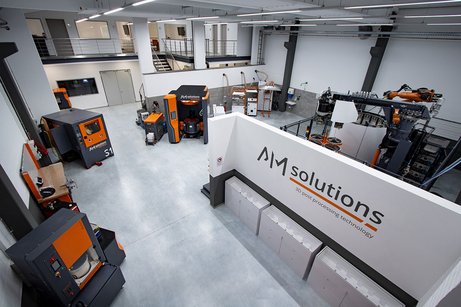
test lab AM Solutions

New technology and test center for Rösler brand AM Solutions – 3D post processing technology

The ideal environment for process and product development for post processing of 3D printed components The new technology and test center of AM Solutions – 3D post processing technology represents a significant milestone in the development of processes and products for the post processing of products created with AM methods. The new center is outfitted with state-of-the-art engineering software and various 3D printing systems. However, the main focus is on an exceptionally well-equipped post processing section, where AM Solutions – 3D post processing technology can demonstrate an impressive range of machinery for post processing of 3D printed components. Additive manufacturing allows the quick and flexible production of metallic or plastic components with precisely defined material characteristics. All these components have one thing in common: Their surface requires different kinds of finishes, which must comply with the most stringent finishing specifications. These requirements pose a special challenge for the post processing of 3D printed components. AM Solutions – 3D post processing technology is meeting this challenge head-on with its new, generously equipped technology and test center at the company’s location in Untermerzbach. State-of-the-art technologies along the complete AM process chain under one roof In its new test center with a total area of 400 square meters, the Rösler division specializing in 3D post processing solutions, can demonstrate the complete process chain of additive manufacturing. Manuel Laux, Head of AM Solutions – 3D post processing technology, explains: “It is our declared goal to develop the best possible process solutions for our customers. To do this we must be able to fully understand every detail of the additive manufacturing process and must actually be in a position to demonstrate the various manufacturing stages. Only with such a hands-on approach will we be able take into account all the facets of additive manufacturing.” The new test center is not only equipped with the latest engineering, printing and post processing hard- and software, but the actual building was also carefully prepared, For example, suitable air intake and venting systems were installed to maintain exact temperature and humidity levels in the pressure area. For engineering and topology optimization the center is utilizing NX CAD software from Siemens. The 3D scanner Atos from GOM allows quick and precise optimization of engineering operations. In addition, it is also utilized for quality control. The printing sections are strictly separated by material categories, and the actual printing equipment is placed in vibration absorbing areas. Metallic materials are printed with an EOS M 290 system, whereas for the creation of plastic components a Polyjet printer Objet 260 Connex 3 from Stratasys, a Multi Jet Fusion printer HP Jet Fusion 3D 5200 and a FDM printer are available. To allow test trials for the development of optimum, automated post processing solutions and to select the most suitable equipment, AM Solutions – 3D post processing technology installed its own post processing equipment line in the form of the models S1, S2 and S3 as well as M1, M2 and M3. Moreover, the test center is equipped with various post processing systems from the AM Solutions partners GPAINNOVA and PostProcess Technologies. These include a GPAINNOVA DLyte 100 and the first installation in the world of a DLyte 10.000. In addition, the DEMI, DECI, DECI Duo and Rador from PostProcess Technologies are available for test trials. With such a comprehensive equipment portfolio the new technology center is an ideal partner for the efficient specification and development as well as optimization of customer specific processes and products for post processing of 3D printed components. This includes unpacking, removal of support structures, stripping of loose as well as sintered-on powder from the work pieces, but also general cleaning, surface smoothing, edge radiusing and, even polishing.
Multi-Tumbler RMT 70

Intelligent Multi-Tumbler solution produces absolutely consistent shot peening results on spring band clips

Quick, efficient and gentle processing of work piece batches A leading, globally active automotive supplier increases the tensile strength of spring band clips by shot peening. For this purpose the company purchased a second Rösler shot blast machine for its plant in Poland. The Multi-Tumbler RMT 70 shot blast machine, equipped with a highly wear-resistant Rutten high-performance turbine, was designed for fully automatic operation including loading and discharging of the work pieces. A simulation of the work piece behavior provided valuable design pointers making sure that in the actual barrel the work pieces are perfectly mixed. This guarantees the safe and gentle processing of the work piece batches and shortens the actual peening time. When it comes to developing and manufacturing of automotive components for lowering weights and reducing CO2 emissions, the worldwide active Mubea group is without any doubt one of the global leaders. The company’s products include components for automotive chassis, car bodies and drivetrains. Besides serving the automotive industry, the Mubea group also manufactures components and assemblies for aerospace and home appliances and offers custom-engineered solutions for other industrial applications. With over 700 different types Mubea also markets the worldwide largest range of spring band clips, generally known as hose clamps. More than one billion of these hose/pipe union connection elements are produced at locations in Europe, Asia and North & South-America. Simulation helps reduce the cycle time for peening of spring band clips To make these components, manufactured from high-strength alloyed tool steel, more resistant against the constantly changing loads in vehicles, their tensile strength is improved by shot peening them. For this purpose the Mubea Automotive Poland sp. zo.o. purchased a second Rösler shot blast machine. The Multi-Tumbler RMT 70 allows the fully automatic shot peening of spring band clips in batches weighing up to 1,800 kg. A key factor in the customer’s decision for this machine type was the unrivalled geometry of the blast barrel. A simulation of the work piece behavior in the blast barrel provided valuable design pointers making sure that the work pieces are perfectly mixed. This helped shortening the actual peening time. The unique barrel design also helped prevent any rejects by work pieces getting stuck and, thus, helped improve the overall productivity. High cost efficiency and reduced requirements for maintenance To comply with the strict specifications of Mubea Automotive Poland, the Multi-Tumbler is equipped with a Long Life Rutten blast turbine with curved throwing blades in “Y” shape and an installed power of 30 kW. The precisely calculated curvature of the blades generates an extremely high throwing speed along with a precise media guidance. This results in an optimal blasting efficiency. At the same time the turbine requires a lot less energy reducing the energy consumption by up to 25 %. The throwing blades are made from a highly wear-resistant alloy, and their special “Y” design allows using both blade sides. For this reason – depending on the used blast media – the Rutten high performance turbines achieve a 10 to 16 times higher uptime compared to conventional blast turbines. This results in a significant increase of the equipment availability and drastically lower costs for maintenance. An automation concept that is precisely tuned to the customer’s requirements To completely automate the shot peening process, the shot blast machine was equipped with a special work piece loading system that includes a weighing cell and the required software integration. This allows calculating the optimum batch weight during the automatic work piece load operation. The PLC adapts the shot peening time to the actual weight of the respective work piece batch. Throughout the peening operation the barrel is completely sealed with a lid. The barrel and turbine RPM are automatically adjusted with frequency inverters. All these features, combined with the optimum mixing of the work pieces in the barrel, make sure that absolutely consistent, repeatable peening results are achieved in surprisingly short cycle times. Of course, the continuous monitoring of all critical process parameters also contributes to the process safety and stability. The blast media recycling and cleaning system is adapted to the overall system and guarantees the consistently high blast media quality required for the shot peening process.

Wet Blasting Technology, Part 1 – Wet Blasting Gently Delivers Dramatic Finishing Results

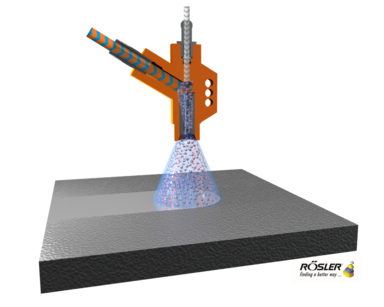
Thanks to its many technical advantages and “gentle” application, wet blasting is a versatile and fast-growing segment of the shot blasting field. Achieving precise, repeatable results with any wet blasting process requires understanding both its principles and real-world uses. With decades of experience and the latest in engineering expertise, Rosler understands how to develop efficient wet blasting machines and consumables . Learn more about wet blasting technology as we begin our five-part Wet Blasting Technology Series. How Does Wet Blasting Work? Wet blasting is a water-based method of shot blasting utilizing abrasives that are particularly suited for the finishing of delicate, precision-produced parts. Rosler Wet Blast Gun Schematic The blast medium consists of a slurry of water and an abrasive media placed in a tank. This slurry is supplied to the blast gun from the tank with a special pump and accelerated with compressed air. The compressed air creates a venturi effect at the blast gun nozzle. The accelerated slurry, pushed through the blast gun nozzle, is then thrown at the work pieces at high speed. The impact on the work piece surface creates the desired blasting effect, be it cleaning, coating preparation, cosmetic surface texturing, or peening. The concentration of abrasive media in the slurry usually amounts to 10-40% by volume. For example, 20% media and 80% water, etc. For consistent process uniformity and high-quality surface finishing of the work pieces, the control of the blasting nozzles in Rosler wet blasting machines is assumed by industrial robots or by CNC systems. Loading and unloading can also be automated in many ways, and the individual production requirements implemented. What is Wet Blasting Used for? Useful for any surface treatment task dry shot blasting is used for, wet blasting provides surface improvement, cleaning , preparation, decoating , preparation for initial coating, deflashing , and shot peening . Wet blasting is also ideal for stripping paint and coatings from delicate parts. High water content in the slurry allows wet blasting to be a lot more gentle than dry blasting. Therefore, it is ideal for processing delicate work pieces with thin walls, which, if treated with dry shot blasting, might be subject to heat warping. Wet blasting creates very smooth cosmetic finishes. To a certain degree, it can also be used for cleaning of work pieces contaminated with oil or grease, for example, for engine and transmission re-builds or aircraft MRO work . Wet blasting has also become indispensable for initial surface smoothing of additively manufactured components made from plastic and metal. Special surface finishes can be achieved by selecting different blast media materials such as ceramic beads and other mineral abrasives. In addition, the wet blasting process eliminates the risk of dry dust explosions and can ensure that you are meeting more stringent hazardous dust exposure limits. The Rosler Way With more than 80 years of experience in surface finishing, the Rosler team has expertise in the wet blasting field. To demonstrate our capabilities, we offer FREE sample processing in our global test centers . Contact us to discuss your wet blasting goals and challenges. The complete Wet Blasting Technology Series includes: Part 1 – “Wet Blasting Gently Delivers Dramatic Finishing Results.” Part 2 – “Comparing Attributes, Advantages to Dry Blasting.” Part 3 – “Technical Features, Slurry Control Achieve Precise Finishing.” Part 4 – “Typical Wet Blasting Applications.” Part 5 – “PureFinish® Offers Food-Grade Excellence.” Sign up for enews alerts to be notified of all Rosler blog posts!
Semi-automatic cleaning centrifuge RZ 120 M-V

Dewatering of paint sludge with centrifuges

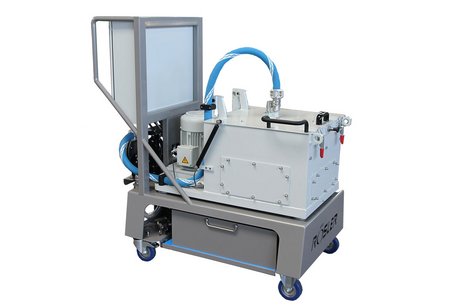
90 % cost reduction combined with a positive environmental impact Wet absorption systems are the standard method to catch and discharge overspray from paint booths. For dewatering of its paint sludge a Polish paint shop purchased a cleaning centrifuge from Rösler. With sizable cost savings this investment paid for itself within the first year of operation. At the same time the dewatering of the paint sludge by centrifuge saves resources and is more eco-friendly In 1996 the painting job shop Hannex, located in Ordzin, Poland, started with the manual wet painting of components for household appliances. Since then the company has developed into a sophisticated operation with modern work places for manual paint applications as well as several fully automatic painting lines equipped with 6-axis robots and computer controlled paint supply systems. The company is coating metal, plastic and glass components with solvent- and water-based wet paint materials. Krzysztof Iwanicki, general manager at Hannex, explains: „Besides the household appliance industry our customers also include automobile companies and their suppliers around the world. A focus on costs and the environment To ensure top quality and cost efficiency, the company utilizes the latest paint application technologies from renowned suppliers. This helps reduce overspray but does not prevent it completely. The catching of the paint mist takes place with the classic Venturi wet absorption method. This uses atomized water to pick up the excess paint particles in the paint booth and discharge the paint/water mixture into three collecting tanks with a total volume of ten cubic meters. To maintain the stability of the process water various chemicals had to be added for controlling the pH value, for defoaming and for protection against bacteria infestation. The addition of coagulants and flocculants made sure that the paint particles were separated from the water and floated to the surface. The resulting sludge was then removed from the surface and pushed into a separate container with a sludge scraper. Subsequently, it was disposed of. On average about 4 tons of sludge and dirty water accumulated per week. The professional disposal of this waste material was not only extremely expensive, but under environmental aspects the resulting high consumption of fresh water was not very eco-friendly. Last-but-not least, this paint sludge disposal system also caused an unpleasant odor, a real nuisance for the employees. Krzysztof Iwanicki continues: „These disadvantages had annoyed me for quite some time. Therefore, I became very interested in paint sludge dewatering with a cleaning centrifuge and was grateful to Filip Kapela, the representative of Rösler Oberflächentechnik in Poland, informing me about this possibility in 2016”. After this first information a joint visit at the headquarters of the equipment manufacturer was arranged. During his visit Krzysztof Iwanicki was able to acquaint himself with the working principle and the performance characteristics of centrifugal filters for paint sludge dewatering. The general manager remembers: „I immediately specified my requirements and subsequently decided to purchase a centrifuge RZ 120 M-V”. Efficient separation of solids and water from the paint sludge The semi-automatic cleaning centrifuge can handle a volume of 120 liters per minute. A feed pump continuously feeds the process water into the centrifuge drum, rotating at a speed of 2,750 RPM. The high rotational speed ensures not only an excellent performance in terms of throughput, but it also ensures that very small and light-weight particles are deposited on the drum wall as solid sludge with a residual water content of 20 to 30 %. This represents a significant improvement over the sludge scraper with the residual water content of the sludge amounting of more than 80 %. Once the sludge load in the drum has reached about 22 kg, the sludge can be easily removed by simply extracting the sludge basket out of the drum and dumping the sludge into a waste container. Alternatively, in fully automatic centrifuges the sludge can be removed from the centrifuge drum with a stationary peeling knife. During the separation cycle this peeling knife is positioned in the center of the drum. For sludge peeling mode the knife moves slowly towards the drum wall by way of a pneumatically activated linear guide. The peeled out sludge falls into a container placed below the centrifuge drum. This peeling knife arrangement prevents any additional load on the bearings of the rotating drum. After completion of the peeling cycle the drum is automatically rinsed out for removal of any residual sludge deposits, which, during the subsequent cleaning cycle could cause an imbalance with the risk of premature bearing failure. The cleaned process water, now free of paint particles, is fed back into the process with a special water collection tube. Quick amortization combined with high cost savings Because of its small footprint Hannex decided to purchase a semi-automatic centrifuge. The RZ 120 M-V is equipped with sophisticated controls and a process water and clear water tank. It is not only easy to operate and maintain, but because of its placement on a movable base, it can be easily utilized at the different collecting tanks. Krzysztof Iwanicki explains: „The centrifugal cleaning process is so effective that we no longer need any coagulants and flocculants for supporting the separation of the paint particles from the water. We could also eliminate all the other chemicals for stabilizing the process water in the collecting tanks. As a matter of fact, we are only using chlorine for disinfecting the reclaimed water coming out of the centrifuge in crystal clear condition”. But the savings by no longer having to use chemicals are not the only reason for the substantial cost reduction. Because of the drastically decreased residual water content the amount of paint sludge that must be disposed of has become a lot smaller. And finally, a lot less fresh water is required for the collection of the overspray paint mist. Krzysztof Iwanicki concludes: „The centrifuge has been in operation since 2016. It amortized itself already within the first year. And we could reduce the operating costs for paint sludge removal by roughly 70 %. Beginning with the second year of operation our annual cost savings increased to 89 %”. Besides the sizable cost reduction Krzysztof Iwanicki is also very pleased with the much lower consumption of resources and the positive effect on the environment. This undeniable success prompted him to purchase a second centrifuge for cleaning the water that is used for the general cleaning of the paint booths at Hannex.
Blades with patented Y-Design

Special turbines for shot blasting in the forge and foundry industry

30 percent longer service life and lower operating costs The special version of the easy to maintain Rösler blast turbines Gamma 400G-8 has been perfectly adapted to the harsh blasting conditions in foundries and forge shops. Designed with 8 throwing blades and made from extremely wear resistant tool steel, the Gamma 400G-8 turbines offer an up to 30% longer service life than conventional turbines. Moreover, the Y-design of the throwing blades ensures a more effective and energy efficient acceleration of the blast media. This results in lower operating and maintenance costs combined with a significantly higher equipment availability. Sand, oxide, scale and residue from the tempering process on castings and forgings inevitably cause the blast turbines to wear a lot faster and lead to higher operating and maintenance costs. Rösler Oberflächentechnik GmbH has tackled this problem head-on by developing the Gamma 400G-8. This turbine variant is especially wear resistant and offers the ideal solution for such challenging shot blasting applications. It can be easily installed in all turbine shot blast machines irrespective of the original manufacturer. Equipped with a power input of up to 37 kW, the direct drive Gamma 400G-8 turbines allow a blast media throughput of up to 460 kg/minute. 8-bladed wheel design and tool steel guarantee a longer service life A key feature of these special turbines is the 8-bladed wheel design ensuring a greatly improved blast pattern. In addition, the forged throwing blades, impeller and control cage are made from high-quality, extremely wear resistant forged steel. Likewise, the turbine housing is lined with the same material. Compared to conventional turbines, this results in an up to 30% longer service life. And the patented Y-design of the blades allows using both blade sides, which practically doubles their usable life. An innovative quick-change system allows a quick and easy blade change without having to touch the other turbine components. The time consuming dismounting of impeller, control cage and inlet tube is no longer necessary. Improved performance and higher energy efficiency Another advantage of the Y-design with the precisely calculated blade curvature is a considerably better performance that expresses itself by a significantly higher throwing speed and a highly precise blast media delivery. The resulting improvement of the blast performance requires much shorter cycle times. Finally the energy efficient blast media delivery reduces the energy consumption by up to 15%. All these features uniquely qualify the custom-engineered Gamma 400G-8 turbines for use in foundries and forge shops. They offer a tremendous potential for not only reducing the operating and maintenance costs but, at the same time, increasing the shot blast capacity and overall cost-efficiency.

Mass Finishing Media, Part 2 – Tips for Measuring Media-to-Work Piece Ratio

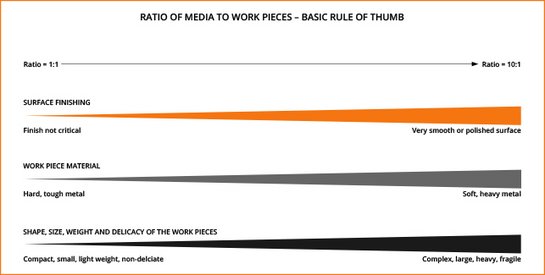
Maintaining the right ratio of media to work pieces is essential to achieving precise, repeatable results in mass finishing processes where work pieces and media loosely tumble in the processing bowl. Ensuring that the work pieces are properly embedded in the media allows the media to perform its designated grinding or polishing function as well as cushioning the work pieces from damage caused by part-on-part impingement. Building upon our last post on the series about navigating the complex media selection considerations , Rosler’s team of experts now discusses tips for determining the best media-to-work piece ratio. Basic Rule of Thumb The standard ratio of media to work pieces is around 3-to-1 by volume – meaning that the mix is 3 parts media to 1 part of work pieces – but the exact ratio varies based on the aggressiveness of finishing required as well as the work piece’s material, shape, size, weight, and delicacy or lack thereof. For simple, sturdy work pieces, the ratio may be lower than the standard while work pieces that are very delicate; made from soft, heavy metals; or must receive a high-gloss polish require a much higher ratio of 10-to-1 and higher. Typically, media-to-work piece ratios increase with the more extreme smoothing and finishing, higher material softness, large and heavy work pieces, and those with more complex or fragile construction. The basic rule of thumb for the ratio of media to work pieces in mass finishing. Pinpoint Your Ratio Determining the exact ratio for your mass finishing process requires digging a bit deeper into your specific media and machine specifications. Determine the “usable volume” in cubic feet of the processing bowl. This information is usually supplied by the equipment manufacturer. Determine the number or weight of work pieces that fit into 1 cu ft, e.g. for small parts use a 12x12x12” shipping box and transfer parts until the box is full. Use the bulk density of the specific media type to calculate the required media quantity by weight. For reference: Ceramic media = 95 - 105 lbs/cu ft Porcelain and high density media = 115 - 145 lbs/cu ft Plastic media = 70 - 85 lbs/cu ft An Example The usable volume of a processing bowl is 12 cu ft and the desired ratio is 5-to-1. Therefore, 10 cu ft of media and 2 cu ft of work pieces should be filled in the machine. We’ve determined that 50 work pieces fit into 1 cu ft so you would place 100 work pieces into the machine. If we were dealing with small, bulk goods, we would measure out 2 cu ft instead of counting individual pieces. Let’s assume we’re using ceramic media which weighs around 100 lbs/cu ft. Because we need 10 cu ft to balance out the work pieces, we will need 1,000 lbs of media. If we were using plastic media, the total would be around 750 lbs; high-density media would require about 1,400 lbs. Process Observation Once established, the initial media-to-work piece ratio must be constantly monitored. If the ratio becomes too low, new media must be added. Equipment updates may be available to help maintain the optimal media levels. For certain applications, timer- or widget-controlled media replenishment systems may be beneficial. The Rosler Way From the engineering of a mass finishing machine all the way through process refinement and service , Rosler partners with you to achieve precise and efficient results. Contact us for help with all aspects of your surface finishing process. The complete Mass Finishing Media Series includes: Part 1 – “Don't Navigate the Complex Selection Process Alone.” Part 2 – “Tips for Measuring Media-to-Work Piece Ratio.” Part 3 – “Why Discharging Undersized Media, Maintaining Media Levels are Crucial.” Sign up for enews alerts to be notified of new posts!
HP Jet Fusion 5200 3D Printing System

HP and AM Solutions Present the Innovative HP Jet Fusion 5200 Series 3D Automatic Unpacking Station

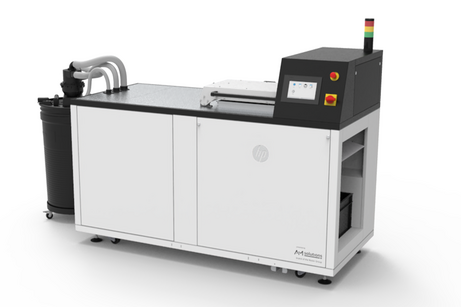
With the HP Jet Fusion 5200 Series 3D Automatic Unpacking Station, HP and the Rösler brand AM Solutions – 3D post processing technology, present their first product that was jointly developed on the basis of their cooperation agreement announced last year. This scalable, industrial post processing solution allows the fully automatic and consistent unpacking of AM parts made on the HP Jet Fusion 5200 3D Printing System in a continuous workflow. Compared to manual unpacking operations, the new solution offers not only a significant productivity increase and a greatly improved cost efficiency, but also a considerably higher powder reclaim rate for certain geometries. The Automatic Unpacking Station will be manufactured at the German location of the Rösler brand AM Solutions – 3D post processing technology. As a global leader in the field of industrial 3D printing solutions and digital manufacturing, HP recognized early on that the use of 3D printing on an industrial scale is only possible, if the printing and post processing operations can be combined into one automated, scalable process. About one year ago HP and AM Solutions – 3D post processing technology, a division of Rösler that specializes in post processing solutions for 3D printed parts, announced a cooperation agreement. This created the ideal foundation for developing such an integrated, industrial solution. The HP Multi Jet Fusion technology offers the possibility for volume production on an industrial scale. On the other hand, post processing still requires a great deal of manual operations. This is now changing with the innovative Automatic Unpacking Station for the HP Jet Fusion 5200 series. This unpacking station, the first result of the cooperation between HP and AM Solutions – 3D post processing technology, combines the full range of print, software and material knowhow at HP with more than 80 years of experience in the fields of surface treatment and equipment manufacturing for industrial applications at Rösler. Consistent, repeatable unpacking and a high powder reclaim rate The automatic unpacking process takes place immediately after the cooling of the build job in the HP Natural Cooling Unit. A lifting device is used to transfer the cooling unit to the Automatic Unpacking Station. There it is positioned, unlocked, and the entire build job is placed in the station. All relevant printing job data are transmitted to the unpacking station by means of its RFID reader. This ensures that the job- and process-related data can be tracked and the process monitored remotely by means of HP’s 3D Center software. Furthermore, the automated unpacking process, adapted to the individual work pieces, allows a considerably higher powder reclaim rate for certain geometries. An air suction system transfers the powder collected in the station continuously to a dedicated external tank. The printed parts are discharged into an unloading box. Once the external tank is full, it is replaced with an empty one, and the retrieved powder can be loaded back into an HP Build Unit after connecting the full tank to the Processing Station. The new Automatic Unpacking Station minimizes not only manual operations but also reduces the overall cycle time for certain applications, as the unpacking operation can start right after the recommended minimum cooling time is completed. Ramon Pastor, GM and Global Head of HP 3D Printing & Digital Manufacturing explains: “New solutions for the scalable, efficient post processing and automation of the entire workflow are the precondition for fully exploiting the advantages of Additive Manufacturing and making it suitable for industrial volume production.” Pastor continues: “With Rösler/AM Solutions we have found a partner who is intimately familiar with the standards of a broad range of industries and possesses the required knowhow in the field of surface treatment and equipment manufacturing.” Stephan Rösler, President & CEO of Rösler Oberflächentechnik GmbH, adds: “The comprehensive knowledge of HP in the areas 3D printing, software and digitized manufacturing allows us to quickly develop innovative solutions for the 3D post processing and adapt these solutions to the demands of industrial users.” This premise is fully confirmed by Matteo Rigamonti, Founder at Weerg: “The HP 3D Automatic Unpacking Station has fully met our expectations for an automatic unpacking solution. With a growing fleet of HP Jet Fusion 5210 systems at high-volume production, the unpacking process requires a lot of time and resources. Thanks to this solution, our unpacking process became not only significantly faster, but we are also reclaiming more powder. The process is precise, and works well even for small and delicate parts.” The company, a leading industrial parts provider located in Scorzè, Italy, produces around 2,500 pieces per day and has thoroughly tested the new machine at their facilities during numerous trial runs. Matteo continues: “As we expand our business, these enhanced capabilities are designed to help us meet customer demand, and improve our turnaround times, for high volume production parts.”

Automotive Supplier Achieves Process Stability, High Cost Efficiency with Modular Shot Peening System

For transmission components like gears and shafts, shot peening has become an indispensable step in the overall manufacturing process. With the RWT swing table machine, Rosler developed a modular equipment concept that can be easily adapted to different technical requirements and offers a maximum in process stability paired with absolutely repeatable peening results and high cost efficiency. One of the numerous customers within the automotive industry utilizing the RWT is an Asian automotive supplier. The Need As part of a capacity expansion for minivan transmissions, this customer increased annual production to 40,000 units and decided to carry out the required shot peening operation in-house instead of subcontracting it to an external job shop. The specifications called for a system that can handle around 560,000 single work pieces per year, including 15 different types of gears and shafts. Each work piece type required the development of a specific peening program based on drawings and various work piece materials. Another requirement was the tight control of the entire peening process capable of handling gears and shafts with diameters of 12 in (300 mm), heights of 20 in (500 mm), and weights of up to 55 lb (25 kg). The Solution The customer chose the Rosler shot peening system RWT 13/4 So due to its capability and fully automatic processing. This pressure blast system includes a table with two 180° segments, each equipped with two satellite stations which allows two parts to be processed in one segment while another pair of parts is loaded/unloaded in the other segment. For complete coverage of the work pieces, the RWT is equipped with four blast nozzles – two for vertical and two for horizontal movement. Since some areas of the work pieces are completely finished before entering the machine, special wear-resistant masking is integrated into the work piece fixtures to protect the already finished surface area from being blasted. To meet all customer requirements, the system design allows the parallel use of two different blast media types or one type with different shot sizes. Rosler tested various work pieces during the course of the project. Rosler’s global test centers and the in-house X-ray diffraction measurement capabilities showed that the achieved compressive stress values were twice as high as the values stipulated by the customer. The in house X-ray diffractometer allowed Rosler to shorten the process development cycle for these transmission components. The measurement system can also be used for a variety of other parts besides gears and shafts. These can include valve and chassis springs, other chassis components, airplane turbines , and components for the energy generating industry. Rosler also offers x-ray diffraction measurements as a service . Developed for Success The RWT’s concept can easily be adapted to specific customer requirements since its swing table design is based on a modular concept developed for shot peening of rotationally symmetrical components. The RWT's blast chamber Compared to other peening systems on the market, the blast chamber contains considerably more wear protection and is easier to access for maintenance work. The pressure blast system requires a considerably lower amount of compressed air and, therefore, runs more efficiently. The RWT's monitoring and control system A comprehensive monitoring and control system measures the air volume to ensure the high process safety and consistency required for any shot peening operation. The RWT's blast nozzles The nozzles can be moved vertically and horizontally as well as pivoted at an angle from 0 to 90°. This guarantees complete coverage of all work piece surface areas over a large part size variety. The high efficiency of the pressure blast system results in significant savings in compressed air consumption. For controlling the overall peening process Rosler also uses standard components. These include the automatic control of the blast media throughput and the precise measurement of the media throwing speed directly at the nozzle exit. The Magna valves for precise dosing of the blast media as well as all media hoses can also be monitored. The RWT can be equipped with a spiral separator for discharging any broken-down blast media. The Rosler Way With more than 80 years of experience, Rosler has the knowledge and expertise to find the exact shot peening machine to meet your needs. Contact us to discuss your challenges and be sure to sign up for enews alerts to be notified of new posts! https://vimeo.com/142621047

Blast equipment modernization and upgrade – an efficient alternative to buying new

Turbine replacement results in a 45% higher blast performance and lowers operating costs by one third Growing maintenance and operating costs combined with a declining blast performance; these are usually good reasons for investing in a new shot blast machine. By taking advantage of the Rösler Retrofit program for a shot blast machine in its foundry division a leading company for drivetrain technology and electronic controls chose a significantly less expensive but highly effective alternative. The existing shot blast machine was upgraded with the foundry version of the Rösler Gamma 400G-8 high performance turbines. This turbine upgrade helped reduce the expenses for maintenance by two thirds and the overall operating costs by more than 34%. At the same time, the blast performance could be increased by 45 percent. This resulted in an amortization time of a little over one year. The turbines in shot blast machine must carry a heavy load and are exposed to a lot of stress. Over time this leads to ever increasing maintenance and operating costs along with a growing energy consumption. Frequently, the blast performance no longer meets the capacity and quality demands. In order to fulfill their shot blasting requirements in a cost-efficient and competitive manner companies usually invest in a new shot blasting system. A persuasive modernization solution with a quick amortization A renowned manufacturer of drivetrains and electronic controls was facing exactly this problem with a shot blast machine in its foundry. The responsible project managers at the company contacted TuneUp, a division of the Rösler Oberflächentechnik GmbH, that specializes in the modernization of shot blast equipment . On this occasion they learnt that the Rösler modernization and upgrade service covers not only Rösler equipment but extends to third-party machinery as well. After a comprehensive analysis of the current equipment condition the Rösler Retrofit experts presented a suitable technical solution along with a realistic amortization calculation. The customer was impressed by the technical depth and short pay-back period of the proposed modernization concept. Turbine replacement increases productivity and lowers costs At the center of the modernization concept was the replacement of the two 22 kW turbines originally supplied with the shot blasting machine. The existing units were exchanged with high performance Gamma 400G-8 turbines in wear-resistant foundry version, also with a drive power of 22 kW each. They are equipped with eight curved throwing blades in „Y“-Design with a precisely calculated curvature. This generates an extremely high throwing speed along with a precise media guidance and results in an optimal efficiency. The unique characteristics of the Gamma turbines with a 45% higher blast performance allowed achieving the needed capacity increase. Another feature of the new high performance turbines is that they require a lot less energy. The energy savings were an important reason for the overall operating cost decrease of 34%. Expenses for maintenance reduced by over two thirds The unique design of the throwing blades produces not only a higher performance but allows using both blade sides by simply turning them around. Depending on the utilized blast media, this design feature, combined with the use of wear resistant blade material, for example, forged tool steel, results in a three times longer lifetime compared to conventional turbines. An innovative quick-change system allows easily and quickly changing the blades at the mounted turbine. The usually required time-consuming dismounting of impeller, control cage and infeed pipe is no longer necessary. Overall this reduces the expenses for maintenance by more than two thirds. Quick amortization produces a competitive edge Based on the capacity utilization to-date, the productivity increase achieved by the upgrade and the cost savings the Retrofit investment will have paid for itself already after 1.1 years. The technical features of the modernized shot blasting machine and the quick amortization allow the user to improve his profitability and consolidate and expand his competitive position in the market.

Mass Finishing Media, Part 1 – Don’t Navigate the Complex Selection Process Alone

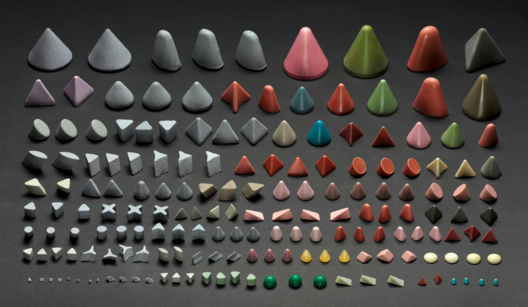
The importance of the media selection in any surface finishing process cannot be emphasized enough. These consumables are essential “precision tools” for achieving the specified finishing results. Selecting the right media is a complex task. That’s why you should consult an expert such as Rosler for guidance. Even after a mass finishing process has been established, the media status must be constantly monitored and, if necessary, corrected. When different work pieces are processed or finishing tasks are altered, exchanging the currently used media type with another may be required. Careful and collaborative media selection is crucial to a mass finishing success. Consider the Characteristics The work pieces should always be at the center of the media selection process and take into consideration its starting surface burr condition, material, shape, size, and desired surface finish. Media characteristics must complement the work piece as well as the machine being utilized. Media characteristics to consider in relation to work pieces and the machine utilized include: Bond – Ceramic media generally has a higher density than plastic media , making ceramic more aggressive. While typically more gentle, plastic media can sometimes produce unwanted foam known as “dirt foam.” Type/Abrasiveness – Deburring/edge radiusing and/or aggressive surface grinding require a more abrasive media than gentle surface smoothing. Shape – Media may have to reach very tight corners and internal passages. Choosing the right media shape is crucial for reaching all critical surface areas. Size – Always choose the largest possible media that fulfills the finishing tasks for the most efficient process. Lodging issues – Media lodged in the work piece can have disastrous consequences for downstream manufacturing. Selecting a media shape and size that prevents lodging is crucial. Color – Choosing a media color that differs from the work pieces helps identify lodging issues. Potential for damage – For delicate work pieces, gentle yet effective media must be selected to avoid bending thin walls or damaging critical sealing areas requiring a tight fit. Separation – Reliable media separation from the finished work pieces must be allowed by screens, inverse screens, magnetic separators, or, in extreme cases, manual separation. Intensity – More intensive machines such as centrifugal disc systems or drag finishers usually require smaller, less abrasive media than vibratory models such as rotary and tub vibrators . Analyze Ongoing Costs Since finishing media is a consumable that wears and must be regularly replenished, cost is an ongoing concern. In some finishing process, the expenses for media account for more than 50% of the total process costs. Therefore, it is important to select a media that is both economical and effective to maintain a viable mass finishing process. While media costs also play an important role in the selection process, media choice should never be determined by price per pound. Instead, the media cost per work piece should be a guiding factor. For example, a lower priced media might require much longer processing times or wears a lot faster and would therefore be less economical than a higher priced media that achieves the desired finishing results in less time and has a lower wear rate! Rosler Testing Center Partners in Testing Whether your process uses ceramic, plastic, or drying and polishing media , a crucial step in selecting media should always be contacting the experts, i.e. your supplier. Since a media change might require extended test trials, your supplier should partner with you to test prospective media with your specific work piece in their test lab. The Rosler Way With more than 80 years of experience in surface finishing, the Rosler team is well equipped to prove media selection guidance. We also offer FREE sample processing in our global test centers . Contact us for all of your mass finishing needs! The complete Mass Finishing Media Series includes: Part 1 – “Don't Navigate the Complex Selection Process Alone.” Part 2 – “Tips for Measuring Media-to-Work Piece Ratio.” Part 3 – “Why Discharging Undersized Media, Maintaining Media Levels are Crucial.” Sign up for enews alerts to be notified of new posts!