Solution Finder
SOLUTION FINDER

Su guía a través del
mundo de productos Rösler

Con unos pocos clics encontrará la máquina adecuada a sus necesidades.

Resultados: 237 Artículo - 51 Productos

Non-Foaming Plastic Media Optimizes Finishing Process

While the optimization of mass finishing processes mostly focuses on the machinery utilized, Dörfler & Schmidt Präzisionsfinish GmbH (Dörfler & Schmidt) has shown that a simple shift such as using a different media can create significant process optimization. By switching to a new, non-foaming plastic media from Rosler , the post-processor achieved improved process stability, productivity, and efficiency. Meeting Varied Needs Founded in 1998, Dörfler & Schmidt offers a wide range of surface finishing including deburring , edge radiusing, surface smoothing and polishing , creating matte and textured finishes, descaling , and cleaning . The family-owned business located in Kammerstein, Bavaria, works with automotive , machinery building, electronics, medical engineering , jewelry , and a variety of consumer goods customers. “We have to deal mostly with requests for deburring and edge radiusing,” said Dörfler & Schmidt Management Assistant Felix Dörfler. “For example, on tools like milling tools and cutting inserts we have to create a precise edge radius. “Other work pieces, such as bearing rings, must have precisely defined surface roughness readings after the finishing operation while jewelry and accessories must have an optically pleasing finish.” Work piece materials range from metal, plastic, and ceramic to glass and wood in dimensions as little as a fraction of an inch (a few mm) up to 25 in (60 cm). Working with a Proven Partner Dörfler & Schmidt operates 33 different machines capable of handling a broad range of different mass finishing and shot blasting technologies. “To handle various work piece materials, we employ different process water cleaning and recycling systems,” Dörfler said. “For this purpose, we are utilizing five centrifuges , which, like the overwhelming majority of our mass finishing equipment, were supplied by Rosler.” When it comes to consumables , Dörfler & Schmidt primarily uses Rosler products as well. “The consistently high quality of the Rosler media and compounds, as well as the excellent process development support and optimization by their Customer Experience Center , are just a few reasons why we’ve relied on solutions from Rosler right from the beginning,” Dörfler said. The Situation “For the deburring and edge radiusing 40-mm-long stainless steel wire segments, we need an excellent grinding performance with a high metal removal rate,” Dörfler said. “However, foaming during the finishing process created a buffer between the work pieces and the media, reducing the grinding effect. “Therefore, the desired finishing results could no longer be achieved within the prescribed cycle time,” he said. In addition to Prolonged cycle times and an inability to separate media from finished work pieces after processing, the foaming issue was even carried over to the process water cleaning system, where foam seeped out of the centrifuges, soiling the system itself and the immediate environment. A Smart Solution The extent of foaming issues largely depends on the hardness of the process water and can often be remedied with special additives. When the company’s Rosler Sales Agent learned of the problem, he recognized that additives weren’t effective and suggested the newly developed “N” series of non-foaming plastic media from Rosler. Dörfler & Schmidt subsequently joined a select group of companies who tested the new media series. Since the non-foaming media version is identical to standard plastic media in identical shapes, sizes, and grinding performances, it could be swapped in without finishing process modifications. The Results More than a year later, Dörfler & Schmidt is still using the non-foaming media. Impressive results are achieved within the prescribed cycle time and separation issues have also been resolved. The media switch also greatly simplified the monitoring of the finishing process. Eliminating the need for reprocessing significantly improved the process’ overall cost-efficiency and extended the usable life of the process water, reducing the consumption of additives and contributing to increased sustainability. “We have been using the non-foaming media in two machines, and we have found that the grinding performance and the wear rate are absolutely identical with the standard version,” Dörfler said. “The new media helped us to make our processes more cost-efficient without affecting the quality of the finishing results. “For this reason, we will switch more plastic media types to the non-foaming version.” The Rosler Way All standard Rosler plastic media varieties have been available in non-foaming “N” versions since 2021, adding to the more than 15,000 equipment and consumable products we offer. Contact us today to discuss your mass finishing challenges and our solutions!

Wet Blasting Equipment & Media, Part 5 – Careful Media Selection, Additive Use Impact Results 

Wet blasting and dry shot blasting often use similar media to achieve the desired processing result. Unlike dry blasting that only uses a solid abrasive media, wet blasting processes use a slurry of water with the shot blasting media. This greatly cushions the impact energy on the work pieces, providing gentler, yet effective results for delicate work pieces. The achieved surface finish and appearance will also differ between wet and dry processes, even when the same media type and size are used. With more than 80 years of experience worldwide, Rosler can supply both the machines and media best suited for your wet blasting needs. Common Media Types As long as it is heavier than water and not water soluble, practically any media used for dry blasting can be used for wet blasting. It is important to consider the usefulness of the media compared to its cost. While a cheaper or longer-lasting media may be available, it may also require additional processing time to accomplish the desired surface finishing. Selecting the most appropriate media for your process requires balancing initial costs with overall results. Common types of wet blasting media include (top, from left) brown, white, and pink fused aluminum oxide; glass beads, ceramic beads, (bottom, from left) stainless steel shot, stainless steel grit, and polycarbonate beads. The most common wet blast media include: Brown, white, and pink fused aluminum oxide – Widely used for blast cleaning, this media type’s hardness makes it ideal for surface cleaning and paint preparation. Glass beads – Useful in wet cleaning and light peening applications, glass beads can also be used for light deburring and cosmetic blasting. Ceramic beads – This media’s high bulk density produces a higher impact intensity than glass beads and is useful for general surface cleaning and shot peening. The spherical beads provide a bright matte finish. Stainless steel shot – While useful in special cleaning and shot peening applications, this media type is not suitable for non-ferrous, soft metals. Stainless steel grit – The high bulk density and angular shape of this media produces an excellent cleaning effect, but is not suitable for non-ferrous, soft metals. Polycarbonate beads – This media is useful for very gentle cleaning applications and cosmetic blasting. Water Additives Rosler offers a wide selection of additives and compounds. The addition of certain chemical additives to the process water will support the wet blasting process and help extend the usable life of the process water. Popular additives in wet blasting processes include: Degreasing compounds – These surfactants chemically augment the mechanical cleaning effect of the wet blast process. They are only applicable when the work pieces are covered with grease or oil. Heavy contamination must be removed before wet blasting. Corrosion protection compounds - Such compounds provide temporary corrosion protection for a few days on ferrous work pieces. Biocides – These additives prevent bacterial contamination of the process water/slurry. During downtimes and inactivity such as the holidays or weekends, bacteria grows more easily. The addition of a biocide prevents such contaminations and allows process water to be used for longer periods of time before being replaced with fresh water. Flocculants – Used for augmenting the cleaning effect of centrifuges, flocculants aid in the removal of contaminants from the process water by encouraging contaminates to “floc” or group together, making the larger pieces of debris easier to remove for the system. Water hardeners - If very soft water is used (< 70 mg/L or 4.2 grains per gallon), foaming in the wet blast machine and the filtration system can become an issue. In such cases, a water hardener is useful in eliminating and/or avoiding issues. The Rosler Way As the utilization of wet blasting increases, Rosler reminds manufacturers to review their traditional, dry shot blasting applications and consider if wet blasting could provide additional efficiencies, reduced costs, and better results. We have extensive experience in wet blasting. Whatever your challenges are, we are confident that we can deliver a solution. Contact us to discuss your needs today! The complete Wet Blasting Equipment & Media series includes: Part 1 – “Machines Range in Complexity, Uses.” Part 2 – “Technical Components Combine for Systematic Success.” Part 3 – “Maintain Slurry Concentrations for Finishing Consistency.” Part 4 – “Internal Cleaning, Rebuilds Prolong Machine Lifetime.” Part 5 – “Careful Media Selection, Additive Use Impact Results.”
RHBD 22/27-F blast chamber

Linde MH relies on a sturdy foundry version of continuous feed spinner hanger blast machine

Linde Material Handling (MH) is a globally leading supplier of fork lift trucks and warehousing equipment. The company also provides technical solutions and services in the field of intralogistics. With a sales and service network in more than 100 countries the company is represented in all major regions of the world. In Weilbach the material handling specialist manufactures the counterweights for its broad program of fork lift trucks. Taking advantage of the potential for optimization with a new shot blast machine Linde MH is continuously striving to improve its manufacturing operations. Therefore, a Linde project team and the Rösler Oberflächentechnik GmbH worked closely together to optimize the material flow and increase the overall flexibility of the shot blasting operation for different lift truck counterweights (in short LTCW). To fulfill the demand for a better utilization of the available space, Rösler developed a customized system around a continuous feed spinner hanger blast machine RHBD 22/27-F that is setting new standards in the foundry industry. Fully automatic and flexible operation within an integrated manufacturing system Within the scope of the newly laid out material handling process the raw castings are deposited in a specially reserved, clearly marked staging area in front of the inlet chamber of the blast machine. After an operator has manually positioned the castings and confirmed this step at the control panel, they are picked up by a power & free system for transport through the shot blast machine. For each work piece type specific shot blasting and transport parameters were defined and stored in the respective PLC programs. This ensures that after the shot blasting operation the LTCWs are perfectly clean with no traces of residual molding sand. At the same time they have a highly homogeneous surface roughness that displays the typical casting structure of the work pieces, even after they have been painted. All process parameters were established on the basis of a suitable operating mix of the selected blast media. Special foundry version of the shot blast machine RHBD 22/27-F In compliance with the customer requirements the new shot blast machine was installed at its designated location in the factory. In a very tight space, but easily accessible for maintenance, the return system for the mix of blast media and sand was placed below the shot blast machine. Also integrated into this system was the return of the molding sand carried into the work piece staging area by the LTCWs. For this purpose, the sand is guided to a cross-chute located in front of the shot blast machine. This cross-chute then carries the material to the sand transfer hopper that transports the sand from LTCWs at the staging area and the sand from the inlet chamber onto the return conveyor below the inlet chamber. The return conveyor transfers the collected sand to the central screening hopper below the blast chamber. At the outlet chamber of the shot blast machine a floor scraper returns any residual sand and blast media to the central screening hopper below the blast chamber. The screening hopper separates all sand clumps, burs and metal flashes and transfers them to a sturdy Z conveyor belt for discharge from the machine. The screening hopper transports the remaining sand/media mix to an elevator, from where it is carried to the highly efficient media cleaning system. This device, consisting of a dual stage magnetic separator and an air wash system, ensures a high cleaning efficiency, guarantees a trouble-free operation and minimizes the wear of the shot blast machine. After the LTCWs have been manually positioned in the staging area, they are picked up by the trolleys of the power & free work piece transport system and carried through the different machine sections inlet chamber, blast chamber and outlet chamber at certain indexing time intervals. The three-chamber design of the shot blast machine also helped to minimize the escaping of sand, blast media and dust into the immediate environment. At the center of the entire shot blast system is the blast chamber with five specially placed blast turbines. The chamber is made from wear resistant austenitic manganese steel, grade X120Mn12. For additional wear protection it is lined with 25 mm thick replaceable cast chromium plates. A large maintenance platform, easily accessible by stairs, greatly facilitates the required maintenance activities. All goals achieved! With the new Rösler continuous feed spinner hanger shot blast system the demands by Linde MH for a technically and economically optimized shot blasting operation & work piece handling could be fully met. The quality requirements for the LTCW components are fulfilled through precisely defined shot blasting parameters, optimized blast patterns and better wear characteristics. Overall, this resulted not only in a significant improvement of the shot blasting results, but the streamlined shot blasting and transport concept also increased the overall efficiency of the material flow in the factory.

Wet Blasting Equipment & Media, Part 4 – Internal Cleaning, Rebuilds Prolong Machine Lifetime  

While highly effective in a number of applications and industries, wet blasting can be a messy process. Unlike dry shot blasting which produces dust, wet blasting generates a mix of media, dirt, and debris mixed with water mist. If this water/particle mix is not removed properly the machine itself may be soiled to the point that it cannot be used. Mist which escapes the machine can also cause health hazards to personnel and other equipment in the area. Rosler builds its wet blasting machines with usability and safety in mind, factoring in precautions and cleaning functions to prolong the machine’s use and ensuring a clean, safe work environment. Internal Cleaning Rinse systems flush out contaminants including dirt, broken down media, and oil from the blast cabinet. After each blast cycle the inside of the wet blast machine must be cleaned by completely rinsing it down with clean water. High-pressure spray nozzles are installed to rinse the wet blasting machine’s viewing window. During the blast cycle and as needed, high-pressure spray nozzles rinse off any dirt from the viewing window. Water mist from processing as well as the internal cleaning process is continuously removed from the blast cabinet by a suction fan equipped with a filter which removes contaminants from the water. Rebuilding Established Systems Blast machines are often a considerable investment for companies. When these highly specialized and high-investment pieces of equipment start to show signs of wear and underperformance, expert surface finishing companies such as Rosler can help prolong the life and effectiveness of your investment by repairing and rebuilding a machine instead of replacing it. Cost is often the biggest factor considered when rebuilding a blasting machine. Generally, rebuilds offer shorter turnaround times than buying a new machine. Rebuilds also come with the added benefit of not needing to integrate a new process since the process already includes a proven shot blasting process. The Rosler Way We have the experience and expertise to meet your wet blasting needs. Rosler partners with you to find a better way, the best machine, and the best finishing results. Contact us today to discuss your unique challenges. Previous posts in the Wet Blasting Equipment & Media series include: Part 1 – “Machines Range in Complexity, Uses.” Part 2 – “Technical Components Combine for Systematic Success.” Part 3 – “Maintain Slurry Concentrations for Finishing Consistency.” The final post will be: Part 5 – “Careful Media Selection, Additive Use Impact Results.” Sign up for enews alerts to be notified of new posts!

Automotive Manufacturer Partners with Rosler for Fast Processing, Long Wear Life

True to our “finding a better way…” motto, Rosler partnered with thyssenkrupp AG to create a continuous flow shot blasting operation for the fastest crankshaft forge shop in the world. World renowned for its drive trains, chassis, and automobile manufacturing equipment, the automotive division of thyssenkrupp AG significantly contributes to the technical progress and efficiency of motor vehicles. The thyssenkrupp Gerlach GmbH plant in Homburg, Germany, is a leading partner for the development of automobile engine components, offering a full-service package ranging from component design, prototype fabrication, and full-scale production. Developing a Solution To improve cost efficiency at its Homburg plant and to meet all customer requirements, thyssenkrupp AG installed its high-tech “production line 19” for forged crankshafts for engines with one to four cylinders in 2016. For this line, Rosler developed an innovative shot blast equipment concept known as the Rosler RKWS crankshaft shot blasting system . At the beginning of the manufacturing sequence, bar blanks are cut to length. They are then heated in an induction oven before being shaped in a 6,500-ton press. In the last step, the crankshafts undergo a blast cleaning process in a shot blast machine. Using a unique equipment concept for the final blast cleaning step, Rosler engineers created a system for handling different work piece sizes without time-consuming retooling of the work piece holders. This innovation helped reduce the cycle time to less than 10 seconds, which in turn allowed the manufacturing operation to be run in a continuous flow. The result of the comprehensive cooperation between thyssenkrupp AG, Rosler, and all the other partners created the fastest, most modern crankshaft forge shop in the world capable of producing a finished component for its customers every 7.5 seconds. Crankshaft after surface finishing Delivering Convenience & Longevity Our innovations go beyond world records to provide long-lasting value and dependability. The RKWS system was also designed for long life and easy maintenance. The three blast chambers and the work piece load/unload chamber are arranged in a circle around a rotary drive equipped with an asynchronous servo motor with an extremely high overload reserve. Blast media is accelerated and thrown by Rosler Gamma G blast turbines equipped with a unique Y-shaped throwing blades. Rather than being made of chilled iron castings typically used in conventional turbines, critical wear components of the turbines are made of forged tool steel. This results in a much longer uptime of the throwing blades whose curvature produces a much higher throwing speed than straight throwing blades. In addition, the symmetrical Y design allows the use of both blade sides. The combination of more wear resistant material and the blade geometry result in up to three times longer usable blade life. Another feature of the Gamma G turbines is their easy maintenance. Turning the blades around or exchanging them can be done from the top of the turbine housing without having to dismount the impeller, control cage, and the media inlet tube required with conventional turbines. The RKWS is equipped with 12 Gamma G turbines, each with an installed power of 22 kW. The turbines, evenly placed on the three blast chambers, are capable of throwing the large steel shot onto the entire surface area of the crankshafts with a speed of 80 meters per second. This results in a complete removal of forging scale and other surface contaminants. By utilizing highly wear resistant material for all components exposed to the large cast steel shot and the removed forging scale, the RKWS shot blast system’s external workings are protected from excessive wear. The three blast chambers are lined with wear resistant hardened steel. Media augers are made from special steel that is predominantly utilized in the mining industry. Technical characteristics of this material are its extreme toughness and its remarkable hardness of 600 Vickers providing it with a considerable structural strength. Planning Proactive Maintenance Thyssenkrupp AG’s “production line 19” processes the entirety of the company’s customer orders within 21 shifts per week, posing a considerable organizational challenge for the thyssenkrupp Gerlach GmbH maintenance department. In order to manage time for the equipment upkeep, the maintenance team utilizes a TBM (time-based maintenance) system. Within a pre-determined time span, a recurring time window is defined for all inspection and maintenance activities as well as any required repairs including the replacement of spare parts. The time management allows requisitioning all repair materials in advance and facilitates the effective assignment of the maintenance personnel at thyssenkrupp Gerlach GmbH in Homburg. Stocking Spare Parts Planning certainty for the entire manufacturing line along with consistently high product quality is a high priority at thyssenkrupp Gerlach GmbH. For this reason, essential wear and spare parts for all machines were determined jointly with the equipment suppliers and stocked on-site in Homburg. To define the specific requirements for the crankshaft shot blast machine, the customer relied on the experience of the Rosler service department. Based on the customer specifications, our service experts conducted a risk and wear analysis using an ultra-modern simulation of the blast media recycling process allowing them to determine the wear intensity for every single component. Based on the results of the analysis a comprehensive list of recommended spare parts was prepared including wear parts such as protective wear plates, etc. The Rosler Way Working with an experienced supplier is the best way to develop and maintain a shot blasting operation. From selecting the right type of machine for your needs to suggesting everyday actions to ensure repeatable results and extended uptime, Rosler develops lasting solutions. Contact us to learn how we can put our surface finishing expertise to work for you!
Tumble belt blast machine

Tumble belt blast machine for coating preparation

Blast cleaning of springs prior to coating Shot blasting is the most common pre-treatment technology to prepare the surface of technical springs for subsequent coating operations. In a newly established manufacturing line for compression springs this cleaning operation takes place in a Rösler tumble belt blast machine. Within short cycle times the custom-engineered RMBC 4.2-HD produces surfaces that are perfectly prepared for the subsequent coating operation. Oil carried into the shot blast process, is neutralized and, through the media cleaning system, separated from the blast media. The Baumann Springs Ltd., located in Ermenswil, Switzerland, is a global leader in the production of springs and all kinds of stampings. This family-owned company was founded in 1886 and ever since has been managed by the family, today in the fifth generation. Baumann Springs is specialized in the development and production of custom-engineered products with tight dimensional tolerances and high demands for process stability in the automobile industry, medical engineering and other markets. The products are manufactured in 11 plants in Europe, Asia and North-America. Shot blasting solution for a new production line In 2021 the plant in Stare Mesto in the Czech Republic established a new production line for different types of long compression springs made from spring steel EN 10270-2. For cleaning and texturing (roughening) the surface of the springs prior to coating, the company purchased a tumble belt blast machine, model RMBC 4.2-HD, from Rösler . Claudio Hertig, project manager global operations at Baumann Springs, explains: „For this challenging task we had discussions with several equipment manufacturers and requested quotes from three of the suppliers“. “The Rösler solution impressed us not only because of the design of the equipment but also its functionality. Another positive factor was the sturdy machine construction. To familiarize myself with the suppliers, I visited all three companies and prepared a detailed technical comparison. Last-but-not-least, our good experience with Rösler equipment already running at some of our facilities and the global presence of the company, also played a role in our decision for Rösler”, continues Mr. Hertig. Equipped for short cycle times and clean results The RMBC 4.2-HD was painted per customer specifications and is equipped with special technical features. It allows the blast cleaning of complete batches of loosely tumbling compression springs with batch weights of up to 1,000 kg. Two Gamma 300G turbines , each equipped with a power of 11 kW, ensure a high shot blast intensity. These high performance turbines, developed by Rösler, are equipped with curved throwing blades in “Y” design. Compared to conventional turbines the specially calculated blade curvature generates very high media throwing speeds resulting in an up to 20% higher blast performance and, consequently, shorter cycle times. All this is achieved with a lower energy consumption. Moreover, the special “Y” design of the throwing blades allows the use of both blade sides. This practically doubles the usable life of the throwing blades. A quick-change system permits a quick blade change without the need for dismounting the turbine from its housing. The blast process is further intensified and accelerated by the integrated blast media deflectors. These special compressed air nozzles are causing an additional blast media movement. The automatic blast media flow control allows not only the monitoring but also the precise adjustment of the media flow to the respective work pieces. The media replenishment takes also place fully automatically. An additional automatic dosing system allows the application of a powder cleaning compound in the blast chamber to catch and discharge any oil that may be carried into the shot blast machine by the work pieces. It should be noted that the powder compound does not affect the functionality of the blast media: In the air wash separator of the media cleaning system the powder is completely separated from the blast media. Since the machine was also intended for stripping the coating buildup from the work piece carriers used for the coating operation, the dry dust collector is equipped with explosion protection features. In order to minimize machine downtimes due to wear, the inside of the blast chamber is lined with easily replaceable 6 mm thick highly wear-resistant manganese plates. The left and right side of the media discharge opening of the turbines is equipped with additional wear plates. These bundle the media stream and prevent this section of the blast chamber to be attacked by the blast media. Finally, the barrel heads, also made from manganese steel, are equipped with a PU coating providing an additional wear protection in the primary blast zone. This helps to further extend the equipment uptime. Claudio Hertig concludes: „The comprehensive experience and know-how of Rösler with the production of such machines is an invaluable advantage that helps improve the overall efficiency of the equipment. In addition, the global Rösler technical service allows us to work in other plants with the same processes and machinery and have them maintained by local Rösler service engineers”.

Mass Finishing Process Water, Part 2 – Maintain Adequate Drainage to Protect Your System

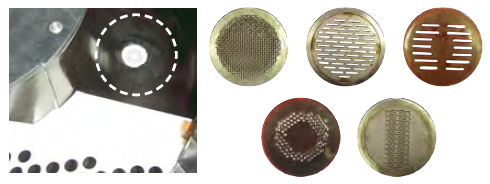
Numerous functions and calibrations factor into developing a precise and stable mass finishing process. From media and compounds to work piece characteristics and processing times, successful finishing requires each process aspect to be carefully monitored and evaluated. When it comes to process water flow rates, poor drainage from the machine can cause quality control issues as well as equipment damage and costly downtime. While simple in their function, drains play an integral role in regulating the flow of process water out of the machine. With the exception of intentional “flooding” of the process bowl for sharp work pieces, the same amount of compound and water entering the machine must be flushed out again. Otherwise, contaminants in the form of dirt, media, metal fines, and, frequently, oil will accumulate in the process water. Since this buildup can cause the finishing process to deteriorate and even collapse, mass finishing machines must have sufficient drainage! With more than 80 years of experience, Rosler can expertly design mass finishing technology and troubleshoot issues to protect your system for the life of the machine. Machine Features Most mass finishing machines, including rotary and tub vibrators and drag‐ , plunge‐ , and surf‐finishers have special drainage screens built into their work bowls. High-energy centrifugal disc finishing machines differ since the “dirty” process water is evacuated through the gap between spinner and work bowl. Drain types used in rotary vibrators. Made from plastic such as polyurethane or stainless steel material, these drains must allow process water and media debris to be flushed from the system while retaining usable media mix and the work pieces. Machines utilizing small media, including steel media for ball burnishing or pressure deburring , always require more drains since small media has a much higher water retention rate than large media. Regardless of the media size, drains can be easily plugged with media debris, flashes from die castings, small metal pieces, etc., and it is essential to make sure that the drains are regularly inspected and cleaned. Drain for undersized media seperation in the work bowl. Manual Evaluation Taking action to prevent process failure, machine damage, and costly repairs and downtime will improve process results and machine longevity. To ensure proper process water drainage: Make sure that the work bowl of your mass finishing machine contains enough drains. If additional drains are needed, they can be easily installed while the work bowl is being relined. Alternatively, a suction pump can be installed for faster evacuation of the process water, if needed. Regularly inspect the machine drains and make sure that they are in good condition, functioning properly, and removing debris appropriately. Install drains with bigger or differently shaped holes if plugging occurs. The Rosler Way Working with an experienced supplier is the best way to develop and maintain a mass finishing operation. From selecting the right type of machine for your needs to suggesting everyday actions to ensure adequate drainage, Rosler develops lasting solutions. Contact us to learn how we can put our surface finishing expertise to work for you! The complete Mass Finishing Process Water Series includes: Part 1 – Understand When to Balance Flow or Flood the Process Bowl . Part 2 – Maintain Adequate Drainage to Protect Your System .

820 Jahre Betriebszugehörigkeit: Die Rösler Oberflächentechnik GmbH ehrt 67 langjährige Mitarbeiterinnen und Mitarbeiter

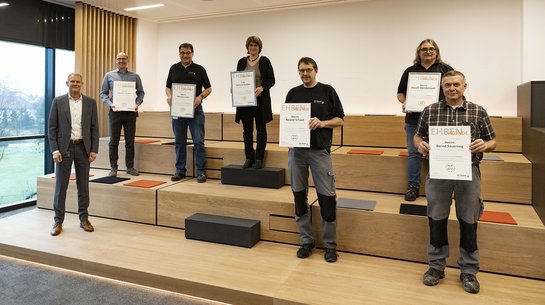
Die Rösler Oberflächentechnik GmbH freute sich auch in diesem Jahr wieder 67 Mitarbeiterinnen und Mitarbeiter für deren insgesamt 820 Jahre Treue und Loyalität zu ehren. Allerdings mussten, wie bereits im Vorjahr, die Feierlichkeiten coronabedingt in kleinem Rahmen unter strenger Einhaltung der Hygienevorschriften stattfinden. Die traditionelle Ehrungsfeier der Jubilare sowie die Verabschiedung treuer Mitarbeiterinnen und Mitarbeiter in den Ruhestand sollte in diesem Jahr erstmalig in dem neuen und modernen Betriebsrestaurant der Rösler Oberflächentechnik GmbH am Standort Memmelsdorf stattfinden. Doch auch in 2021 konnte die Feierlichkeit aufgrund der Corona-Pandemie leider nicht in dem ursprünglich geplanten Rahmen abgehalten werden. Um den Jubilaren trotzdem die verdiente, persönliche Wertschätzung gegenüberzubringen, fanden die Ehrungen in kleinen Gruppen durch die entsprechenden Führungskräfte unter Wahrung der erforderlichen Hygieneregeln statt. In diesem Zusammenhang dankten die jeweiligen Führungskräfte im Namen der Rösler Oberflächentechnik GmbH ihren langjährigen Mitarbeiterinnen und Mitarbeitern für deren Loyalität und Engagement. Die Rösler Oberflächentechnik GmbH gratuliert … zum 40-jährigen Betriebsjubiläum: im Werk Memmelsdorf: Harald Wendelmuth und Helmut Lutter sowie Gertrud Rädlein aus dem Werk in Hausen. … zum 25-jährigen Betriebsjubiläum: Roland Schaad, Michael Striebe und Edmund Hübner – alle tätig im Werk Memmelsdorf – sowie Bernd Sauerteig im Werk Hausen. … zum 10-jährigen Betriebsjubiläum: im Werk Memmelsdorf: Daniel Bahls, Gerhard Bauer, Michael Berwind, Jens Beugnies, Marcus Breitfelder, Patrick Diez, Stephan Dohles, Ivan Drescher, Thilo Friedel, Florian Gries, Stefan Gründel, Marco Habermann, Stephan Hacker, Adrian Häfner, Viktor Heinrich, Herwig Heiser, Angela Herr, Simone Jäger, Woldemar Jung, Stefan Kalb, Manuel Kambach, Daniel Keim, Tom Kollacks, Manfred Kohmann, Tobias Kurzendörfer, Andreas Lamm, Johannes Leicht, Denis Leidner, Stefan Mantey, Iris Martin, Sebastian Martin, Katharina Meixner-Pelkner, Andreas Popp, Marcus Roth, Benedikt Reubel, Patrick Rösler, Lisa Schad, Anna Schlawne, Christian Schmidt, Astrid Schwappach, Oleg Strauch, Peter Strohschein, Benjamin Sülzle, Oxana Walinger, Rebecca Walther, Dimitri Wander, Bernhard Waschkowski, Dimitri Winterholler, Christoph Wunner und Thomas Zimmermann. im Werk Hausen: Vladimir Bauer, Steffen Beyer, Fabian Heer, Alexandra Janson, Andreas Kästner, Bernd Landvogt, Mario Nüßlein, Sabine Precklein, Viktor Schell und Marion Zeller. Nach langjährigem verdienstvollen Einsatz wurden Detlef Bauer, Josef Bornschlegel, Albin Dorsch, Günter Elflein, Adelgunde Fischer, Ralf Gutmann, Uwe Hein, Gerd Leipold, Uwe Michael, Josef Schnapp, Siegfried Schrenker sowie Hartmut Tremel in den Ruhestand verabschiedet. Rösler stellt die Weichen für eine erfolgreiche Zukunft In seinem traditionellen Weihnachtsgruß bedankte sich Stephan Rösler, Geschäftsführender Gesellschafter der Rösler Oberflächentechnik GmbH, bei allen Mitarbeiterinnen und Mitarbeitern für deren tatkräftige Unterstützung und Loyalität in einem Jahr, welches aufgrund der Corona-Pandemie und der damit verbunden wirtschaftlichen Situation strukturelle Anpassungen im Unternehmen erforderlich machte. „Doch nur wer sich ändernden Rahmenbedingungen nicht verschließt und entsprechend reagiert, kann langfristig und nachhaltig erfolgreich sein“, so die Maxime von Stephan Rösler. Dass die getroffenen Maßnahmen erste Wirkung zeigen, beweist eine deutlich verbesserte Auftragslage, wenn auch nicht auf Vorkrisenniveau. Zudem investierte das Unternehmen auch in Krisenzeiten wieder in wichtige Zukunftsthemen wie z. B. die Digitalisierung und Automation, sowohl in Form der angebotenen Produkte als auch im Unternehmen selbst. Als Teil des produzierenden Gewerbes ist sich die Firma Rösler aber auch seiner gesellschaftlichen Verantwortung gegenüber dem Thema Nachhaltigkeit bewusst und ist deshalb seit kurzem Teil der VEA-Initiative „Klimafreundlicher Mittelstand“. Darüber hinaus ist das Unternehmen nun bei der CDP gelistet, bei der es sich um eine gemeinnützige Organisation handelt, die Unternehmen und Regierungen zur Nachhaltigkeit anhält und die weltweit führende Plattform zur Offenlegung von Umweltdaten betreibt. Die insgesamt getroffenen Maßnahmen lassen den Geschäftsführenden Gesellschafter der Rösler Oberflächentechnik GmbH optimistisch in die Zukunft blicken.
Wet Blasting Equipment & Media, Part 3 – Maintain Slurry Concentration for Finishing Consistency

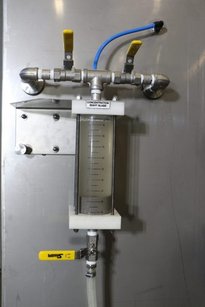
Wet blasting propels a mixture of media and process water at the surface of a work piece to provide cosmetic (anti-glare) finishes, surface smoothing , deburring , de-powdering, decontaminating, and cleaning after casting, welding, machining, and additive manufacturing . Useful in a variety of industries , this specialized form of shot blasting relies heavily on the media and water mix known as wet blasting slurry to work in tandem with the machinery in order to deliver the desired finishing results. Rosler has extensive experience developing wet blasting systems as well as providing guidance on slurry concentrations and supplying the necessary consumables . Slurry Characteristics Wet blast schematic The slurry is created in a tank housed within the blast chamber by mixing water and an abrasive media. A special pump delivers the slurry to the blast gun where it is then propelled onto the work surface using compressed air. High-speed impact of the slurry on the surface of the work piece creates the desired blasting effect, be it cleaning, coating preparation, cosmetic surface texturing, or peening . Wet blasting in process The concentration of abrasive media in the slurry usually amounts to 10-40% by volume, for example, 20% media and 80% water, etc. Establishing the ideal concentration may require extensive processing trials initially or if the work pieces and their original condition change. In these cases, contact the machine manufacturer for guidance. Controlling Slurry Concentrations Regular and gradual slurry loss is expected even in a well-calibrated finishing operation. During the blast process the media wears by becoming smaller or fracturing. These smaller and irregular pieces must be removed from the system. To make up for this loss and removal of undersized media, new media must be added. Maintaining a very tight tolerance range of 1-2% in the prescribed slurry concentration is required to achieve consistent results. For smaller systems, maintaining slurry concentration can be done by visual inspection of the media-to-water ratio in the graduated viewing glass of the concentration measurement unit and manually adding media as needed. In larger blast systems, the slurry concentration is controlled automatically with an ultrasonic level sensor, a weighing system, or continuous density measurement. Adding media to the desired concentration level can be done manually or through an automated, PLC-controlled media adder. Manual slurry concentration measurement unit The Rosler Way Rosler has more than 80 years of experience in shot blasting. Whatever your wet blasting challenges are, we are confident that we can deliver a solution. Contact us to discuss your needs today! Previous posts in the Wet Blasting Equipment & Media series include: Part 1 – “Machines Range in Complexity, Uses.” Part 2 – “Technical Components Combine for Systematic Success.” Upcoming posts will include: Part 4 – “Internal Cleaning, Rebuilds Prolong Machine Lifetime.” Part 5 – “Careful Media Selection, Additive Use Impact Results.” Sign up for enews alerts to be notified of new posts!