

What capabilities do high pressure water jet blasting and UHP / ultra-high-pressure water jet blasting offer?
Shot blasting technology under high pressure: an effective process for demanding workpieces
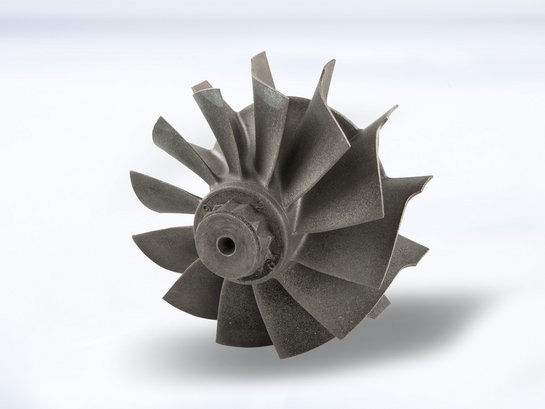
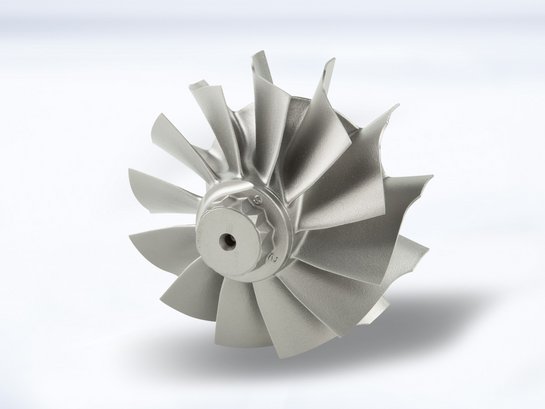

High pressure water jet blasting at pressures up to 4,000 bar is an exceptionally workpiece-friendly, environmentally responsible, and highly efficient process. When operating pressures exceed 2,000 bar, the process is also referred to as ultra-high-pressure water jet blasting (UHPW). The ultra-high-pressure variant in particular has become widely established across numerous industries, as it is capable of removing even extremely hard coatings — such as ceramic coatings or specialty lacquers.
Water jet blasting using pressure — whether applied through a rotating multi-nozzle head or individual nozzles — offers numerous additional advantages. No blasting media is consumed, which in turn minimizes material removal from the base workpiece. Post-process cleaning of the workpiece to remove dust and blasting media residue is eliminated entirely. When compounds are added to the process water, temporary corrosion protection can also be achieved. Furthermore, because the process water can be continuously recirculated in a closed-loop system, high pressure water jet blasting is an inherently environmentally friendly process.
Rust removal, descaling, stripping, cleaning, decoating (where the base material must not be attacked), and deburring are all blasting processes that perform effectively in combination with water and pressure. For other applications — such as surface roughening — high pressure water jet blasting or ultra-high-pressure water jet blasting is less suitable, as achieving a homogeneous surface finish with this method is difficult.
The process is used extensively in the aerospace sector, where components are routinely decoated prior to non-destructive inspection in order to detect even the smallest defects. It is frequently employed as an alternative to chemical liquors or as a replacement for blasting with aluminum oxide. In both cases, high pressure water jet blasting represents the gentler machining option.
The process is also used when machined components require deburring without introducing new contamination in the form of blasting media.
In which industries is the process used?
- Decoating of a wide range of turbine components in the aerospace sector.
- Removal of ceramic residues from investment castings.
- Paint stripping and removal of rubber, latex, bitumen, and stubborn product residues in the chemical, rubber, and process industries (pipes, heat exchangers, reactors, hoppers, mixers).
- Pipe and heat exchanger cleaning, tank and container cleaning — in some cases performed as a non-entry process using remote-controlled equipment.
- Surface preparation and coating removal on steel structures, ship hulls, offshore structures, tanks, and pipelines.
- Concrete removal (hydrodemolition) for bridge rehabilitation, industrial floors, ramps, and structures using UHP systems operating at up to approximately 2,800–3,000 bar.
- Pipe and heat exchanger cleaning, tank and container cleaning — in some cases performed as a non-entry process using remote-controlled equipment.
- Industrial and municipal cleaning — for example, traffic surfaces, municipal infrastructure, and graffiti removal — as well as special applications such as cold cutting or precision cleaning in energy and oil/gas facilities.
Frequently asked questions — What you need to know about high pressure water jet blasting
High pressure water jet blasting begins at approximately 600 bar. At a pressure range of 2,000 bar and above, the process is referred to as ultra-high-pressure water jet blasting (HPW) or ultra-high-pressure water jetting (UHPW). The maximum operating pressure currently in use is approximately 4,000 bar.
Yes — no chemical cleaning agents or harmful additives are required. The process water can also be recirculated and reused in a closed-loop system. Compared to conventional blasting with blasting media such as aluminum oxide, high pressure water jet blasting is the more environmentally responsible option, as it generates no blasting media waste and significantly less dust.
In high pressure water jet blasting, we harness very high energy in combination with liquid. The liquid penetrates the surface readily and blasts the coating away. This occurs significantly faster and with greater precision than chemical processes or conventional dry blasting. At the same time, the process does not damage the surface of the components. However, the high energy consumption of the process does represent a certain disadvantage.
Both methods are available. Manual operation using a hand lance remains widely used in rehabilitation and maintenance applications, or where the processing objective involves only minor material removal. This type of operation, however, always places significant physical demands on the operator. For more demanding material properties and thanks to a wide range of new technological developments, robotic systems are employed and the blast lance is guided automatically. Robotic technology also enables cost-effective operation at high blast volumes.
Modern high pressure water jet blasting systems and ultra-high-pressure water jet blasting systems are equipped with a water cleaning unit that separates the process water from blasted-off materials. The process water is recycled and returned to the closed-loop circulation system.
Yes. When machining particularly hard materials, abrasive media such as garnet sand are frequently added. This process is referred to as abrasive water jet blasting and significantly increases the material removal rate.
With the appropriate selection of pressure and nozzle, a wide variety of substrates — from steel and titanium to nickel-based alloys — can be processed. However, the pressure setting must be strictly adapted to the sensitivity of the material in question.
Use the Solution Finder to find the right system for your processing method.