

Desanding: How shot blasting cleans cast parts
Processes, requirements, and industrial applications
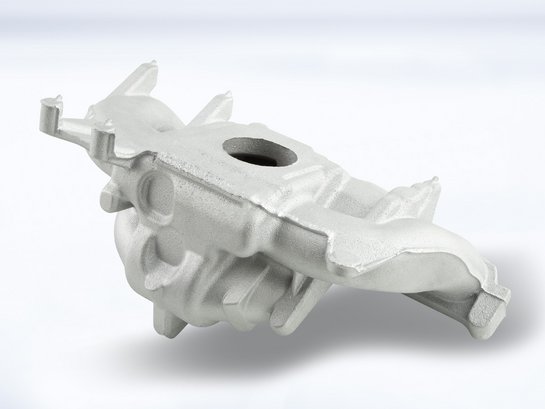
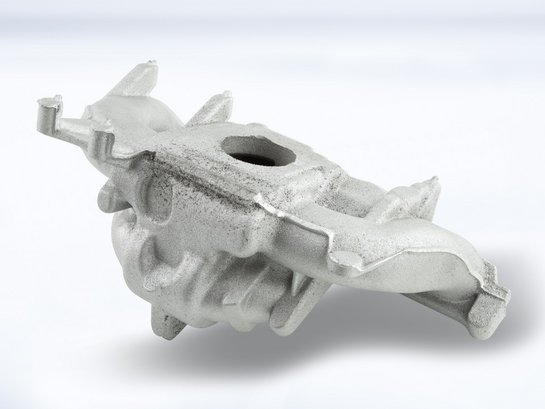

Desanding is a classic abrasive shot blasting process, also known as “unpacking” blasting. It typically serves as a preparatory stage before machining or coating processes, and is widely used across industries such as automotive, mechanical engineering, and aerospace.
While sand casting is the oldest and most common foundry process, other techniques — like permanent mold casting, investment casting, or core casting — are also used. Each casting process presents unique challenges for the complete removal of sand and impurities, making abrasive blasting the go-to solution in nearly every case.
For desanding, a high-energy process with powerful abrasive media is essential. Turbine blasting (centrifugal wheel blasting) is the most effective method, especially when using turbine blasting machines.
Common examples of parts requiring desanding include engine blocks (from automotive to shipbuilding), oil and cooling channels, chassis components, engine parts, and transmission housings.
Why Is desanding the ultimate test for shot blasting equipment?
Removing residual sand from cast parts places extreme demands on the durability of blasting equipment. Sharp-edged foundry sand, aggressive abrasive materials, and excess material like scale cause significant wear on the machinery. Effective desanding systems must continuously remove both large debris (such as core remnants and burrs) and fine sand particles. Regular maintenance is non-negotiable.
Blasting chambers made of manganese steel, optionally lined with wear-resistant cast steel plates, offer exceptional longevity even under intense blasting conditions. Another innovative approach to reducing internal wear is lining the chamber floor with steel balls, which help deflect abrasive media and prevent contamination of the blasting cycle.
Turbines used in desanding face extreme stress. High-performance turbines, such as those from the Rutten series (made from hard metal alloys) can last up to 16 times longer than standard turbines. Evolution turbines, featuring straight throwing blades for maximum abrasive media throughput, have also proven highly effective for cleaning metal castings. Compared to standard turbines, modern high-performance models can extend service life by up to eight times.
What are the different casting methods and their blasting requirements?
Flexible and cost-effective: Sand casting and desanding
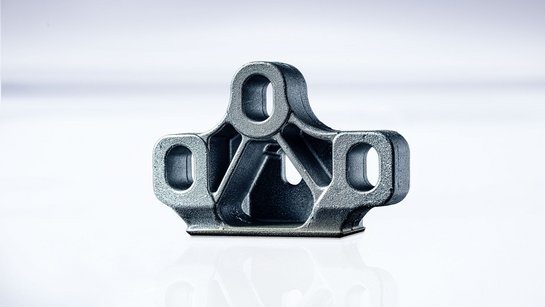
Sand casting dominates the German iron foundry market, accounting for about 60% of production. In this process, molten metal is poured into a sand mold cavity. Once cooled, the sand is removed, and the casting is prepared for further processing.
Because sand molds are destroyed after each use, this method is less suitable for small production runs but ideal for medium-sized series, prototypes, and large castings like engine blocks for ships. Advantages include low production costs and high flexibility in mold design. However, dimensional accuracy and surface quality are relatively poor.
Cleaning sand-cast parts requires robust turbine or centrifugal wheel blasting machines. The castings often have sharp residual sand and sprue remnants that abrade the blasting chamber, turbines, and other components. Another challenge is the fusion of sand and metal surfaces due to high temperatures during casting. These fused areas must be thoroughly removed to prevent damage to machining tools in subsequent steps. This requires intensive blasting — sometimes over extended periods — without compromising the part’s surface. Precision and power are critical, achieved through the number and alignment of turbines, abrasive media flow rates (up to 500 kg per minute per turbine), and optimized part conveyance speed.
Desanding aluminum sand castings
When desanding lightweight metals like aluminum or magnesium, the abrasive media must be compatible with the softer material. Aluminum/zinc wire shot or fine stainless steel abrasives are commonly used. Blasting pressure and duration must be carefully controlled to avoid surface damage or distortion. Additionally, aluminum and magnesium dust are highly flammable, necessitating specialized filtration systems for fire and explosion protection.
Sand removal of permanent mold and investment castings
Permanent mold casting is ideal for small, high-precision parts with excellent surface quality. Unlike sand casting, molten metal (aluminum, magnesium, zinc, or copper) is poured into a reusable metal mold, though sand cores may still be used for complex internal geometries.
While permanent mold castings have better surface quality than sand castings, they often require extensive surface treatment to remove core sand residues, release agent remnants, and oxide layers.
Investment casting produces highly accurate, complex metal parts with smooth surfaces using wax patterns. These parts also require cleaning to remove ceramic or sand residues —a process that, while less aggressive than sand casting desanding, is just as essential.
Removing sand cores from core casting
One of the most challenging tasks in foundries is removing sand cores from passages and cavities, which are used to create complex geometries. These cores often bond strongly with the metal, making separation labor-intensive and requiring advanced technology. A recent innovation, the dual-axis manipulator, allows parts to be securely gripped and rotated along multiple axes. This enables precise blasting into undercuts and openings, ensuring thorough internal desanding.
What do you need to know about desanding?
Frequently asked questions
What is desanding in foundries?
Desanding involves removing residual sand and foundry impurities from cast parts, preparing them for machining, surface finishing, or coating.
Why use shot blasting for desanding?
Shot blasting is the most efficient and versatile cleaning method for castings. It accommodates virtually any part size and shape, ensures uniform surface quality, and can roughen surfaces for better coating adhesion.
Which blasting methods are used?
Turbine blasting (centrifugal wheel blasting) is the primary method. Air blasting or wet blasting is used for sensitive applications, such as aerospace turbine blades.
How long does desanding take?
Duration depends on the part’s size, shape, and contamination level. Modern systems often require just one pass, with cycle times ranging from 20 seconds to five minutes per part.
What abrasive media are used?
Metallic abrasives, such as round or angular steel shot in various grit sizes, are standard. The choice depends on the material, desired surface finish, and contamination level.
How is quality controlled?
Visual inspection, surface roughness measurement (Ra, Rz values), and adhesion tests for coated parts are common. Typical Rz values for steel castings range from 50 to 75 µm.
Can abrasive media be reused?
Yes. In closed-loop systems, abrasive media is cleaned and recycled. Metallic abrasives are particularly suitable for reuse.
Does desanding vary by casting method?
Yes. Sand casting requires intensive blasting, while investment casting needs gentle removal of ceramic shells. Permanent mold and full mold casting generally require less post-processing.
How often should blasting equipment be maintained?
Regular maintenance is crucial, especially in high-volume foundries. Annual inspections are standard, but heavily used equipment may need more frequent servicing. Modern machines, with enhanced wear protection, extend maintenance intervals.
How energy-efficient is modern desanding technology?
New turbine systems reduce energy consumption by up to 25% and overall operating costs by over 30%, particularly in retrofit projects.
Can all casting materials be desanded the same way?
No. Soft alloys like aluminum or magnesium require gentle processing, while iron and steel castings can withstand more aggressive blasting.