

A clean proposition: how metal is efficiently degreased
Degreasing and cleaning metal – what you need to know about industrial cleaning processes and industrial parts cleaning
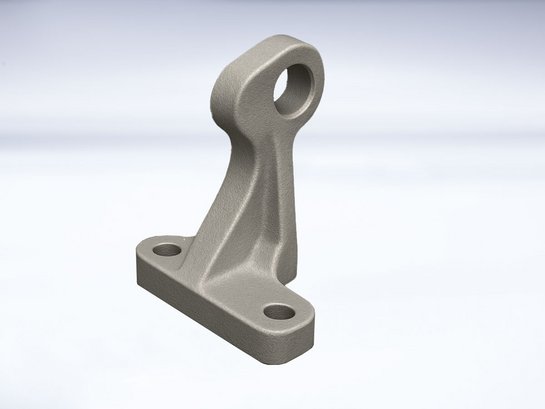
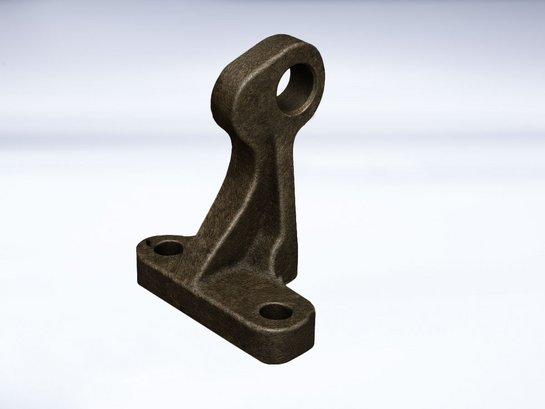

Industrial parts cleaning is a central element of modern manufacturing and plays a decisive role in quality, cleanliness, and purity across numerous industries. Many industrial manufacturing and production processes involve the use of oils, greases, coolant lubricants, or mold release agents – residues that remain on workpieces and components even when minimum quantity lubrication systems are employed.
For downstream processes such as hardening, electroplating, coating, paint finishing, or other treatments to perform reliably, these contaminants and impurities must be completely removed.
Processing target: absolute cleanliness
A precisely tailored parts cleaning process ensures that components and workpieces meet the required cleanliness specifications. The objective of every industrial parts cleaning operation is the removal of contamination, particles, and residues in order to guarantee optimal results in subsequent processing and high-quality end products.
A variety of cleaning methods and technical solutions are available for the industrial cleaning of such parts. These include mass finishing processes, ultrasonic cleaning, spray cleaning, and specialized cleaning systems equipped with nozzles and matched cleaning media. The selection of the appropriate process depends on the nature of the components, the required cleanliness specifications, and the specific application.
Ultrasonic cleaning in particular offers significant advantages for sensitive components and complex geometries. By applying ultrasonic energy, even the smallest particles and contaminants can be reliably removed. Spray cleaning, on the other hand, is well suited for robust workpieces and high-volume production runs.
Modern industrial parts cleaning increasingly relies on water-based cleaning solutions. Compared to conventional solvents, these processes enable environmentally responsible and cost-effective cleaning. At the same time, they reduce operating costs and improve safety for employees and operators.
The broad range of cleaning technology solutions available today gives companies versatile options for a wide variety of cleaning tasks. In medical technology, the automotive industry, and high-quality metal processing in particular, stringent cleanliness requirements are critical to product quality – making high-performance industrial parts cleaning an essential process step.
Industrial parts cleaning using mass finishing and shot blasting
One of the key advantages of mass finishing is that multiple processing steps – such as cleaning, degreasing, deburring, and polishing – can always be performed within a single process, either simultaneously or in sequence, in the same system. This saves both time and cost while consistently delivering uniform, reproducible results. As an alternative to solvents, this type of degreasing and cleaning is typically free of isopropanol. Instead, the mechanical motion generated by the relative movement of the grinding media and workpieces actively enhances the cleaning performance of the consumables. The extensive range of cleaning products offers numerous advantages across a wide variety of applications. Non-ferrous metals in particular benefit from the removal of contaminants, resulting in a significantly improved surface appearance.
When the term "parts cleaning" is used in the context of shot blasting, it typically refers to the conventional blast cleaning methods such as de-sanding, descaling, rust removal, and decoating. In these cases, the focus is not on removing lubricants and oils, but rather on stripping rust, molding sand, scale, and coatings from metal surfaces of all types, as well as removing adherent deposits such as dirt and dust. The goal is to expose the bare base material. These processes represent a core area of shot blasting technology and are widely adopted solutions across many industries that process metal parts – including foundries, structural steel fabrication, and raw steel production.
Depending on the cleaning task at hand, different cleaning media, nozzles, and systems are employed. The right combination of cleaning technology, cleaning agents, and process parameters determines both the results achieved and the overall cost-effectiveness of the operation.
FAQ: What do you need to know about industrial parts cleaning and component cleaning?
Why is residue-free parts cleaning so important?
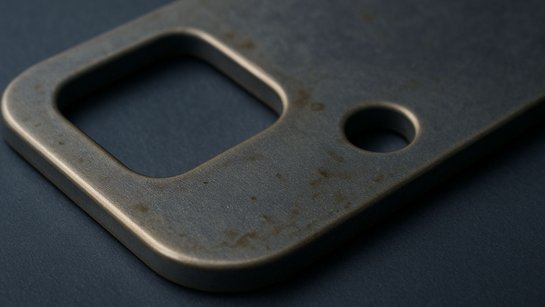
The use of lubricants and coolant lubricants is indispensable in many production processes. They improve manufacturing performance, reduce wear, and ensure optimal processing properties. At the same time, however, they generate contamination that must be removed by effective parts cleaning prior to further processing.
Only thorough industrial cleaning ensures that coatings, paints, or electroplated layers adhere reliably. Residues also frequently cause problems and quality defects during hardening and other downstream processes.
Component cleaning and industrial parts cleaning therefore not only ensure clean workpieces, but also directly influence the quality of the finished products. Companies benefit from more stable processes, reduced scrap rates, and greater process reliability.
What parts cleaning solutions does mass finishing offer?

In mass finishing, cleaning is not a one-size-fits-all operation. In addition to deburring and surface finishing, workpieces can be cleaned and degreased simultaneously – allowing multiple processes to be combined in a single operation.
The process is particularly well suited for the industrial parts cleaning of metals and sensitive components. Water is an integral part of the cleaning process. Specialized cleaners and cleaning agents are used in addition, targeting and removing contamination from the parts being processed.
The mechanical action of the grinding media effectively dislodges particles, oil, and other contaminants from the surface. The combination of water, mechanical motion, and chemical additives enables efficient cleaning while maintaining high quality standards.
Integrating parts cleaning into existing production processes offers numerous advantages. Companies save floor space, reduce operating costs, and eliminate the additional effort associated with separate cleaning systems.
Effective cleaning for demanding workpieces
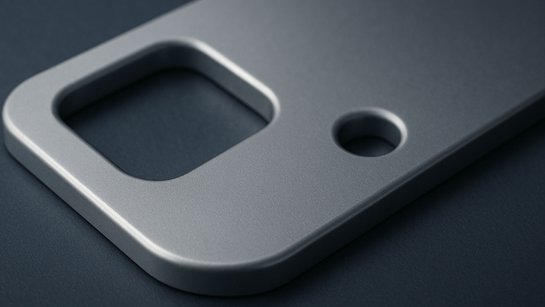
For sensitive or complex workpieces in particular, combining multiple processes is a practical approach. Flat parts or geometries prone to nesting represent classic challenges for conventional cleaning methods. In such cases, combined solutions incorporating mass finishing and cleaning can prove more effective than separate systems.
With precisely matched cleaning methods, even sensitive components made of aluminum or other metals can be cleaned gently and effectively. At the same time, corrosion and re-contamination of workpieces between individual processing steps are reliably prevented.
What role do compounds and cleaning agents play?
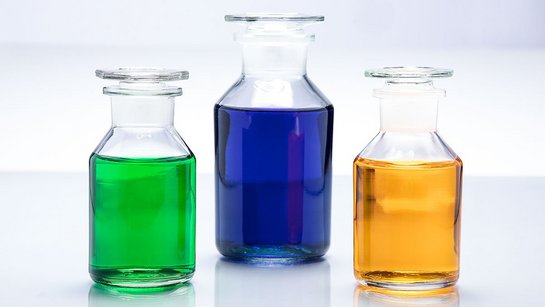
Compounds are an essential component of modern industrial parts cleaning. These specialized cleaners are added to the water and support the entire cleaning process in accordance with the respective requirements.
Depending on the application and the type of contamination involved, different cleaning agents are employed:
- alkaline cleaners for degreasing
- specialized liquors for sensitive workpieces
- cleaning agents for the removal of particles and abrasive residues
- products for corrosion protection and bath maintenance
- cleaning media for surface brightening
Selecting the right cleaning agents improves cleanliness, stabilizes processes, and enhances the quality of results.
Cleaning as a standalone process

Not every cleaning task is integrated directly into other machining processes. Many companies rely on dedicated cleaning systems specifically developed for industrial parts cleaning.
These systems operate using various cleaning methods such as ultrasonic cleaning, spray cleaning, or immersion processes. Main cleaning and rinsing are key elements of the overall process sequence. Rinsing is frequently carried out in multiple steps to achieve maximum cleanliness of the parts through successive water exchanges.
The development of modern cleaning technology is increasingly focused on energy-efficient solutions with reduced water consumption and lower operating costs.
What role does process water play?

Water plays a central role in many cleaning processes. Controlled water treatment and bath maintenance are critical to ensuring consistent results and high levels of cleanliness.
Modern monitoring systems allow companies to continuously track the contamination level of the water as well as key process parameters. This enables cleaning media to be used for longer periods and helps reduce operating costs.
Water recirculation and treatment also improve the sustainability of industrial cleaning operations and reduce the environmental impact.
Cleaning processes in shot blasting
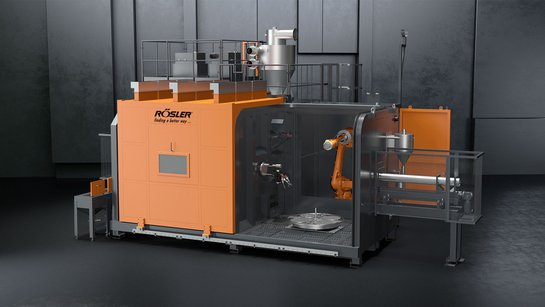
In shot blasting, the primary focus is on the removal of rust, scale, molding sand, and other contaminants. By directing blasting media against the surfaces, foreign matter is reliably removed.
The selection of appropriate nozzles, blasting media, and systems is determined by the material, the degree of contamination, and the requirements of the specific application. These processes are used on a regular basis particularly in general industry, structural steel fabrication, and foundry operations.
Depending on the application and industry sector, the requirements for cleaning, cleanliness, and quality can vary considerably. Companies therefore develop tailored solutions for a wide range of workpieces, components, and products.
Industrial parts cleaning as the key to quality
Industrial parts cleaning is far more than just an additional process step. It is a decisive factor for quality, cleanliness, and stable production processes.
With modern cleaning technology, matched cleaning agents, and innovative cleaning systems, even the most demanding challenges can be reliably addressed. Companies benefit from clean components, optimized processes, and high-quality end products.
Whether metals, plastics, or sensitive components – the right industrial cleaning process lays the foundation for successful downstream operations and long-lasting products.
Use the Solution Finder to find the right system for your processing method.