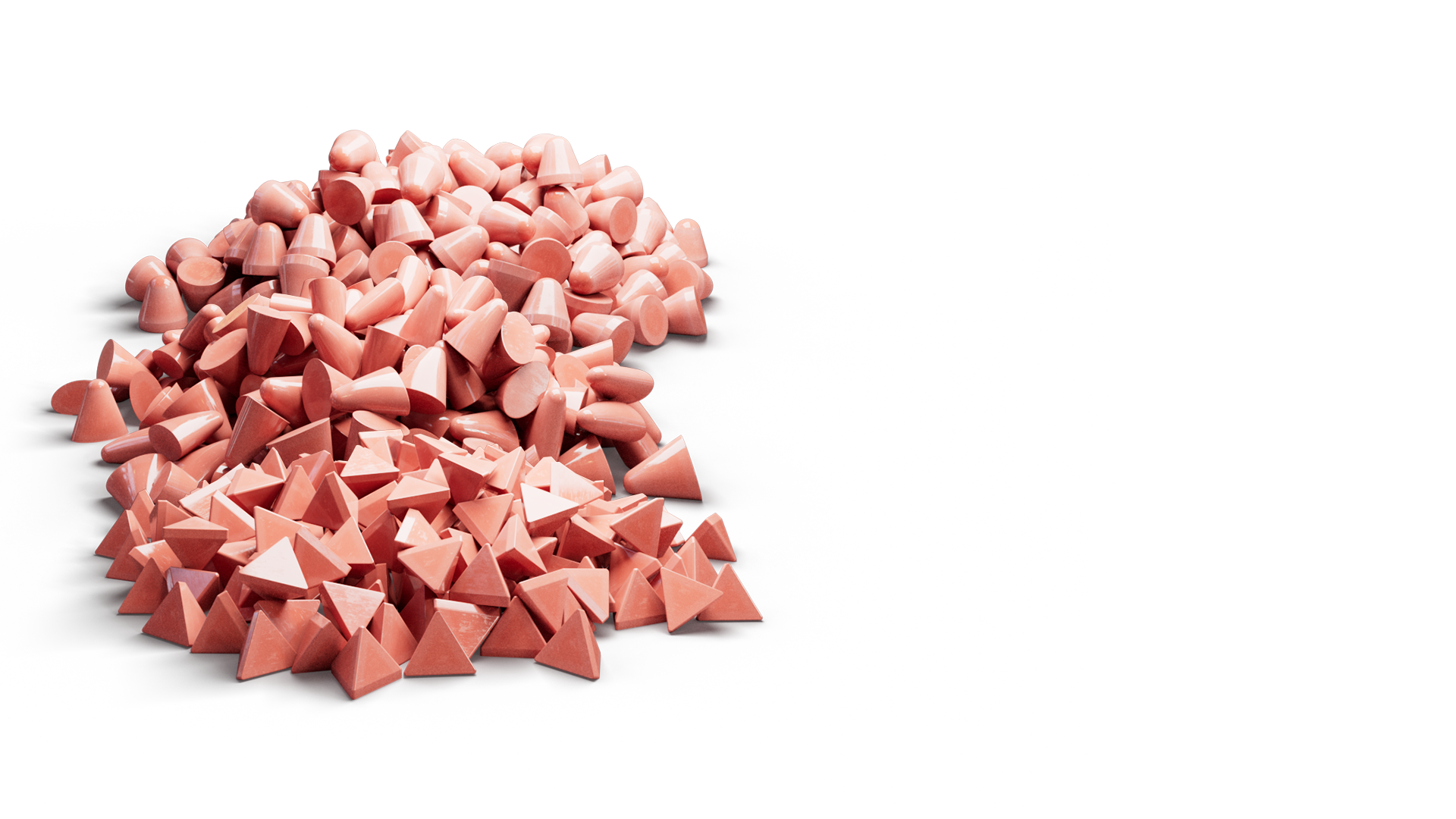
Plastic finishing media from Rösler: Gentle yet effective
Maximum grinding performance for sensitive surfaces
Rösler Oberflächentechnik GmbH plastic finishing media are an ideal complement to ceramic media in mass finishing (vibratory finishing). Thanks to their specific composition and significantly lower density compared to their ceramic counterparts, they are widely used for gentle processing tasks. Even larger media sizes can produce the desired fine, scratch-free surface finish when special surface quality requirements must be achieved.
Plastic tumbling media are particularly suitable for finishing softer metals such as brass, aluminum, and copper. They are also used for wood and plastic parts. Typical applications include gentle deburring, edge radiusing, surface metal removal, and preparing workpieces for polishing, plating, or anodizing. Their ability to produce a consistent, refined surface quality makes them essential in many industries today.
Plastic finishing media as a high-performance alternative

Although ceramic media remain common in mass finishing (vibratory finishing), plastic finishing media continue to gain market share. Their low density and advanced, high-performance formulations provide distinct benefits in applications where controlled material removal and gentle processing are required.
Plastic media are increasingly used in the medical technology sector, where sensitive components demand precise finishing. For example, endoprosthetic implants such as knee joints made of cobalt-chrome or titanium are processed with polyester resin vibratory media. Even extremely hard materials such as ceramic can be processed in high-energy mass finishing systems using specialized plastic finishing media.
Gentle grinding: Advantages of plastic media at a glance
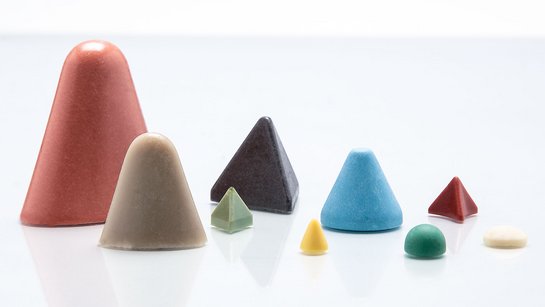
Plastic finishing media weigh approximately half as much as ceramic media. Due to their composition, they resist fracturing and chipping even under high mechanical impingement or when processing heavy parts. This ensures reliable surface quality and reduces the risk of damaging sensitive workpieces.
Their lower weight results in reduced pressure on the workpiece during the finishing process. This makes them particularly suitable for finishing softer metals, thin-walled components, and delicate geometries. Plastic media are widely used in aerospace and medical applications, where consistent results and process stability are essential.
Large media sizes can also be used effectively without damaging parts. In many cases, plastic tumbling media can replace manual grinding operations involving grinding wheels or abrasive paper. Different formulations - often identified by color - define the level of general metal removal, fine finishing, or pre-plate finishing performance.
Manufacturing process and quality assurance

Plastic finishing media consist of a mixture of synthetic resin and abrasive grains. Depending on the application, abrasive content can reach up to 75 percent, directly influencing metal removal rate, surface finish, and service life.
Production is carried out using a casting process. After curing, a controlled thermal post-treatment enhances wear characteristics and overall performance. Tight production tolerances ensure consistent quality from batch to batch. This precision is essential to produce reliable results in cleaning, deburring, burnishing, polishing, and flash removal applications.
The tools of mass finishing technology: an overview of plastic abrasives
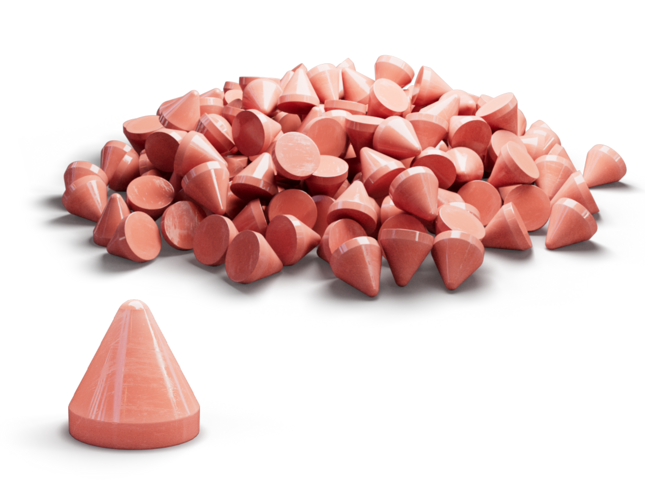
Cone (K)
The plastic cone is the grinding wheel shape for machining damage-sensitive components, for example with sealing surfaces. After the running-in phase, the circumferential base edge rounds off so that the workpiece is treated gently without leaving any marks. There are also advantages in terms of separation behavior due to the rolling properties.
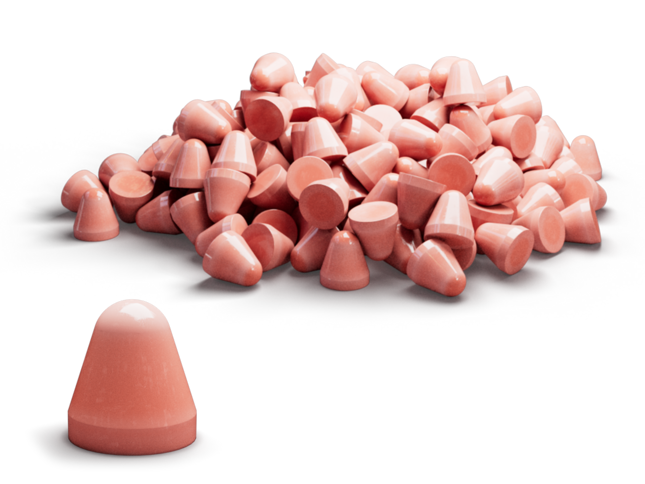
Cone - round (KR)
The rounded tip and the bottom edge that rounds off during preconditioning allow for particularly gentle processing with fine final surfaces.
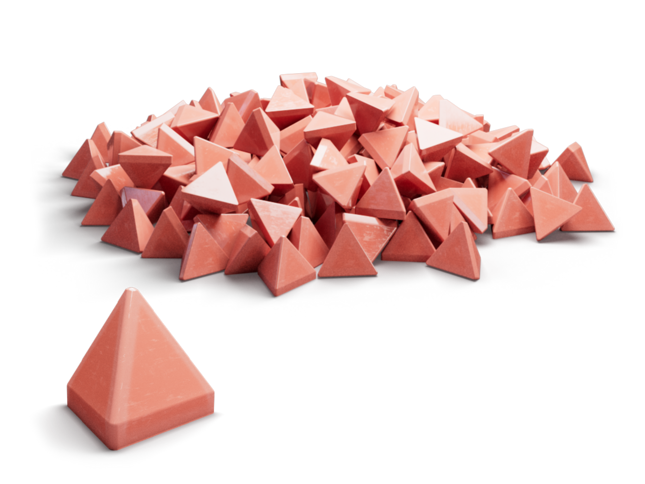
Pyramid (P)
Four identical triangular sides (tetrahedron) wear down evenly even after prolonged use. This reduces abrasive clogging in workpieces. Pyramids are excellent for deburring and grinding tasks. The edges and tips reach almost all surface areas and ensure a uniform workpiece appearance.

Tristar pyramid (PDZ)
The pyramid trident is particularly suitable for machining gear contours, slots, and tight radii. Its low weight can be an advantage, especially for thin-walled components that are susceptible to damage.
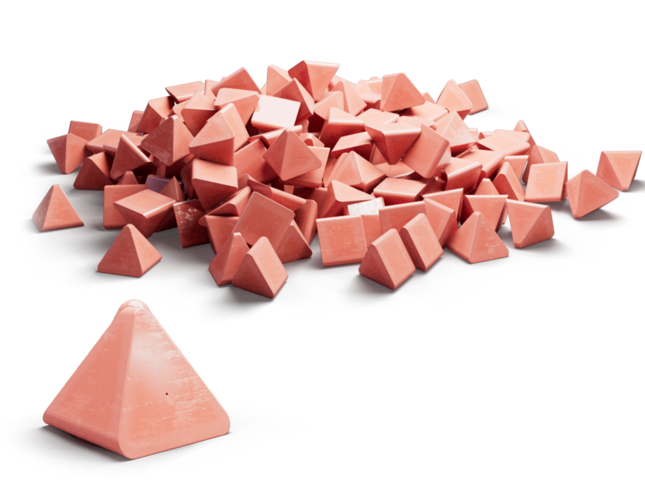
Pyramid - square base (PQ)
Built on the square base of the grinding body, there are eight completely circumferential functional edges, each of which ends in a point. This allows small workpieces to be completely machined, even in areas that are geometrically difficult to access.
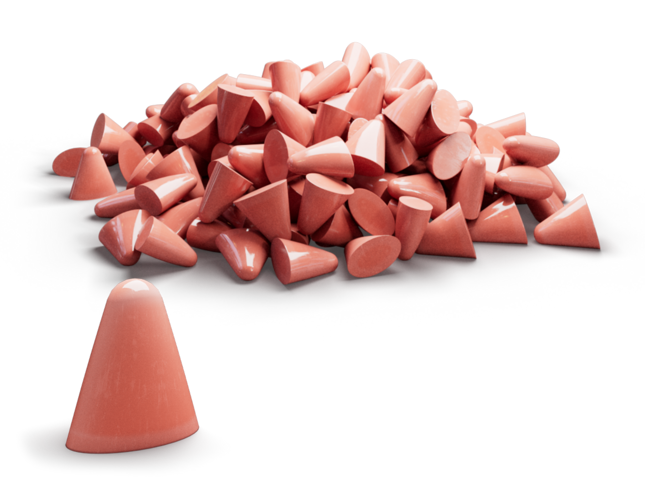
Paraboloid (PA)
The paraboloid is primarily a smoothing grinding wheel. Its shape gives it good sliding properties, which treat the workpieces very gently and ensure even and smooth material removal.
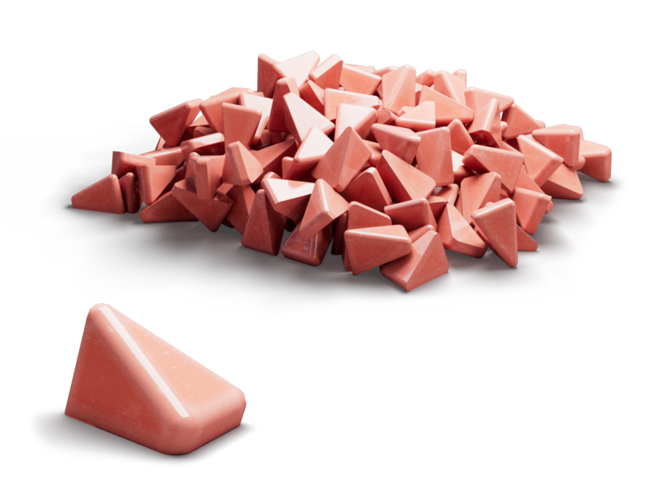
Double wedge (DK)
When new, it is angular and pointed in shape and is primarily used for deburring. Slots, threads, tight radii, and gear geometries can be easily reached. Even after prolonged use, this active, sharp-edged geometry remains highly usable without becoming significantly rounded.
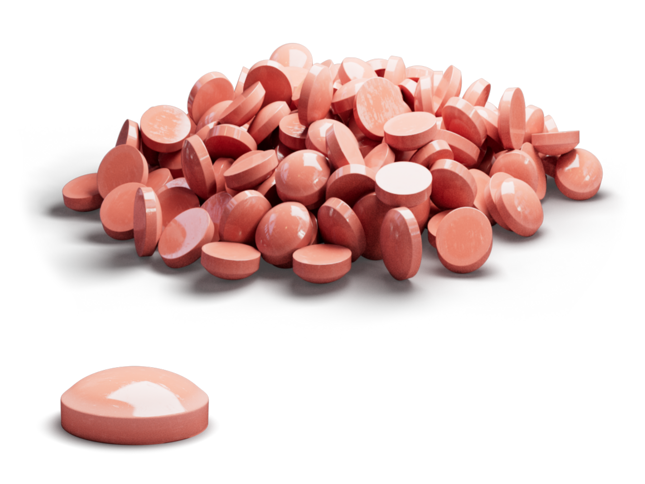
Lens (L)
The lens has good sliding properties due to its shape and treats the workpieces very gently. Especially with very soft materials, the lens shape leaves a damage-free, even, and good surface finish.

Quinto (QZ)
The Quinto is a successful combination of flat surfaces and curves. Workpiece surfaces and tight radii are machined just as well as breakthroughs and slot areas.
What do you need to know about plastic finishing media?
Frequently asked questions
Plastic finishing media consist of a polymer bonding system combined with abrasive materials. They are used in mass finishing (vibratory finishing) for gentle surface processing, particularly for sensitive geometries and softer metals.
Mixture of plastic resin, abrasive grain, and additives is processed into a casting compound and poured into molds. The result is media available in various shapes and sizes, often color-coded to identify performance characteristics.
Compared to ceramic media, plastic finishing media are softer and more elastic. Their lower density reduces impingement forces, enabling controlled material removal while achieving high-quality surface finishes.
Media selection depends on the application, machine type, and desired surface finish. Larger media increase contact pressure and general metal removal rates, while smaller sizes support fine finishing and access to detailed geometries.
They are ideal for aluminum, magnesium, zinc die-cast components, brass, copper, and certain ferrous metals. Applications range from deburring and edge radiusing to grinding, cleaning, polishing, burnishing, preplate finishing, and surface preparation prior to plating or anodizing.
Ceramic media, due to their high density, generally provide more aggressive material removal. Plastic finishing media, in contrast, offer a gentler process with excellent surface quality and reduced risk of damaging delicate parts. Modern high-performance formulations now cover a broad range of demanding applications.
Almost all standard grinding media are also available in our non-foaming “N” version. The non-foaming media achieve higher process stability and reduce contamination on the workpieces and machine. As a result, the grinding effect is optimized, helping to achieve consistent finishing results. This option is not only better for the environment due to using fewer resources (fresh water, compound, and process-water cleaner), but it also significantly reduces processing costs.
Plastic abrasives are just as cost-effective as ceramic abrasives. Thanks to the wide variety of abrasive types (shapes and sizes), there is a suitable abrasive for every specific application. Depending on the type of machine selected, you can find an abrasive type that is ideally suited in terms of grinding performance and durability.
You want only the best for your surface?
We will gladly help you!