Solution Finder
SOLUTION FINDER

Your guide through the
Rösler product world

With just a few clicks you will find the right machine for your needs!


Results: 237 Articles - 55 Products

Automotive Crankshafts, Part 1 – Cost-Effective Surface Improvement for Key Engine Components

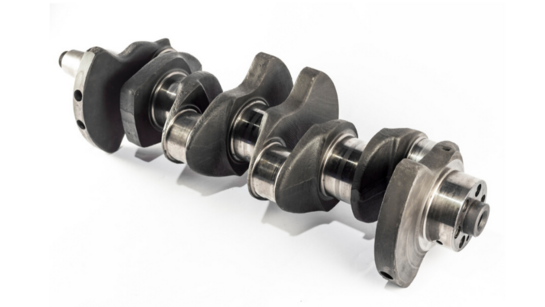
Crankshafts are a key component of internal combustion engines, be it mass-produced engines for motorcycles and automobiles , engines for heavy trucks, off-high highway equipment, and even large ships. Crankshafts convert the reciprocating (up/down) movement of the pistons/connecting rods into a rotational movement that drives the wheels and allows a vehicle to move forward. Rosler Metal Finishing understands the vital importance of these engine components and has developed specific shot blasting and mass finishing machines to process these pieces to perfection. A crankshaft with connected rods and pistons Materials & Production Methods Considering that automotive crankshafts weigh around 40-60 pounds and rotate approximately 100 times per second, these parts are exposed to tremendous tensile, compressive, and shear stresses. In addition, combustion forces and piston acceleration in an engine can also cause significant vibration. Therefore, crankshafts must be made from tough, wear-resistant materials, usually high alloy carbon steel. Typical alloying elements are manganese, chromium, molybdenum, nickel, cobalt, or vanadium. The most common materials are AISI/SAE 4340, EN-30B, 4330-M, 32-CrMoV-13, or 300-M. Crankshafts are made by: Casting – The production of cast iron crankshafts is limited to cheaper production engines, for example, low-performance diesel engines with lower overall loads. Hot forging – Today the most common manufacturing method is hot forging at temperatures of 1,700 to 2,100° F. Compared to casting, forged cranks offer a higher strength with – at the same time – lower weights and somewhat more compact dimensions. Depending on the utilized steel alloy, forged crankshafts may have to undergo a heat treatment process in the form of tempering and quenching. This is generally done after forging, but sometimes also after machining. Complete machining from a steel billet – This method is quite costly and is predominantly used for motorsport and high-performance applications, never for high-volume engine production. A hot-forged crankshaft After forging or casting, crankshafts must undergo an intensive machining process that includes: Turning of the journals, sometimes also called crankpins. Drilling of the oil holes in the journals. Drilling of the balancing holes in the counterweights. Milling of the drive sprockets, etc. Surface Treatment Tasks The main surface cleaning/treatment tasks for crankshafts include: Blast cleaning after forging or casting. Shot peening after machining. Deburring after machining. Blast cleaning after forging or casting is required because the forging/casting/heat treatment process leaves a relatively strong layer of scale on crankshafts and other work pieces. Prior to subsequent production processes such as machining and micro finishing, the work pieces must undergo a blast cleaning process to create a surface finish of SA 3, i.e. a pure white metal surface without any scale residues whatsoever. Crankshafts before and after blast cleaning The high compressive, shearing, and tensile stresses that crankshafts are exposed to as a result of machining can be relieved significantly by shot peening. In this application, the peening process focuses on the journals, especially the bearing surfaces as well as the journal fillets and journal cheeks (counterweights). Crankshaft peening is usually done by air blasting with relatively fine steel media. Deburring after machining is required to smooth edges including those of counterweight cheeks, drilled balancing holes in the counterweights, milled drive sprockets, and, sometimes, drilled oil holes in the journals. It is extremely important that the bearing areas on the journals are not damaged. The deburring operation is frequently done by mass finishing. Crankshaft machining The Rosler Way Whatever type of engine your crankshafts are designed for, Rosler can develop equipment and a process to provide accurate and repeatable finishing results. We are proud to lend our surface finishing expertise to the automotive industry. Contact us today to discuss your unique challenges. The complete Automotive Series includes: Part 1 – Cost-Effective Surface Improvement for Key Engine Components. Part 2 – Shot Blasting Machines Designed for Crankshafts. Part 3 – Typical Mass Finishing Machines Used for Crankshafts. Sign up for enews alerts to be notified of all Rosler blog posts!

Manufacturing Industry Outlook

At Rosler Metal Finishing , we believe in helping our clients in many industries find a better way to finish and process their products. Part of our success comes from understanding their industry, their process requirements, and market drivers. Our friends at IndustryWeek are making our jobs easier when it comes to understanding market drivers. The top findings from their recent research The Future of Manufacturing: 2020 and Beyond include: Positive outlook for growth and sales Leaders are overwhelmingly positive about their business growth prospects. Nine out of 10 expect revenues to increase and more than half (58%) anticipate strong growth of 5% or higher per year over the next five years. More than two thirds (70%) of manufacturers expect to increase the number of people that they employ over the next five years. Fulfillment strategies shift towards build-to-order Over the next five years, manufacturers will continue to move away from make-to-stock and shift towards less inventory dependent build-to-configure and engineer-to-order fulfillment strategies. This shift will cause processes and company strategy to focus on agility. Companies will be required to quickly shift attention and resources to mitigate risks and fully capitalize on growth opportunities. Increased productivity tops manufacturers’ investment list Companies will invest billions of dollars in a wide range of technologies during 2020. Decisions on where to invest will depend on leadership priorities and objectives. Predictably, whether driven by new technology or process improvements, productivity tops the list. The top 5 new technology investment priorities include: Higher productivity Faster responsiveness to customer orders and requests Enhanced collaboration with customers and suppliers Enhanced market intelligence More effective customer communication Market Volatility and rising material costs threaten growth he top challenges to meeting these strong growth expectations are market volatility, rising material costs, price reduction pressures, and increasing labor costs. To thwart such threats, according to Industry Week research, manufacturers are pushing hard to improve performance across a range of capabilities, starting with improving production processes, strengthening customer relationships and finding people with the right skills and experience. Rosler is your Secret Weapon With continued growth predicted across industrial sectors and a focus on improved process and productivity, Rosler is your secret weapon. The Rosler Group has been the experts in the field of surface finishing for more than 80 years and offers the most extensive portfolio in the world of mass finishing systems, shot blasting, consumables and services. The job of our specialists is to design a system for your finishing process, or a complete production line. We will provide support throughout your machine’s lifetime; from the planning phase, all the way to after-sales support and service. Our technology management team works with you to develop the perfect finishing process, precisely tailored to your work pieces. https://youtu.be/E7OQkfEXc8Y At Rosler, finding a better way is our goal. The Rosler Way True to our motto of “finding a better way…” Rosler considers all inputs and outputs of your process. We offer experienced finishing engineering and an entire range of surface finishing equipment and consumables (media and compound) to ensure that the entire process is optimized. Whatever your surface finishing needs are, you can count on Rosler Metal Finishing to find a better way. Contact us today to start the conversation.

Mass Finishing – Are You Ready to Meet Customer Demand in 2020?

Updating a process to meet increased production demand is a cost-effective way to not only improve your processing times and results, but also increase and prolong your equipment’s usefulness. Let’s say production has been steadily building over time. How do you know if it’s time to evaluate the process for improvement? Mass finishing experts suggest examining the final finish accomplished by the process and its ceramic or plastic media and compound usage. Processes in need of optimization will not achieve the desired finish in an acceptable timeframe and will use more media and compounds than necessary. Increasing production demands without reconsidering the process can trigger finishing issues and lead to extra processing time and expense as well as rejected components. As more parts are processed, media begins to wear more quickly. As the media to component ratio decreases, part-on-part impingement is likely to occur and damage surfaces. In these cases, a more aggressive media with a higher cutting ability may solve the problem by producing the desired finish in a shorter cycle time. By lowering cycle times, the required media to component ratio can be achieved eliminating part-on-part contact and ineffective deburring. A process-oriented, experienced manufacturer such as Rosler can help you evaluate your current media type, workpiece properties, process time, and results to suggest an alternative media for optimized performance. Reactive Problem Solving Not all finishing problems are a result of increased production. An increase in processing time and scrap parts, poor finish, using too much water, and creating too much foam can also signal processing issues brought on by other known or unknown causes. If you’re not getting the desired finish on your components, reviewing the mechanics of the machine should be your first step. Meeting with a Client to Discuss a Process, Consumables, and Improvements Mass finishing experts suggest reviewing the machine to answer the following questions: Are the drains clogged? Has the movement of mass in the machine changed? Is the water/compound mix flowing properly? Are there bad valves or plugged compound valves? Is the liner intact or is a tear creating a dead spot where media is trapped? If the machine itself and its mechanics check out, the process should be examined carefully to identify an area in need of optimization. Process-related concerns include media that has glazed over and the presence of excess foam in the machine and/or too much water trapped by clogged drains. Evaluating mechanical and process efficiencies will not only help identify process problems, but also reduce processing costs. For example, maintaining the correct compound usage will reduce unnecessary consumption and ensure that components are processed more efficiently and with fewer rejects. A Learning Experience Mass finishing is an art and a science. No one knows that better than Rosler. When you lose track of that balance, mistakes are bound to happen. Whatever your process optimization needs are, you can count on Rosler Metal Finishing to find a better way. Contact us today to start the conversation.

A Year in Review – Top Blog Posts from 2019

At Rosler, we believe in helping our clients in unique markets find a better way to finish and process their products. According to Grand View Research, Inc., the global structural steel market is expected to reach USD 140.4 billion by 2025. It is projected to expand at a CAGR of 5.6% during the forecast period. Increasing construction spending in emerging economies is projected to drive the demand for structural steel. Maybe that’s why our top posts this year included a series on Structural Steel. Enjoy the following recap. 5. Optimal Media Mix, Part 1 – Identifying and Maintaining Proper Levels The best mass finishing equipment is useless without the proper media. That’s why the experienced engineers at Rosler Metal Finishing pair their quality equipment with the right type and amount of media to achieve consistent results. Media comes in all kinds of shapes and sizes Understanding how your machine, the work pieces it is finishing, and the selected media will interact is key to delivering an optimal finish each cycle. Doing so requires understanding why media levels are important, determining and tracking levels, and evaluating media consumption to avoid issues. Read more about identifying and maintaining proper levels with your media levels. 4. Structural Steel FAQ, Part 7 – Comparing Commonly Used Blast Machines Steel construction and steel trade , shipyards and ship building , and heavy equipment and machinery building rely heavily on specially designed shot blasting machines to prepare their components. Rosler Metal Finishing expertly designs shot blasting machines for these industries and others to descale, clean, and prepare structural steel for surfaces for end-use. The particulars of each machine largely depend on the size and shape of the specific components in need of preparation. This installment of our Structural Steel FAQ series answered: What are the most commonly used blast machines for structural steel surface preparation and how do they compare? Learn more about the commonly used blast machines for structural steel surfaces. 3. Structural Steel FAQ, Part 4 – Evaluating the Presence of Dust As an expert in the surface finishing industry, Rosler Metal Finishing knows that all the expertise in the world won’t do any good if the surface of the work piece is not properly prepared. When it comes to structural steel, we receive many frequently asked questions about preparation. This installment of our Structural Steel FAQ series answered: How is the presence of dust on shot blasted structural steel components evaluated? Learn more about how to evaluate the presence of dust. 2. Using Vibrascope to Measure Amplitude V. Frequency in Vibratory Bowls Example of vibratory drive When it comes to mass finishing, amplitude and frequency require balance and careful consideration. Amplitude is a measure of movement and intensity while frequency refers to the rate of repetition. The wrong amplitude, for example, if it’s too low, can create a lackluster finishing results and longer processing times. If too high it can cause unnecessary wear and tear on the machine. Read more on using vibrascope to measure amplitude v. frequency in vibratory bowls. 1. Structural Steel FAQ, Part 3 – Evaluating Rust and Mill Scale Pre- and Post-Blast Surface preparation can account for up to 40 percent of structural steel painting and repainting jobs. As Rosler Metal Finishing’s Structural Steel FAQ series has already established, the life of anti‐corrosion coatings on a steel surface depends to a large extent on how thoroughly this surface has been prepared for painting. Application of anti-corrosion paint in a preservation line blasting system Properly evaluating the surface of structural steel surfaces for coating before and after shot blasting will help balance the cost of preparing, repairing, and monitoring structural steel throughout its impressive lifespan. This installment of our Structural Steel FAQ series answered: How are rust and mill scale evaluated pre ‐ and post ‐ blast? Learn more about how rust and mill scale are evaluated pre- and post-blast. The Rosler Way True to our motto of “finding a better way…” Rosler considers all inputs and outputs of your process. We offer experienced finishing engineering and an entire range of surface finishing equipment and consumables (media and compound) to ensure that the entire process is optimized. Whatever your surface finishing needs are, you can count on Rosler Metal Finishing to find a better way. Contact us today to start the conversation.