

Shot blasting equipment for paint stripping
Gently and efficiently remove organic coatings
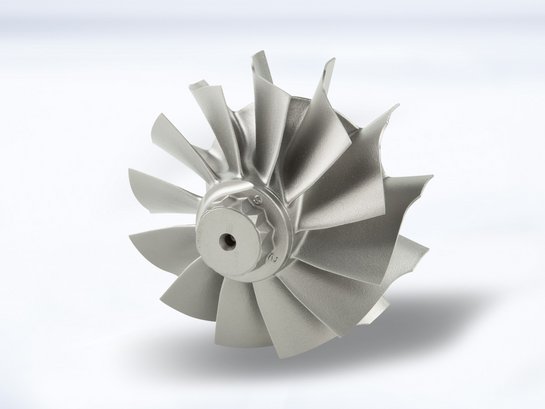
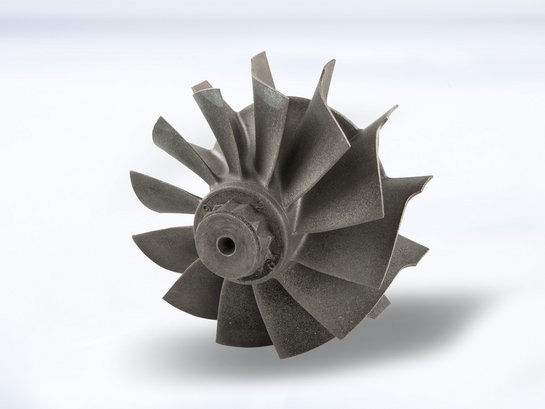

All standard blasting methods are suitable for paint stripping, but turbine blasting (wheel blasting) and injector blasting are most commonly used. Injector blasting ensures even paint removal thanks to a specially designed nozzle that optimally distributes the blasting media. Turbine blasting offers the highest surface coverage and is ideal for processing individual parts or batches, such as in a multi-tumbler system.
Surfaces can be fully or selectively stripped. Different blasting techniques can also be combined—for example, turbine blasting for large areas followed by injector blasting to remove paint from internal sections or stubborn residues.
Paint stripping in practice: surface preparation, system technology, and recycling
Combining paint stripping and roughening

Material preservation is not always the primary objective when combining paint stripping and surface roughening. If the base material is robust and available in large surface areas, other processes become viable. In such cases, shot blasting—including sand blasting—is often the most effective method for removing paint from metal components and, in some instances, from plastic parts as well.
At the same time, this process can create a light to medium surface profile, providing ideal preparation for subsequent coating or repainting. For example, innovative plastic blast media made from organic materials allow composite or metal surfaces to be stripped cleanly and safely without residue. Highly abrasive aluminum oxide is also a suitable blast medium for paint removal—provided the substrate permits it and visual requirements are secondary. The result is a clean, paint-free surface that ensures optimal adhesion for subsequent coatings or powder coating applications.
While alternative processes such as mass finishing (vibratory finishing) may be suitable for certain deburring or surface refinement tasks, large-area paint removal and surface preparation are typically far more efficient with shot blasting technology.
System Features for Paint Removal
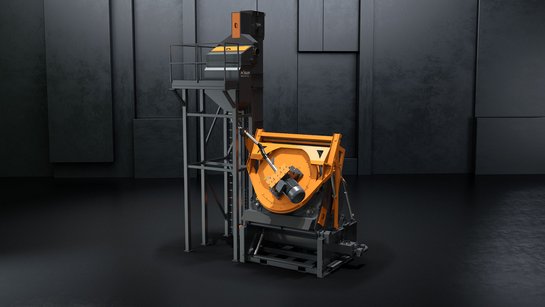
All common shot blasting methods are available for paint removal and surface roughening. The most frequently used systems are turbine blasting (wheel blasting) and injector blasting. Injector blasting ensures particularly uniform paint removal thanks to a specially designed nozzle that distributes the blast media evenly. Turbine blasting achieves the highest surface throughput and is ideal for processing individual parts or batch operations, for example in a multi tumbler system.
Surfaces can be completely stripped or treated selectively. Different shot blasting methods can also be combined—for instance, turbine blasting for large external areas followed by targeted removal of interior coatings or localized paint residues using injector blasting or similar tools. This flexible combination enables efficient paint removal and surface roughening tailored to the specific component geometry and production requirements.
Paint stripping as a pre-process for material recycling

With rising raw material costs and growing emphasis on the circular economy and sustainability, paint stripping is increasingly used as a pre-treatment for recycling metals and lightweight alloys, particularly in the automotive industry.
Wheel recycling, for instance, involves reprocessing or recycling used or damaged aluminum or steel rims. The goal is to conserve resources, save energy, and reduce environmental impact. Old rims that cannot be refurbished are melted down to recover the metal.

A crucial step in this process is stripping paint from the rims. This prevents the release of hazardous substances during smelting. Typical blasting systems for paint removal from shredded rim parts include batch plants like multi-tumblers or loop belt systems.
Paint stripping cleans the metal surface, improves recycling quality, and allows nearly 100% metal recovery. Wheel recycling thus contributes to resource conservation, environmental protection, and sustainable use of aluminum and steel.
What do you need to know about paint stripping?
Frequently asked questions
Is paint stripping the same as coating removal?
Technically, both processes achieve the same result: removing a surface layer from materials like metal, steel, or stainless steel. However, the terms are not interchangeable.
While “coating removal” is an umbrella term for eliminating any type of coating—whether paint, powder, galvanic layers, corrosion products like rust, or passivation—paint stripping specifically refers to the removal of organic paints.
The base material should remain undamaged, though a slight roughening effect is often desirable to improve adhesion for subsequent coatings.
What are thermal and chemical paint stripping?
Thermal paint stripping, or pyrolysis, uses heat to essentially burn off the paint layer. Temperatures can reach up to 450°C, breaking down the chemical bonds in the paint. The result is an ash layer that must be mechanically removed, sometimes using a blasting system.
While thermal paint stripping is fast and effective for thick layers, it is not suitable for heat-sensitive materials like aluminum, which can warp. It also risks causing material fatigue.
Chemical paint stripping is another common alternative to mechanical blasting. Chemical solutions—either acidic or alkaline—dissolve or lift the paint. Parts are immersed in a stripping bath, where chemical strippers break down the paint.
This method is ideal for delicate materials like aluminum or zinc die-cast parts and thin-walled geometries. However, chemical paint stripping can be time-consuming, labor-intensive, and environmentally problematic due to the need for proper disposal of contaminated wastewater.
Which blasting media are suitable for paint removal?

-
Glass Beads:
Glass bead blasting combines paint removal with surface refinement, producing a high-gloss finish. However, it is not suitable for thin-walled parts, as deformation can occur. The process creates a slight roughness, which enhances adhesion for subsequent coatings. Water blasting alone can also be effective (especially in aerospace applications) offering an eco-friendly and cost-efficient option. This method is often used in the automotive industry for stripping paint from aluminum components.
-
Corundum:
Highly abrasive corundum is ideal for quickly removing paint from large, robust components. It achieves the highest removal rate and creates a rough surface—perfect for preparing parts for repainting or powder coating, though not always aesthetically pleasing. Corundum is available in various grit sizes (60-200 mesh).
-
Plastic Blasting Media:
Plastic media provides a gentle paint stripping solution without scratching or deforming surfaces. Though slower due to lower abrasion rates, it is ideal for precision work where the base material must remain intact. This method is widely used in aerospace, automotive plastic components, and electronics.
-
Water:
Water blasting, with or without abrasive additives, uses compressed air (similar to a pressure washer) for gentle material removal through erosion rather than mechanical abrasion. While less efficient due to lower removal rates, it is unmatched in environmental friendliness. Without abrasive additives, the water can be cleaned, recycled, and reused in a closed loop.