

Effective decoating: The key technique in surface finishing
Components and specific requirements
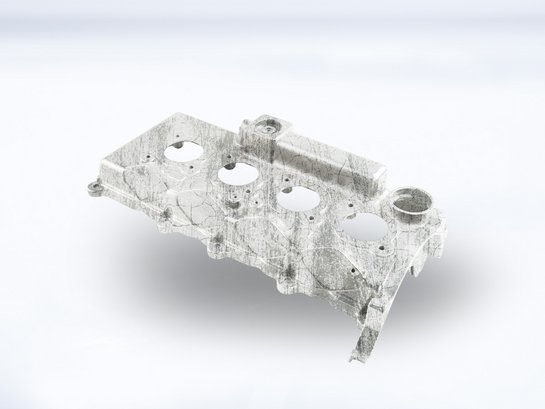
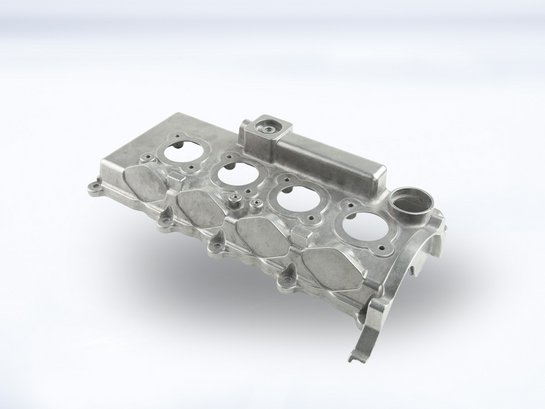

Decoating is a cleaning process and one of the most common types of surface finishing. It involves removing contaminants or unwanted materials down to the base material. Often, decoating also removes previously applied foreign coatings, such as paints and protective layers.
In industrial settings, mechanical decoating is primarily achieved using shot blasting, often referred to as sandblasting.
Decoating, like paint stripping, serves various purposes: recycling raw materials, helping meet aesthetic standards, cleaning components of dirt or rust, improving adhesion, or removing temporary corrosion protection.
In the aerospace industry, decoatin (also called stripping) serves a specialized purpose: components such as landing gear parts, turbine blades, brake and turbine housings, or combustion chamber surfaces must be decoated before safety inspections to detect even minimal surface defects. The base material or component must not be damaged in the process.
An optimal decoating process does not attack the substrate, ensuring its (repeated) reuse.
With the right equipment and tailored processing methods, mineral building materials like concrete, sandstone, glass, or wood can be decoated, as well as plastics and metals. It is crucial to precisely adapt the equipment to the components being processed. Choosing the right decoating technique is also essential for process efficiency.
What are the most common shot blasting methods for decoating?
Wheel blasting (turbine blasting)
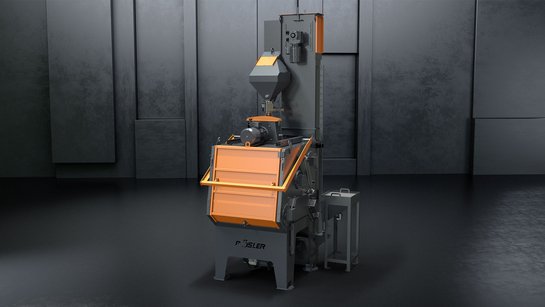
Wheel blasting is the most effective method for quickly, intensively, and cost-efficiently processing large, flat components. It is the most important industrial decoating technique, ensuring uniform treatment of parts with low energy consumption and a high degree of automation. By recycling and reusing the blasting media, wheel blasting is not only effective but it is also sustainable, even for large quantities, such as in multi-tumbler or trough belt blasting systems.
Compressed air blasting
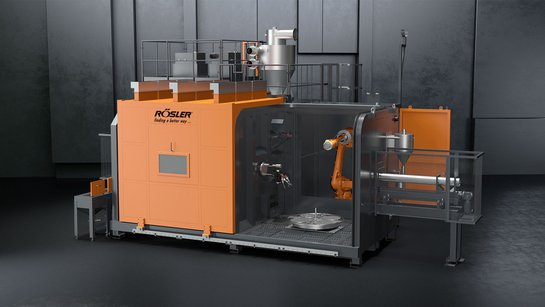
This method allows for precise, localized blasting using injector guns, which can be operated manually or robotically. It is highly controllable, and effectively reaches complex geometries like interior spaces, undercuts, or corners. However, media consumption per treated area is significantly higher than with wheel blasting, and energy consumption is substantial due to the compressed air.
High-pressure water jetting
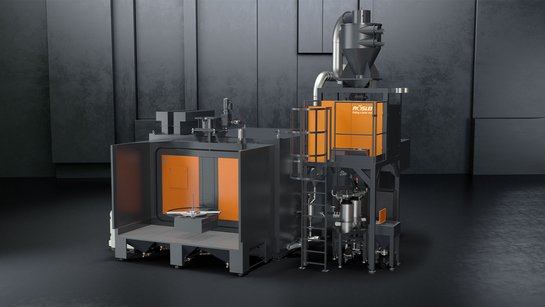
When decoating with high-pressure technology, water is applied under high pressure to the surface layer using a nozzle. In most cases, no blasting media is required, which helps preserve the substrate. This method is often a preferred alternative to chemical decoating, offering significantly better environmental compatibility. More information on high-pressure water jetting can be found here.
What do you need to know about decoating?
Frequently asked questions
What Is the difference between decoating and paint stripping?
Decoating is a process used to remove coatings and layers from surfaces. Paint stripping is a special kind of of decoating, specifically referring to the removal of paint layers. Decoating is the broader term and also includes the removal of:
- Mill scale and oxide layers
- Scale from forged parts
- Casting skin and molding sand
- Rust and corrosion products
- General contaminants and foreign substances
What alternative decoating methods are available?
Surface finishing includes various decoating methods beyond just mechanical processes. The most significant are chemical and thermal decoating, the latter also being known as pyrolysis.
Thermal decoating removes coatings using high temperatures, making it unsuitable for some materials. When it can be used, it delivers fast and thorough results without damaging the substrate. Chemical decoating removes surface coatings without harming the base material, enabling uniform material removal even on complex geometries. However, it poses a high environmental burden due to the use of chemicals, and incurs high disposal costs for contaminated wastewater.
Is selective decoating of substrates possible using shot blasting?

Within certain technical limits, yes. Selective decoating is particularly feasible when the layer to be removed differs significantly from the base material, such as in hardness or adhesion strength. In such cases, targeted removal can be controlled by selecting the appropriate blasting media.
Selective decoating via shot blasting reaches its limits when the coating and substrate have similar mechanical properties or very high adhesion. In these cases, chemical or thermal decoating methods are often preferred.
What are the benefits of decoating using shot blasting?
Decoating is a crucial step in surface finishing to ensure the quality and longevity of components. It is used to clean and prepare surfaces for further processing, and can also remove dirt and corrosion. Thus, decoating is essential for maintaining the quality and durability of components.