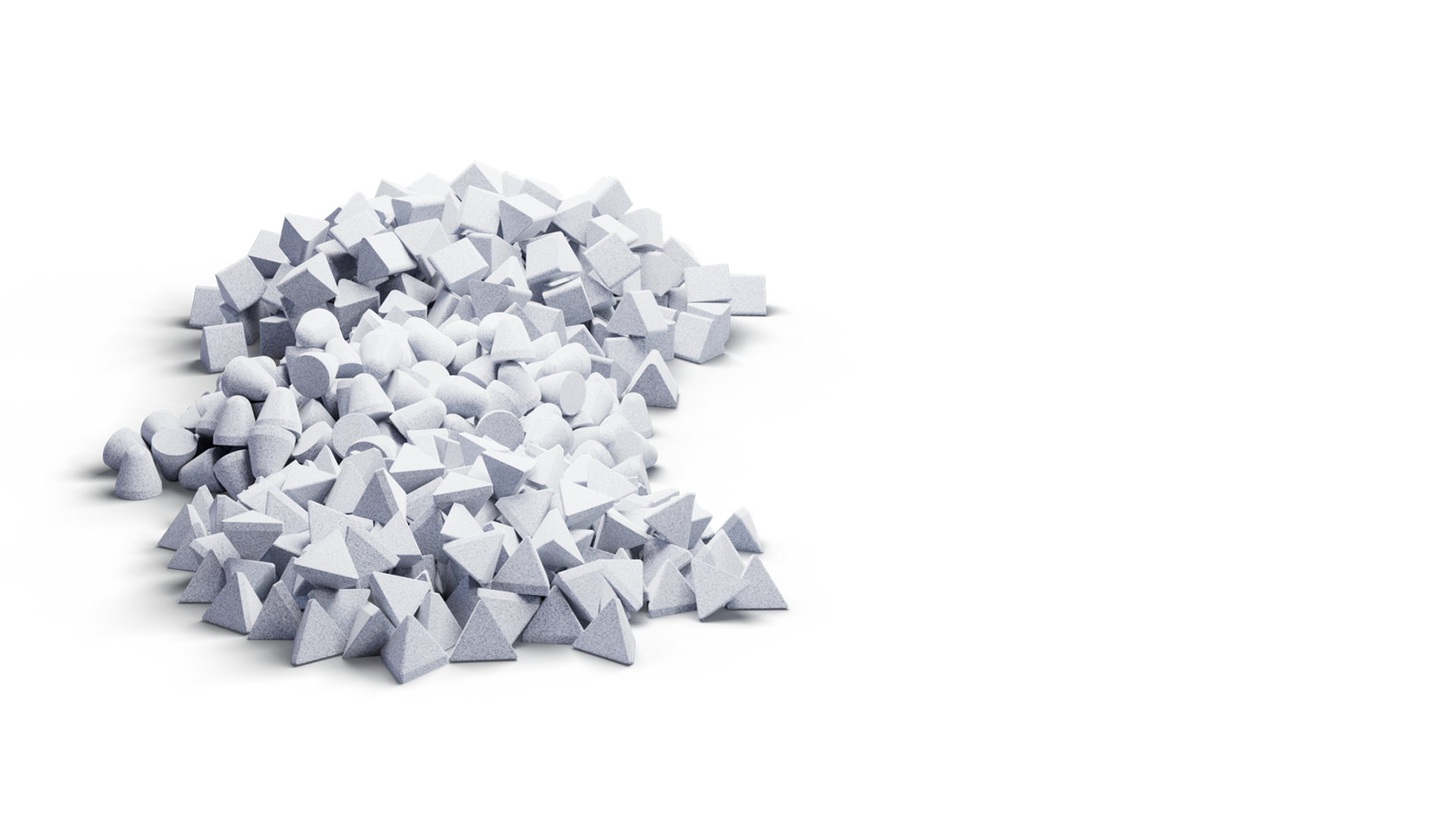
Ceramic media from Rösler: Durable and effective all-round products
Cost efficiency and quality across a wide range
Ceramic media are the best choice for demanding surface finishing applications and represent the most widely used tumbling media in mass finishing (vibratory finishing). Their versatility makes them suitable for aggressive grinding and deburring as well as precision polishing processes.
Ceramic abrasive media are ideal for hard materials such as steel, iron, and other metal alloys. At the same time, they can effectively process soft metals such as aluminum and brass, as well as plastic and even wood. This wide range of applications makes ceramic media indispensable in industries including aerospace, medical technology, automotive manufacturing, and toolmaking.
Whether the goal is heavy stock removal, controlled abrasion, edge radiusing, cleaning, rust removal, or achieving a defined matte finish, ceramic deburring media deliver consistent and reliable results. Depending on the shape, size, and material formulation, the process can be adapted precisely to the needs of the workpiece.
A wide selection of ceramic abrasive media for every need
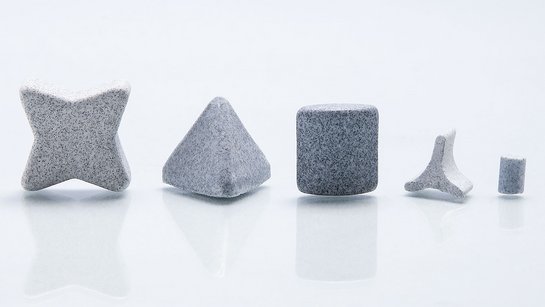
For more than 60 years, Rösler Oberflächentechnik GmbH has specialized in the development and production of ceramic finishing media. Today, the company offers a wide selection of products, shapes, and sizes to ensure optimal performance in virtually any mass finishing (vibratory finishing) process.
The extensive stock program covers standard and customized solutions. If a specific requirement cannot be met with existing products, new ceramic media can be developed to match exact technical needs.
Ceramic media are characterized by their high density and long service life. They retain their shape over time and gradually become smaller through controlled abrasion without breaking apart into unwanted particles. This controlled wear helps ensure stable processes, low dust formation, and predictable results.
Compared to plastic tumbling media of similar sizes, ceramic media generate higher contact pressure due to their density. This results in shorter processing time and more effective grinding and deburring. In addition, ceramic abrasive media typically require less water and compound, contributing to a cleaner and more efficient process.
Miniature media starting at 0.7 mm are available, enabling precise finishing of delicate components and small holes without the media getting stuck.
Precision ceramic production for consistent results

Ceramic media are manufactured in Germany and the USA using carefully selected raw materials. A mixture of clay-based material, sand, and abrasive additives is finely milled, shaped, and sintered at temperatures above 1,300°C.
Abrasives such as aluminum oxide and silicon carbide determine the cutting characteristics. Depending on the formulation, ceramic abrasive media can range from highly aggressive grinding types to low-abrasion polishing grades.
Coarser media remove more material and typically produce a uniform matte finish. Medium grades create refined surfaces, while fine polishing media achieve low surface roughness and bright finishes. This flexibility ensures that every workpiece receives exactly the surface treatment it needs.
Modern ceramic media are engineered for performance and safety. Properly selected and used in appropriate equipment, they minimize unwanted dust exposure during processing.
The tools of mass finishing technology:
An overview of ceramic abrasives
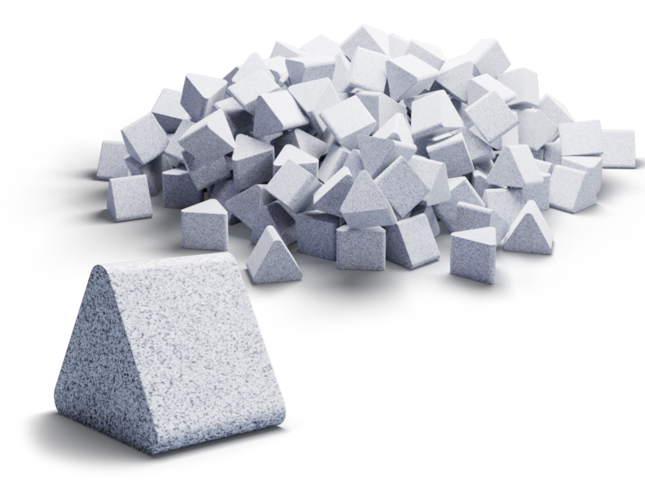
Triangle (D)
The ceramic triangle is the absolute all-rounder among abrasive bodies and offers the best price-performance ratio for a wide range of applications. With its angular geometry, it ensures high removal rates. The selection of sizes and desired grinding performance is virtually unlimited.
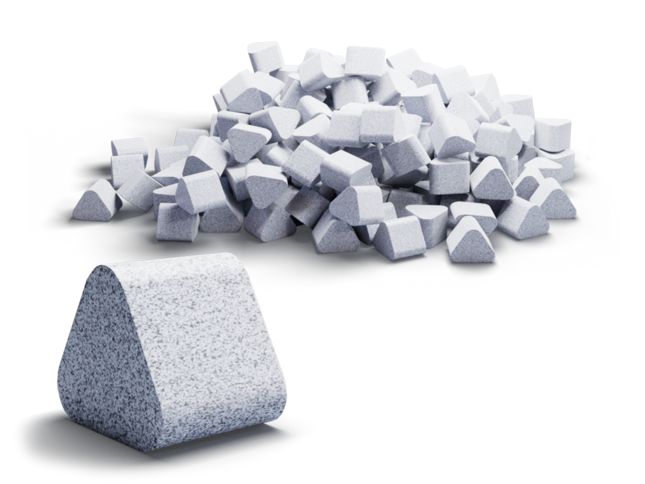
Triangle - with large radius (F)
The “F” triangle is more stable than the standard triangle due to its significantly larger radius, making it less sensitive to mechanical stresses. It is mainly used successfully in centrifugal systems and in processes involving high mechanical stress.
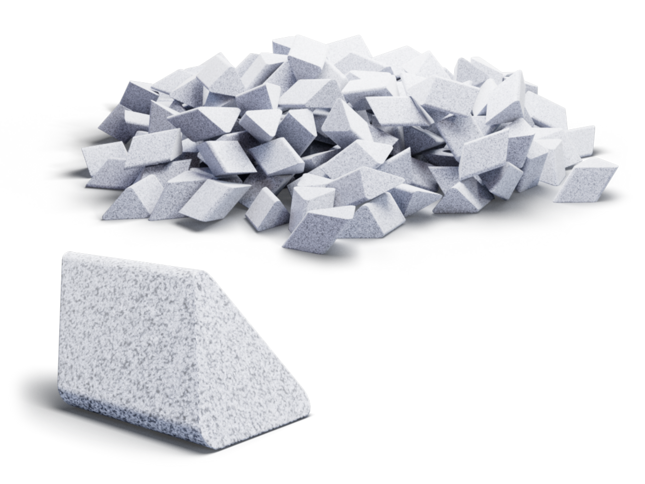
Triangle angle cut (S)
Angle cut triangles have a higher cut rate compared to standard triangles. With these grinding media, burrs and sections of workpieces that are difficult to access can also be reached more easily.
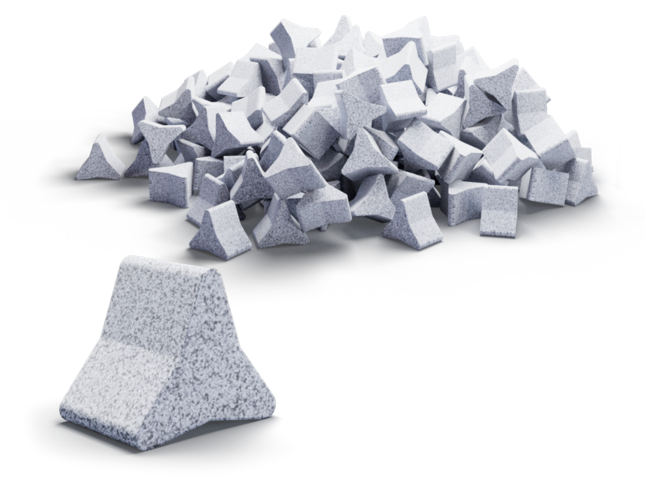
Tristar (DZ)
Special media shapes are required for processing gear components and parts with difficult-to-reach contours. Often, only tristar and angle cut tristar media can reach the base of the gear tooth on the workpiece. Due to the surface indentation compared to the basic triangle shape, the tristar contours remain stable over a long period of use.
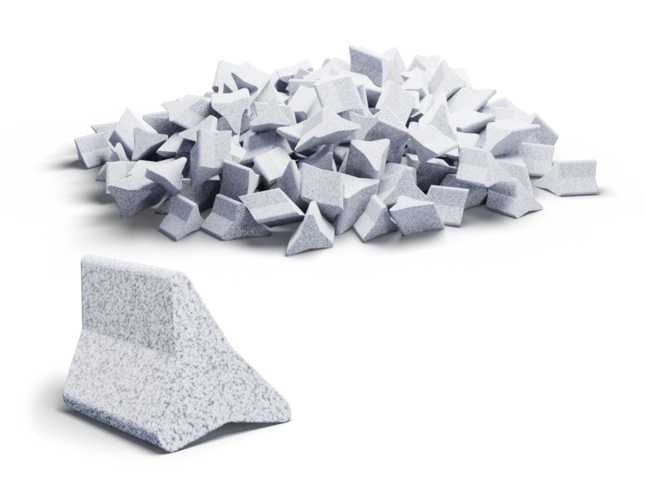
Tristar angle cut (DZS)
The basic trident shape also achieves higher performance thanks to the slanted cut. Particularly difficult-to-reach areas of the workpiece can usually be accessed even more efficiently.
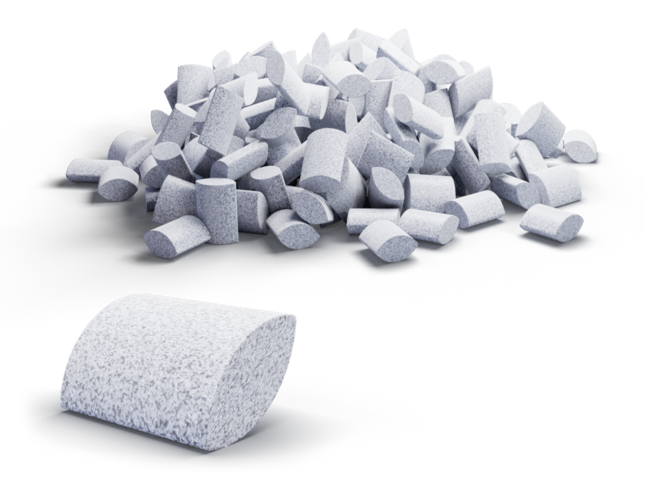
Ellipse (E)
Ellipses and angle cut ellipses are primarily smoothing media. Due to their shape, they have good rolling properties and process workpieces gently, leaving a uniform, homogeneous surface.
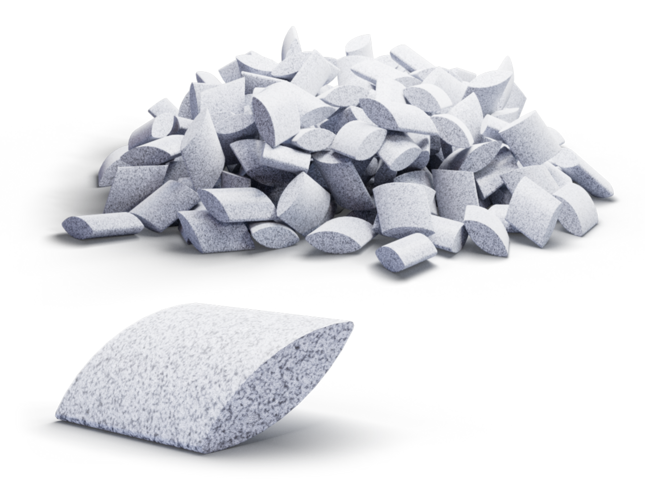
Ellipse angle cut (ES)
This type of grinding media is an evolution of the straight cut ellipse. This makes it easier to reach complex workpiece contours and therefore avoid “shadows”.
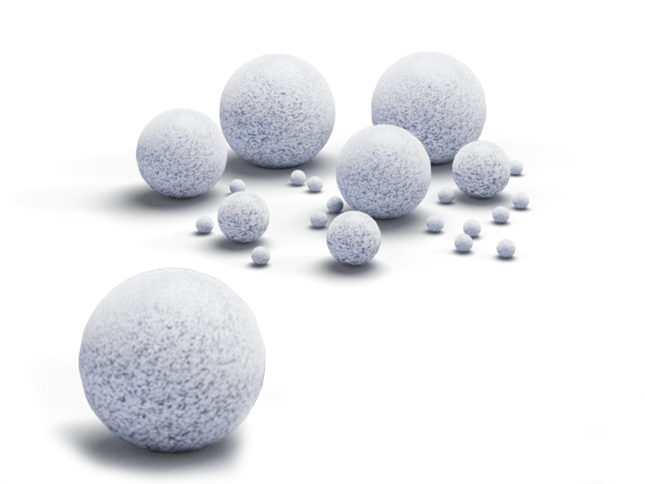
Granulate (G)
Granules (balls) are suitable for light deburring and smoothing or cleaning and polishing workpieces, even in interior areas (pipes or longer blind holes). Jamming in workpieces can be almost completely ruled out. It should be noted that only selective “grinding” of the surface is possible, meaning that material removal is extremely low.
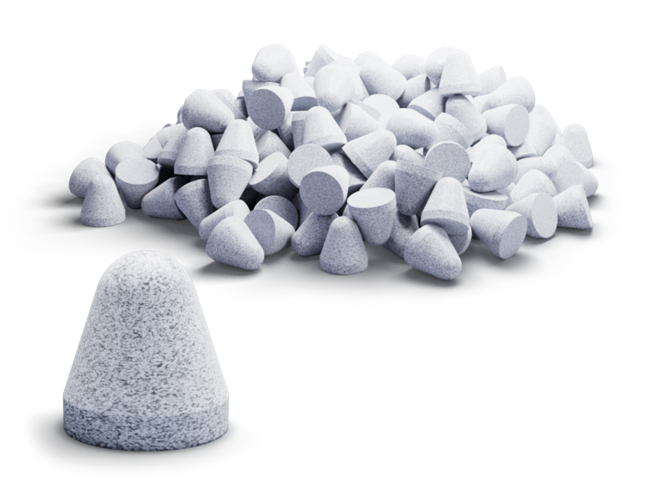
Cone (K)
The cone shape promises a particularly long service life due to its specific characteristics, especially for workpieces with holes and openings. It combines high material removal with a fine surface finish and protects the edges of the workpieces. For flat workpieces, the separation capability is optimized so that no abrasive particles are carried away with the workpieces.
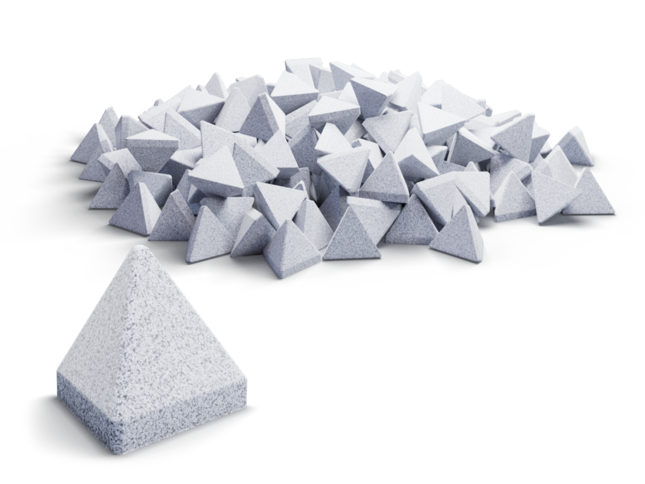
Pyramid (P)
Three identical surfaces guarantee high dimensional stability throughout the entire service life. The mostly insignificant loss of geometry minimizes abrasive clamping in grooves and bores. The compact shape offers ideal separation conditions, and also the best conditions for undersize screening (the automatic separation of abrasives that have become too small).
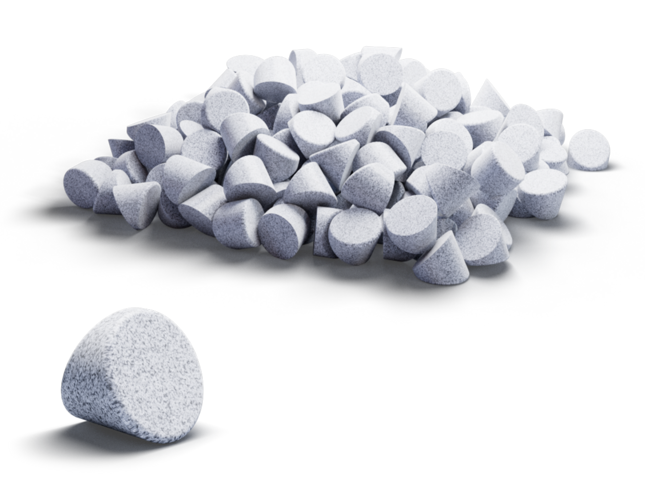
Quinto (QZ)
The Quinto is a successful combination of flat surfaces and curves. Workpiece surfaces and tight radii are machined just as well as breakthroughs and slot areas.
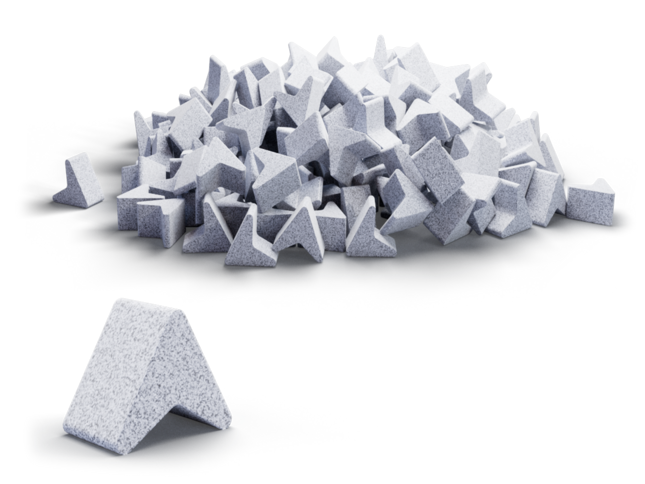
Elbow (W)
The angular shape of this abrasive body particularly supports the circulating motion in the vibratory finishing machine. Difficult, narrow contours and slotted areas can be efficiently finished, as can the outer edge rounding.
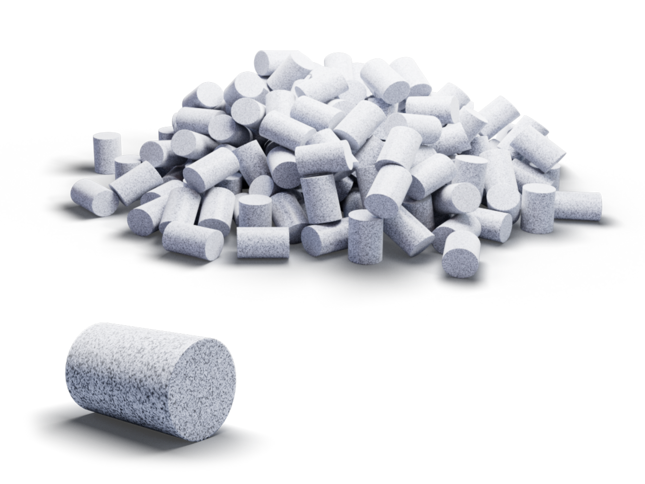
Cylinder (Z)
Cylinders are ideal for machining the interior surfaces of pipe sections. But they also excel in other areas: cylinders are also used for gentle machining tasks and are considered the ideal polishing and grinding tool. Their “rolling shape” is excellent in terms of separability, especially for flat workpieces.
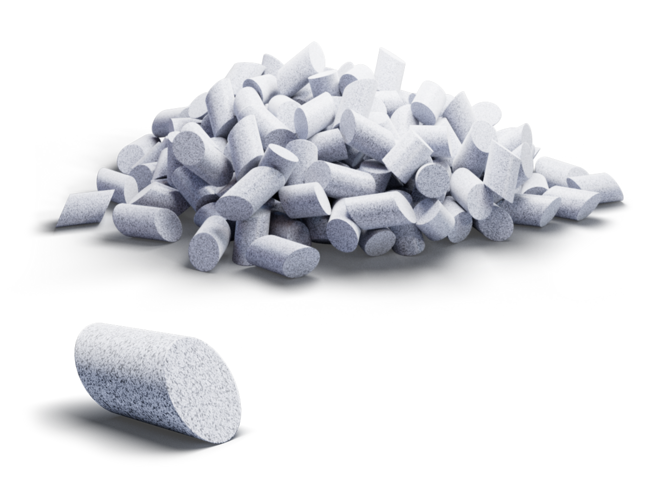
Angle cut cylinder (ZS)
This type of abrasive body threads itself into problem areas most quickly and frequently during machining and passes through “through” holes or breakthroughs without much resistance. The cylindrical shape minimizes jamming in workpiece contours. Smoothing and polishing processes, as well as the machining of delicate workpieces, can be performed well with this type of abrasive body. When separating, the cylindrical bevel cut performs just as well as the cylindrical shape.

MultiShape (MS)
A globally unique ceramic media geometry with fully curved surfaces and defined peaks. It covers applications from aggressive deburring to fine smoothing. The MultiShape abrasive is patented and available exclusively from Rösler.

Star (ST)
Four active tips provide precise deburring of complex parts. The geometry ensures long service life even in challenging metal applications.

Paraboloid (PA)
Primarily used for gentle smoothing and polishing. Its flowing shape ensures uniform material removal with low impact on sensitive workpieces.
What do you need to know about ceramic media?
Frequently asked questions
Ceramic media are sintered, pre-formed abrasive bodies used in mass finishing (vibratory finishing) for mechanical surface treatment. They serve as deburring media for removing burrs, rounding edges, cleaning surfaces, removing rust, and polishing metal, aluminum, steel, iron, plastic, and wood components.
Natural raw materials are wet-milled, shaped, and sintered at temperatures up to 1,300°C. The final properties depend on the selected material composition and abrasive content.
Typical shapes include triangles, cylinder forms, cones, ellipses, pyramids, and special geometries. Sizes range from approximately 0.8 mm up to 60 mm, depending on the application.
The choice depends on the workpiece material, desired surface finish, required stock removal, and equipment type. Larger media generate higher pressure and faster grinding, while smaller sizes are better suited for intricate parts and small holes.
Ceramic media have higher density and provide stronger abrasion and shorter processing time. Plastic media offer lower impact and are typically used for soft metals or sensitive components.
Service life depends on formulation, shape, size, and process parameters. Coarser grinding media wear differently than polishing grades. Proper selection helps ensure optimal cost efficiency and consistent performance over time.
Coarse grades produce higher material removal and a matte finish. Medium grades refine the surface, while fine polishing media achieve very low roughness values and bright finishes.
Separation is typically performed using integrated or external screening systems. The size difference between media and workpiece ensures efficient and clean separation after the process.
MultiShape media are ideal for the high-precision surface finishing of complex workpieces and internal areas. Thanks to their unique shape, they can increase the speed of the media movement in the work bowl by up to ten percent, which helps reduce processing times and increase the material removal rate on the workpiece. The MultiShape grinding finishing media are globally unique. They retain their shape even after a long period of use and are therefore very cost-effective for the customer. The complex geometry of these grinding media greatly reduces the risk of several media becoming lodged in cavities and narrow openings in the workpiece.
Ceramic media are available in sizes ranging from 0.8 mm to approximately 60 mm. As a general rule: The larger the media, the higher the contact pressure on the workpiece and the greater the grinding performance. Larger media also offer longer service life, which positively impacts cost efficiency.
You want only the best for your surface?
We will gladly help you!