

Derusting and rust removal as a key process for durable metal surfaces
Rust removal from metal - a classic application area for shot blasting and mass finishing
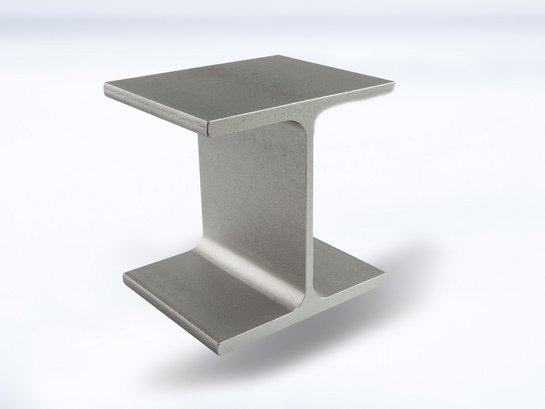
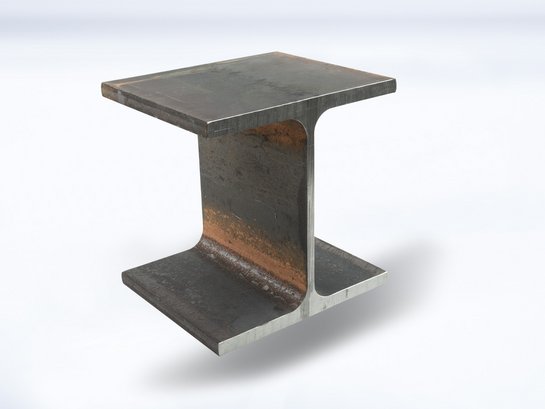

When iron or steel surfaces come into contact with moisture and oxygen, rust forms. Rust is an oxidation product that initially develops on the surface but can penetrate deep into the material layers. If rust is not removed, it can irreversibly destroy even the strongest iron or steel components. In non-commercial environments (depending on the extent of corrosion) household remedies such as various acids or even cola can help remove rust. A particularly effective method is mechanical cleaning using a wire brush or sandpaper. Compared to acid-based scale removal, this mechanical method does not produce chemical by-products, but the manual process is labor-intensive and often leaves scratches on the metal surface.
In industrial applications, manually removing rust from manufactured components is often too inefficient. This is where the material-friendly mass finishing process, or the highly effective and powerful shot blasting process, comes into play. Rust-removal blasting comes under the category of “cleaning blast procedures” and is indispensable in many industries. It is particularly used for large flat and profile steel products and is performed using blast wheels/turbines. For localized rust removal, compressed-air blasting is used, and in some instances both methods can be combined.
Typical industries where rust-removal blasting is part of daily operations include steel construction, steel distribution, vehicle manufacturing, and mechanical engineering.
What do you need to know about derusting/ rust removal:
Frequently asked questions
What is rust and how does it form?
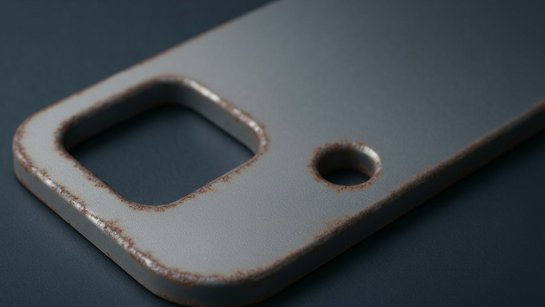
Rust forms when iron or steel comes into contact with water and oxygen. Rust is mainly hydrated iron(III) oxide, meaning water is incorporated into its crystal structure. In the earliest stages of corrosion, iron(II) oxide compounds form first, but they typically oxidize further to iron(III) rust as exposure continues.This oxidation process leads to porous oxide layers that do not protect the metal surface but instead promote further corrosion.
Rust formation occurs in several steps: iron releases electrons, forms Fe²⁺ ions, reacts with water, and eventually oxidizes to iron(III) oxide. Due to the increase in volume of the oxide scales, stresses develop that cause the surface layer to flake off. Commonly affected items include tools, metal fences, garden equipment, and vehicles.
What is the difference between rust and mill scale?
Mill scale forms at high temperatures — for example during forging or hot rolling. It consists of wüstite (FeO), magnetite (Fe₃O₄), and hematite (Fe₂O₃) and adheres more strongly to the metal surface. Rust, in contrast, forms at normal temperatures, contains water, and is more porous. Removing mill scale often requires more aggressive descaling processes than derusting.
When Is shot blasting suitable for rust removal/ derusting metal?
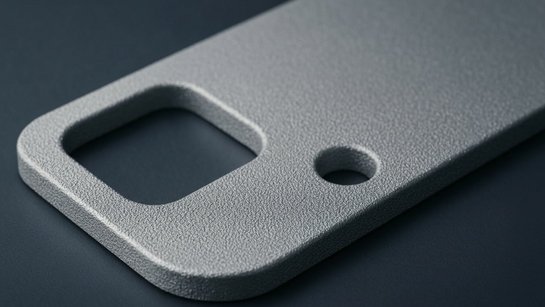
Shot blasting is one of the most efficient mechanical methods for derusting and descaling metal components. Abrasives such as aluminum oxide, glass beads, steel shot, or glass granulate are propelled at high speed onto the metal surface.
Compressed-air shot blasting is suitable for localized rust removal or complex geometries, while blast wheels/turbines efficiently clean large structural beams and other large steel products. The choice of abrasive depends on the metal and the desired surface finish: angular media for aggressive removing oxide scale, round glass beads for a gentle, smooth surface with controlled surface roughness.
Standards such as ISO 8501-1 help determine the rust grade and adjust the shot blasting process accordingly. For light rust, a gentle blast may be sufficient; for heavy corrosion (grade C or D), more intensive blasting is required. The duration of the blasting process depends on the amount of surface impurities and corrosion present.
Shot blasting is used in various industries, including steel construction, machine building, vehicle manufacturing, and the restoration of historical metal parts. Surface quality directly affects adhesion of subsequent coating and thus the service life of metal parts.
Especially in industries working with large components — such as shipbuilding or steel construction — conservation lines are used, where derusting is directly combined with the application of corrosion protection coatings or paint.
When Is mass finishing the method of choice for rust removal/ derusting metal?
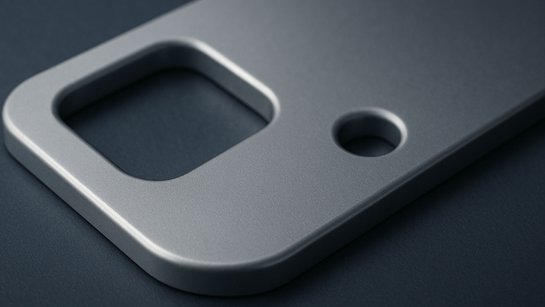
Derusting in mass finishing/vibratory finishing systems is particularly suitable for series processing of small to medium-sized workpieces. The process combines mechanical methods with chemical processes. The parts are processed with media, water, and acidic solutions (compounds) inside the mass finishing equipment. This movement generates material removal, removes rust, and simultaneously improves the surface layer for a consistent surface finish.
A major strength of mass finishing is that several finishing processes can be combined into one single process. In industrial applications, mass finishing is therefore frequently the lowest-cost option for suitable parts.
Compounds activate the removal of rust, corrosion, or oxide scales and are used to neutralize the workpieces (pH adjustment). They are also suitable for removing oily residues and cleaning or brightening the parts.
Machine types for derusting range from vibratory finishers to high energy disc systems and linear continuous-flow systems, making mass finishing particularly suitable for small and medium-sized series often with complex geometries.
What household remedies are available for rust removal?
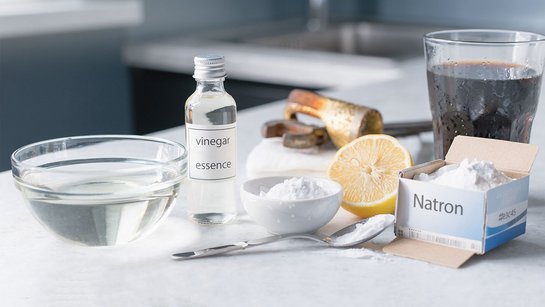
Several methods are used in households to remove rust:
- Vinegar or vinegar essence: dissolves rust through acidic solutions.
- Citric acid: gentle, suitable for small rust spots.
- Baking soda: mildly abrasive and chemically neutral.
- Cola: contains phosphoric acid, which helps remove scale and rust.
Instructions: Soak the item or apply the liquid to the rusted area, let it sit, then rinse with water and dry thoroughly. For long-term corrosion resistance, apply a protective coating or rust converter.
Tip: After treatment, light sanding with sandpaper or a wire brush can remove remaining oxide layers.
What alternative methods exist for derusting?
- High-pressure water jets: environmentally friendly and effective for large structures.
- Chemical processes: acids such as phosphoric, citric, or oxalic acid dissolve rust; phosphoric acid forms a protective surface layer.
- Electrolytic derusting: gentle on materials, suitable for small, delicate, or complex metal parts.
The choice of method depends on part size, rust grade, material, desired surface cleanliness, and environmental impact. Often, a combination of mechanical cleaning and chemical methods is used.
What role does derusting play as a pre-process for painting?

Derusting is an essential pre-treatment step for painting metal surfaces. Rust is an unacceptable substrate because it lacks adhesion strength and does not provide corrosion resistance. If oxidation residues remain on the metal, the coating can be undercut, leading to premature failure.
For a coating-ready metal surface, all corrosion products and oxide layers must be removed. This is typically achieved through mechanical methods (shot blasting, grinding, brushing) or through chemical descaling such as pickling. Only a clean, metallic-bright surface (possibly further treated through phosphating or passivation) ensures durable adhesion and long-term corrosion resistance. After derusting, the metal must be dried and immediately coated or treated with corrosion protection.
How do non-ferrous metals “rust”?
Non-ferrous metals do not rust, they oxidize and form characteristic oxide layers. Aluminum, for example, immediately forms a thin, tightly adhering layer of aluminum oxide that passivates the outer layer of the metal and often enhances durability. Copper, on the other hand, forms a patina that can be decorative but must often be removed for technical coatings. Unlike rust on iron, oxide layers on many non-ferrous metals are stable and improve corrosion resistance.
When Is rust removing/ derusting no longer possible?
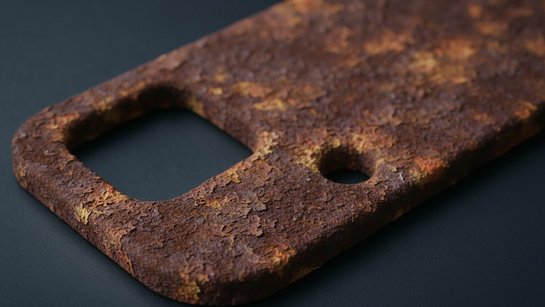
A steel or iron component is considered too corroded for derusting when the rust has penetrated deeply into the material. Deep pitting, cavities, or cracks lead to material loss and structural weakening, making mechanical methods such as shot blasting or mass finishing ineffective long-term solutions. As long as the metal thickness is sufficient and corrosion is only superficial, these processes can restore a suitable surface for subsequent coating. However, severely corroded parts with compromised structural integrity must be replaced.
Conclusion: Rust removal/ derusting for long service life
Derusting is crucial for preserving the value and stability of metal. Whether in households or in industrial applications, the choice of method depends on the metal, rust grade, part size, and the required surface quality. Shot blasting ensures efficiency and large-scale performance, while mass finishing is often the lowest-cost process because multiple finishing processes can be combined.